Sewing School

KONICA MINOLTA DIGITAL CAMERA

I don’t remember exactly how old I was when someone first put a needle and thread in my hands, but I remember who it was. Actually it was three people. My Grandma Thirtle had a sewing box filled with bits of embroidery floss and sharp needles. She used to embroider pillowcases and dish towels. Many years later it was large tablecloths. For someone whose hands shook so badly with Parkinson’s disease, I realized many years later just how difficult the task must have been for her. But those dishtowels and pillowcases usually became gifts for someone, and I can remember that it took two of her tablecloths to cover our holiday tables because we were such a big family.

When my sisters and I were small, she would iron a pattern onto a muslin towel or pillowcase and show us the stitches. Running stitches. Satin stitches. Daisy stitches. The hard to master French knot. When you learned the stitches and used the appropriate ones, when you changed the color of thread in your needle for a new part of the pattern, eventually you would have a frolicking puppy or a bunch of daisies or maybe even a butterfly. As we grew older, we would find designs to put on shirt jackets or tops. It wasn’t high fashion, but it was our own artwork.

Before our mom died when I was seven, she used to sew all our clothes. There is this great Easter photo in which Jana, Susan, Sally and I (Cathy hadn’t come along yet) were in matching dresses. It is not the only time we were, but oh! how I remember those dresses. She left us when we were so young, that she didn’t get the chance to teach us what she knew, but that’s where the aunts came in. Aunt Suzy and Aunt Heddy made sure we learned how to use a machine. In seventh grade – back in the good old 1970s – all the girls took sewing. Because of those good aunts, we already knew how. We had sewn clothing for ourselves for more than two years before Mrs. Schiebe had us in class.

That same Aunt Heddy hooked me on quilting when I was in my early thirties. Cutting large pieces of cloth into smaller ones of different shapes and then stitching them back together in new patterns created a top that was then layered with backing and batting. After quilting the layers together and binding the edges – presto! – you had made a quilt. I still have a large stash of fabric and many projects ready to finish that just await some good free time. It is therapy, and something that will blanket you with warmth comes out at the end.

The best gift received from those lessons was the good time spent together in the learning process. Sharing moments and sharing love. Making something for someone else. Easy sisterly chatter. It was all good.

I have had the joy and privilege of seeing that same kind of community in much harder circumstances than the ones I shared with Grandma and my aunts. There are thousands of Syrian girls and women who have fled the war with their families and are currently living in tents in the Bekaa Valley of Lebanon, among other places. When husbands or brothers are lost to the war, how do these women provide for their families? Who provides the milk? The diapers? The every day needs? How do you plan for a future? A special woman I know named Izdihar – an artist by trade, a lover of Jesus to the core – has taken some of these women under her care. A number of years ago she saw a need in her own country of Lebanon to care for the overlooked impoverished families residing there and began an NGO called Together For the Family. Izdihar and TFF have channeled resources in these days to use what they have learned from those earlier years to reach out to Syrian women. And part of her ministry revolves around the needle and thread and sewing machine.

Today our team visited her in the new campus she has set up near one of the non-UN organized camps. It was a sweet group of women we discovered inside. Wafa, a Kurdish woman from the northeast of Syria with five children, has worked with Izdihar for several years to help shepherd her sister refugees through a process of learning to sew. With other women about Wafa’s age (early 30s) all the way down to 11-year old Alla from Raqqa, these women were gathered together in a small room working on projects that would be part of their portfolio as they worked toward graduation from Izdihar’s sewing school. They make table runners, tissue holders, dresses, pants, baby clothes, pajamas and other items, all learned together in this little classroom that is furnished with sewing machines and a serger. Upon graduation, they will be each be given a sewing machine so that they can begin their own small business, producing some income for their family. Income means food on the table. Survival. As the saying goes, they are not given fish, but they are taught to catch fish. Izdihar has been able to sell some of what they make now as they learn, so they earn some money before the graduation day.

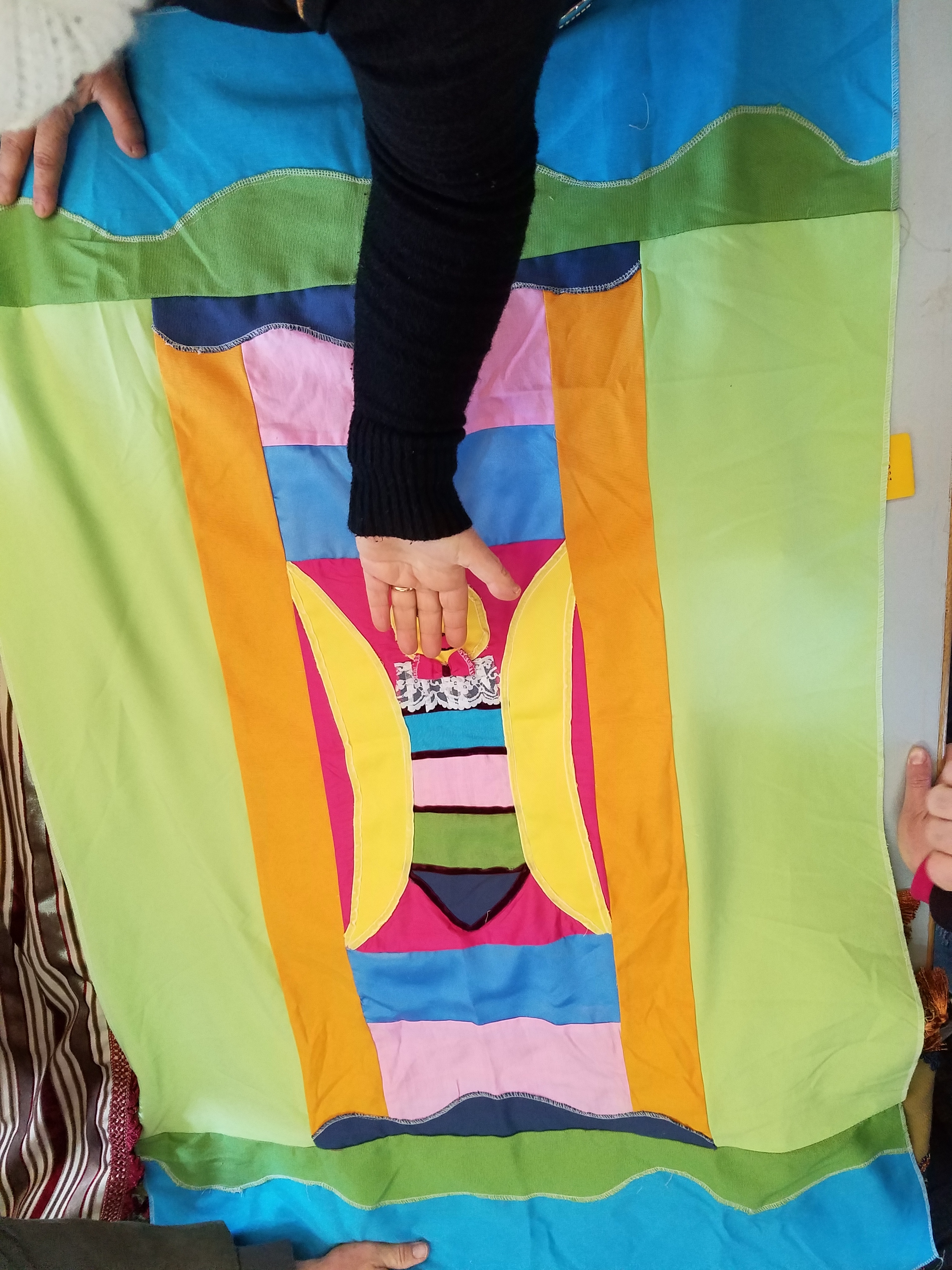
We were shown the first of a number of quilt tops that they are making. In the center panel is the simple shape of a baby sleeping on a quilt. Once these are layered, quilted and bound, they will be given to babies, also cared for by TFF, who have been born in the camps where Izdihar works. Stitched with loving hands of women who have borne much pain, those new babies will be wrapped in the love of Christ.

From 30,000 feet, the view can be daunting. There are thousands of women and children like the half dozen we met today. Where do we start? Come in closer where Izdihar is and hear her prayer: “Please Lord, give me this day work to do.” She sees the ones God puts in her path and she meets them where they are. She gathers them in. She puts the needle and thread in their hands. She teaches. She loves. She shows them a future. They will pass it on as it was passed on to me, and through the work of women’s hands, chattering together at the table in this small room, a little corner of a great big world will be blanketed with love.

May God continue to bless this work and the hands that move the needles.

Encounter

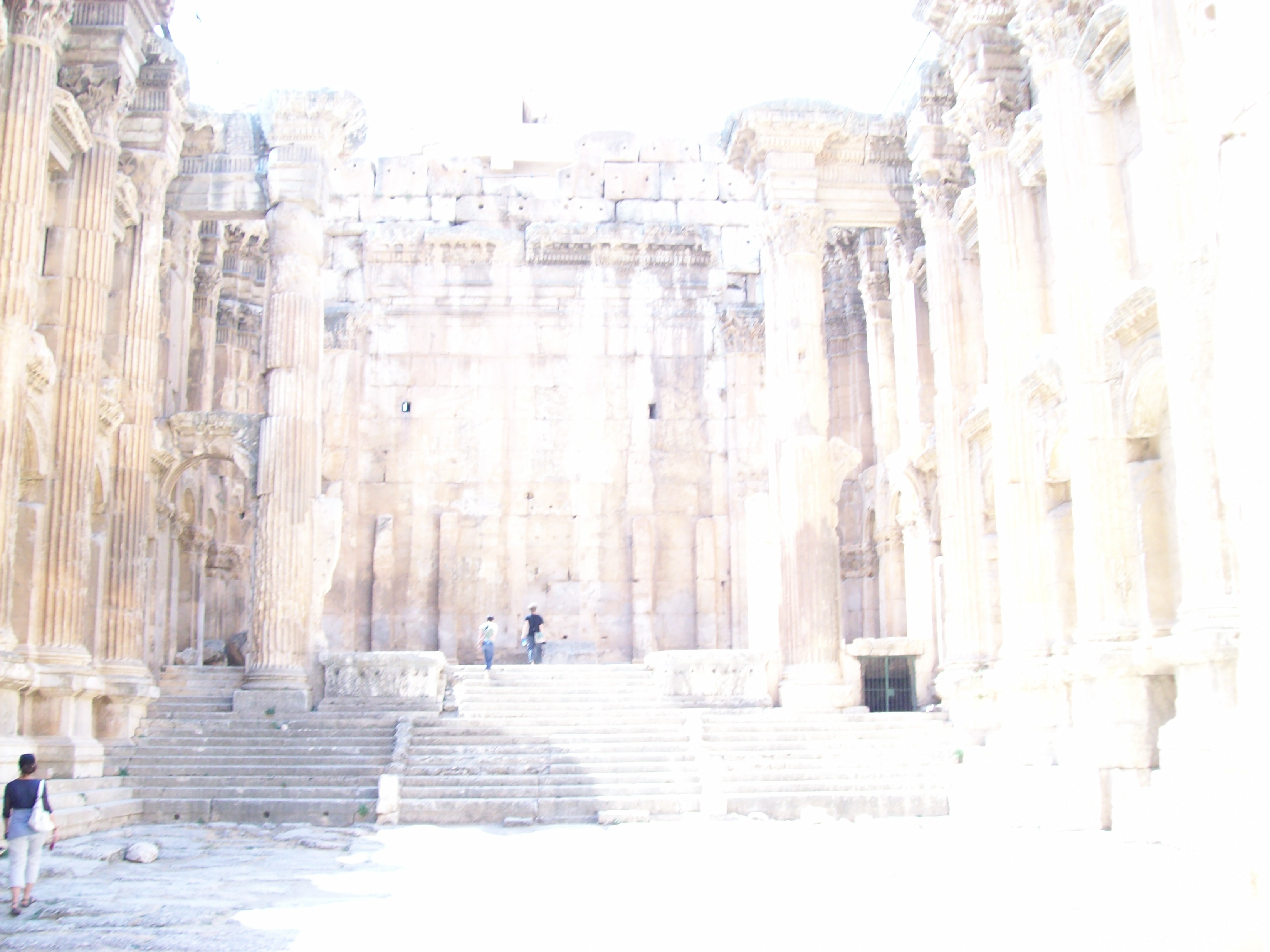
Baalbek, Temple of the Sun, 2010

Beirut, Lebanon, is a fascinating city. There are places we have found to visit once that draw us back again and again. One of those is the Sursock Museum. It was once the home of the Sursock family (funny how they named it after them…) and is a grand old three-story Lebanese home, now filled with modern art. Mr. Sursock and his family were great patrons of encouraging and collecting modern art and every time we come there is a new display. This trip was no different. I have encountered two rooms that are my favorites. One usually has a great collection of old photos, much older than the rest of the art in the place. On Friday, there were late 19th and early 20th century sepia photos of Baalbek, a place I visited in 2010. The color quality of the old photos seemed to match my 2010 versions; the sun was so bright the day I was there that any color simply washed away in its brightness, sacrificed as it were in the Temple to the Sun. The other room is a beautiful old salon with benches that curve around a small fountain. You can just imagine sitting there with a good book and wiling away the hours escaping that same sun on a hot summer day.

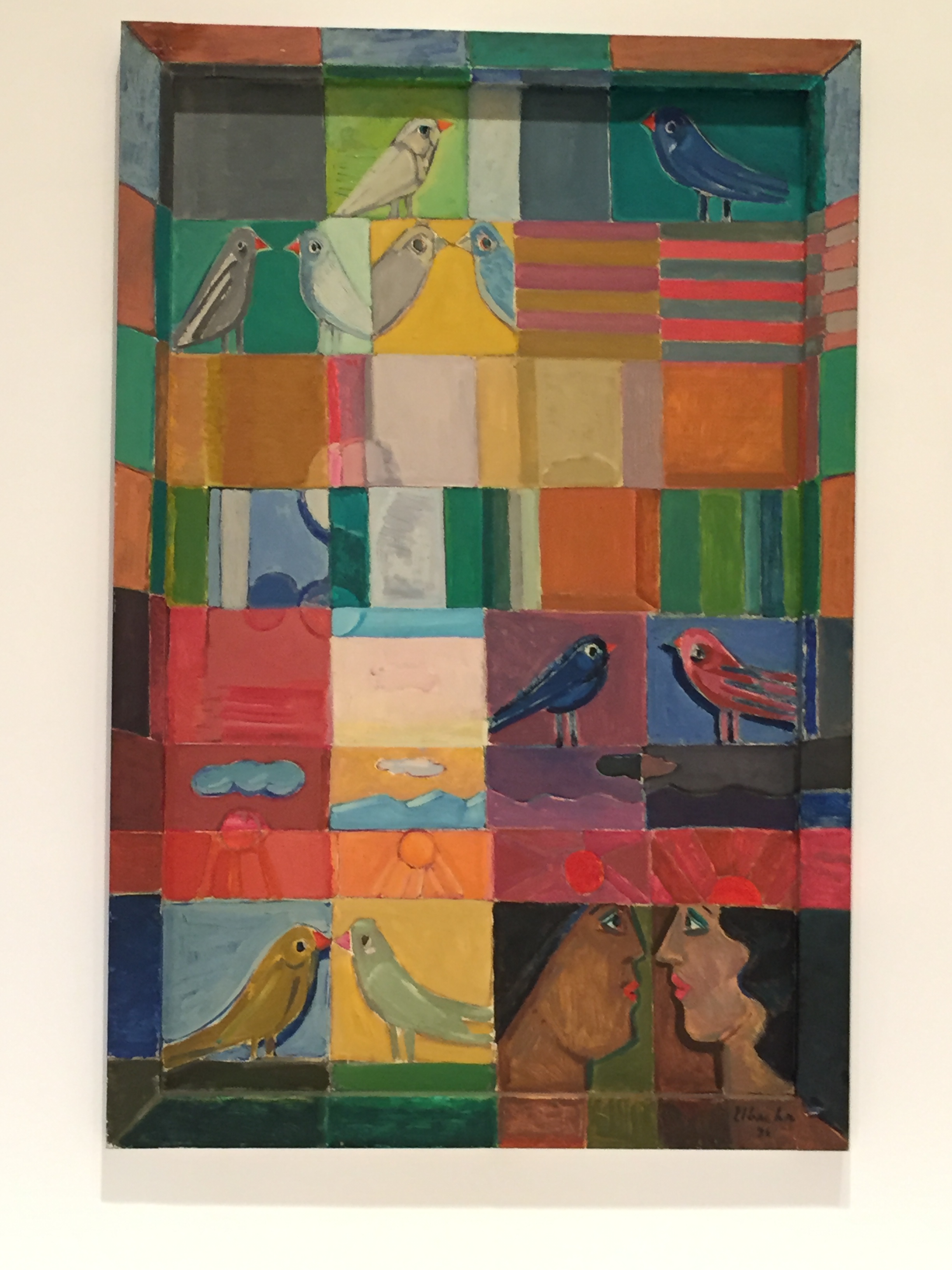
After I scanned the Baalbek photos and poked my head into the salon, I walked a bit farther down the corridor and came across this painting. It is called Encounter and it is by Amine al Bacha, the artist whose work was the feature display of the Sursock. I was entranced by the face-to-face encounters he depicted. Except for the one pair of humans, they are all birds, which I found to be kind of whimsical, as I don’t think I have ever seen birds gaze into each other’s eyes. I noticed that in some of the blocks of the painting they were farther apart and some closer together. They are even touching beaks in one block. They are encountering each other, maybe for the first time, or maybe for the second or third. And I love how the distance closes.

This is how I have experienced my own encounters as I have traveled in these places. The first time in 2010, I encountered new people from a distance. I encountered my roommate, my team members, the church people we met, first in shy conversations and then near the end in nose-to-nose embraces. We encountered each other in those spaces and drew closer to one another in deep relationships. That first roommate is now my dear friend and sister, Barbara Exley. Those team members are faithful women who have gathered me in by Facetime to pray with me over my continued travels. Our faithful leader and my now mentor and friend Marilyn Borst, along with The Outreach Foundation, have enabled me to encounter the churches in Lebanon, Syria and Iraq in ways that help me understand that the body of Christ is much bigger than my church in Omaha, Nebraska. In their midst, I have encountered Emmanuel – God-with-us – who closes the gap between us that our sin and failings create.

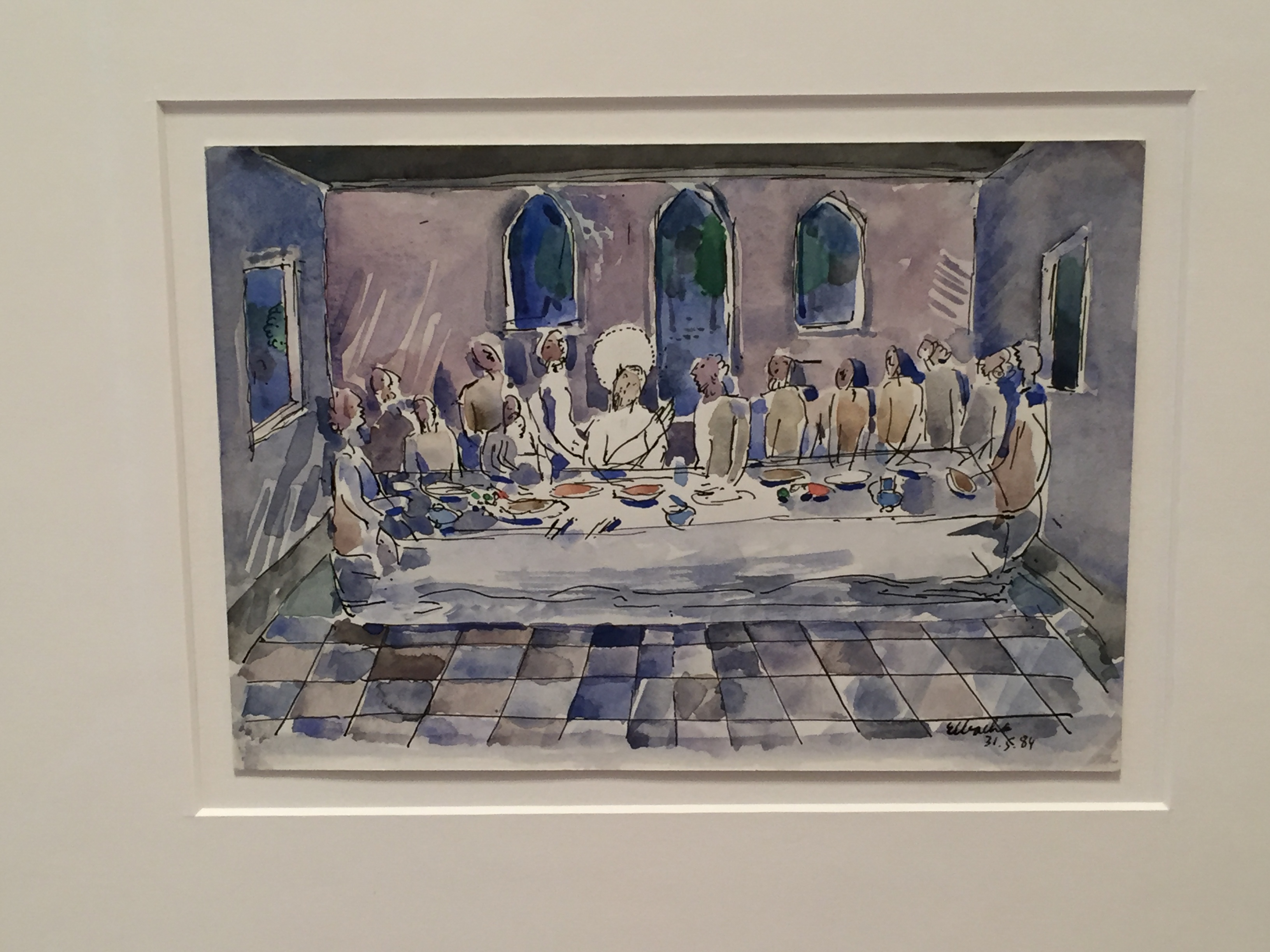
Past the painting of encounter, I discovered a series of paintings Mr. al Bacha did of the last supper, a meal we celebrate and remember every time we have communion. We encounter that same Jesus in the bread broken and the cup raised. That is the place where the gap is closed. And we all are invited to the table to encounter our brokenness and his sacrifice that forgives and heals and redeems us. It was fitting today that in Tripoli, Lebanon, we encountered him again. The words were in Arabic, but the breaking of the bread and the raised cup are universal. He drew us to each other as we shared the elements, and we were all drawn closer to him.

Rev. Nuhad Tomeh and Rev. Rola Sleiman offer the words of institution.

Whether for the first time, or the second, or the thirteenth, I remain grateful for these encounters and the opportunity to meet Jesus face to face.

Belmarouf: With what is known to be good

“Finally, beloved, whatever is true, whatever is honorable, whatever is just, whatever is pure, whatever is pleasing, whatever is commendable, if there is any excellence and if there is anything worthy of praise, think about these things. Keep on doing the things you have learned and received and heard and seen in me, and the God of peace will be with you.” (Phil. 4:8-9 NRSV)

TOF team outside of NEST

It is the end of our first day on this trip to Lebanon and Syria with The Outreach Foundation. I am tasked with encapsulating it for you at home, and so I have taken good notes through our visits on this Friday in Beirut. But as usually happens, the threads of the day all come together into a whole cloth of beauty and truth when someone brings the word to us in a team devotion. Tonight that was Marilyn, our fearless and faithful leader, who gave us the words of Paul (which he gave to the church at Philippi) and the title of this blog.

The words are appropriate for this group of American Presbyterians as we wait in hope for our visas into Syria next week. We will see many hard things. We will hear many hard things. We will wonder where to find hope in a land that is in its seventh year of war. Most of those on this team have experienced it before on other trips to Syria, but some have not. The seeing before does not make the seeing now easier, as those pictures are easily drawn to the front of our brains and we know the names of the people who are the subjects and objects of those stories. Lisa put it very well tonight: they are just like me. But Marilyn’s – and Paul’s – caution is to think on what is good, what is true, what is honorable, what is just and pure and pleasing and commendable. That is quite a list of words to keep in mind, so let us concentrate on the good. I will get to the title later!

Our program visits today were to two of the special partners of TOF in Beirut: the Near East School of Theology (NEST) and the offices of the National Evangelical Synod of Syria and Lebanon (NESSL). To sit with Dr. George Sabra, the leader of NEST, is always like being a part of the best class experience ever. He speaks softly, and is always willing to give the numerical facts of this theological institution – how old it is, how many students, how many faculty – but then will give you the meat of what this place means to the life and vitality of the reformed churches in Lebanon and Syria. For example, to celebrate the 85th anniversary of NEST this past November, NEST published the culmination of a multi-year project to translate John Calvin’s 16th century Institutes of Christian Religion into Arabic. It’s a book for scholars, not the every day reader, so why bother? What do 500-year-old words have to do with today? But then this educator goes on to remind us that Calvin wrote those words in a time when this new reformed faith of ours and the churches which professed it were under great oppression themselves. These words have importance in a 21st century context for Christians in the Middle East and so it was very worthwhile.

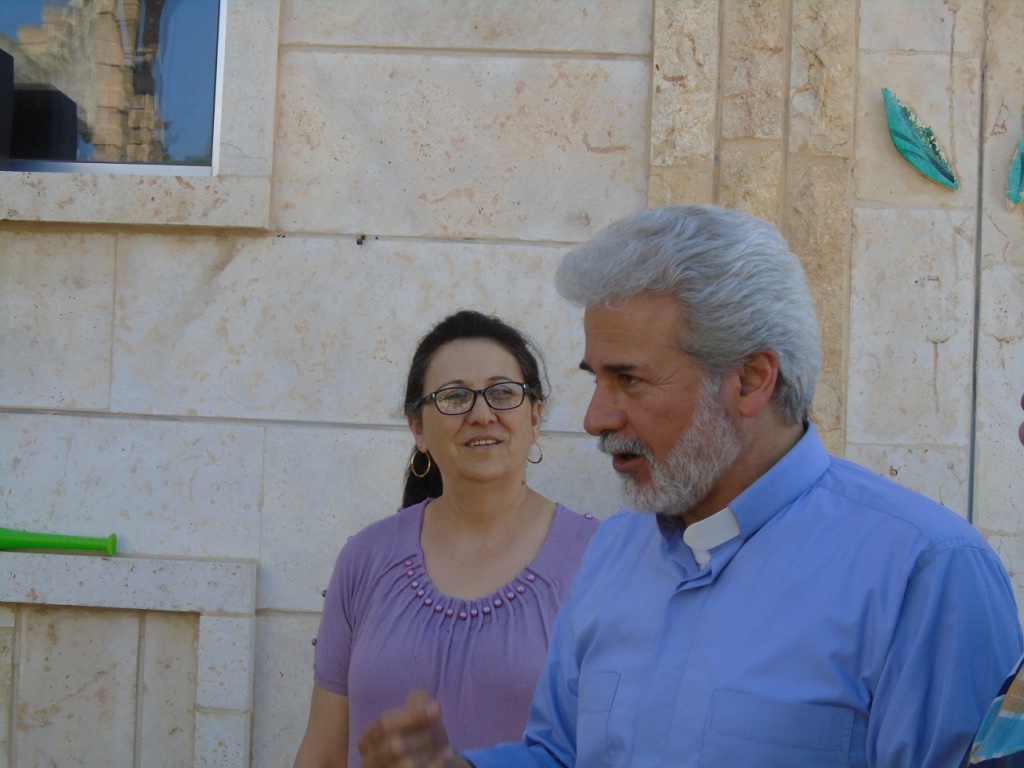
Rev. Joseph Kassab, general secretary of NESSL; Dr. Johnny Awad, New Testament professor at NEST; Rev. Lisa Culpepper, South Caroline and TOF team member

We also spent time with Rev. Joseph Kassab, general secretary of NESSL, and an esteemed group of Synod leaders, including Rev. Suhail Saoud, secretary of the Synod’s Committee on Social and Medical Services. Before the crisis in Syria, this committee was a minor committee of the Synod, but since the crisis began in 2011, its mission and ministry have increased exponentially. We have heard about the growth of a project dear to many of our hearts, the five – now six! – schools for Syrian refugee children. A sixth school was recently opened in Anjar, an Armenian area not far from Beirut that already serves 230 students in two shifts. Forty-five teachers in six schools are educating 600 students age 4-11 in English, Arabic, science and math in the Syrian system in the hope that when they can return home they will be ready to continue their education at grade level. These children and their families, almost all living in tents in camps, are cared for with the love of Christ. Rev. Suheil shared the words of one family: “This is the first time we have felt like humans.”

NEST class of 1997

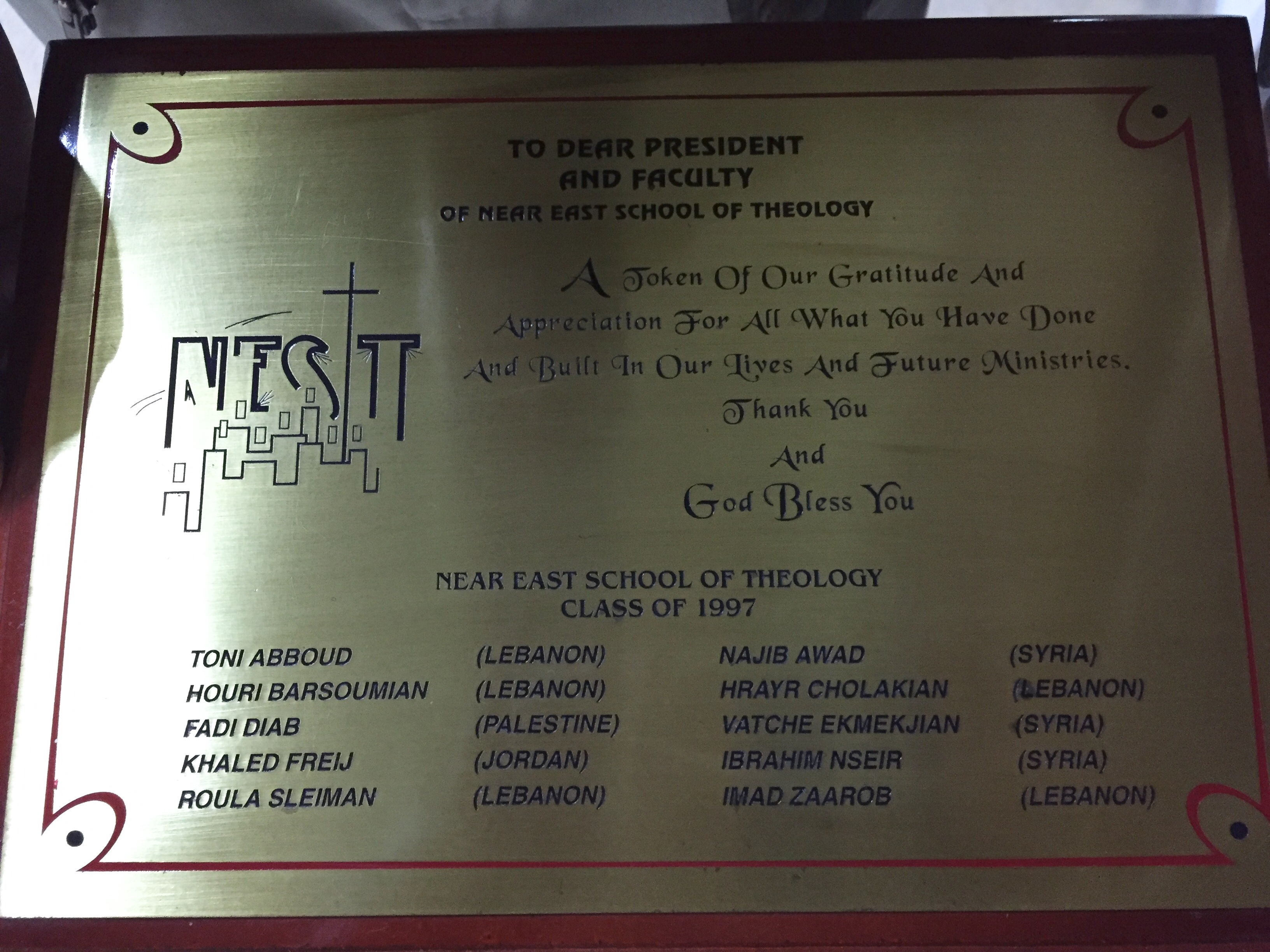
These institutions have interesting challenges. For NESSL, it is coming to the conclusion that the church needs to get outside its walls; it cannot be an insular community. Projects like the refugee schools give the opportunity to daily touch the lives of refugees, nearly all Muslim, with the love of Christ. For NEST, one of those challenges is walking alongside their Syrian students and preparing them for future ministry in the east, in Syria, where the need is great for church leaders. I was reminded of the importance of that leadership as I took the picture of the plaque which represented the class of 1997. Three of those names go with faces I know well who perfectly represent the fact the NEST and NESSL are meeting those challenges. Rev. Tony Aboud is the pastor of the church in Kerbet Khanafar in the Bekaa Valley of Lebanon. His wife Ramak is the principal of the refugee school in Kab Elias. Together this ministry couple and their team touch the lives of sixty-plus students and their families daily. Rev. Rola Sleiman, pastor of the church in Tripoli in the north of Lebanon, is the spiritual leader of a large Synod school there as well as another of the refugee schools. She is also the first woman ordained to the pastorate of a Presbyterian church in the Middle East. Rev. Ibrahim Nsier is the pastor in Aleppo, Syria, a church that volumes can be written about the infinite ways they have served faithfully through the destruction of war. You will hear more about that church and others in the coming posts.

And that takes me back to the title of this post. Belmarouf is a word repeated in an old Syrian love song, which came to the mind of another pastor in Aleppo as he contemplated the destruction of his city. “Oh, how wildly I long for you; how cleaved is my soul to you! I am fully yours, belmarouf (with unconditional goodness). With patience, I will get what I am looking for belmarouf (with your unconditional goodness.” Out of the rape of war, “the new born will heal the wounds of many and will disturb others belmarouf, with goodness and justice.”

As we prepare to see what he has seen, and hear the stories of those who walked those days, we too will think on what is good and just, and remember that it is the people we met at NEST and NESSL who remind us that we have much material to work with.

Belmarouf.

For the team, Julie Burgess, West Hills, Omaha, Nebraska

We Are Marked

One of my chances to write the travel blog from my July trip back to Lebanon…

Traveling with The Outreach Foundation on these ministry experiences as I have for the last seven years, I have learned many things. One of them is that you are part of a team, and even though we begin as strangers, very quickly we bond into a family knowing we have a common Father. Tonight we had the privilege of coming into deeper community with each other as we reflected on the day. Pam Hillis of First Presbyterian Tulsa led our devotion around Romans 12:9-16. In my travel NRSV Bible, the heading says, “Marks of the True Christian.” To paraphrase, we share our gifts, we lift each other in faith, we love and we serve. Those marks should reflect our lives in Christ, marked for us on his head, hands, feet and in his side. This is our model, and today we experienced those same marks on those we came to be with.

The focus of our day was Our Lady Dispensary (OLD) in Beirut, a ministry founded in the days of the Lebanese Civil War (1975-1990). In a small second-floor office in a poor area of Beirut, fifty years worth of war refugees have found their way to Christ’s hands and feet in action. For the past seventeen years it has been lovingly and excellently run by Grace Boustani, a Lebanese social worker and sister in Christ. With limited resources, limited even more by donor fatigue due to the length of the conflicts in Iraq and Syria, she serves some 500 families looking for help with food, medicine, rent and trauma healing.

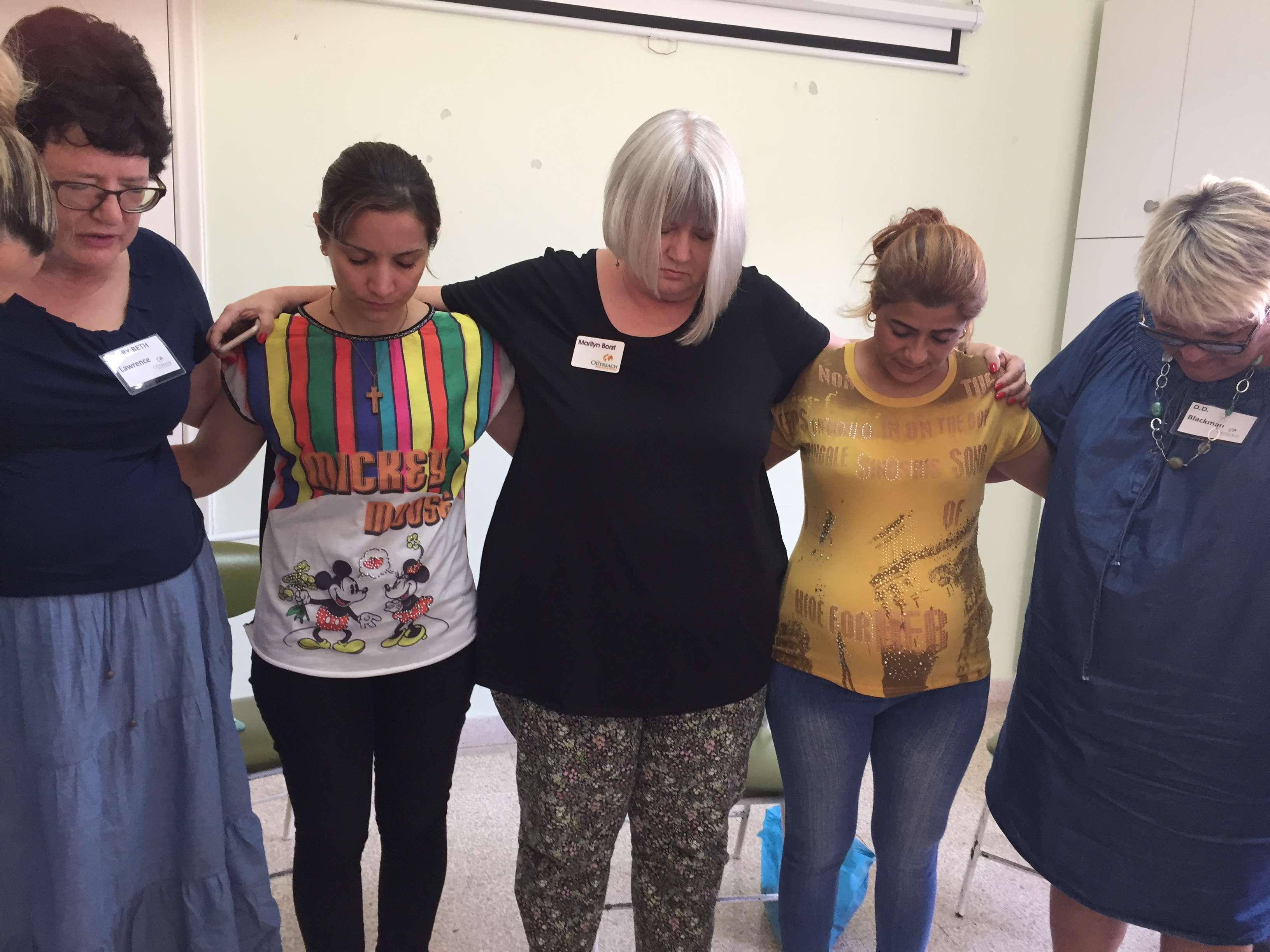
Our team of nine women gathered in a circle with Grace and Rola, who has been trained to lead trauma healing workshops with a Bible Society curriculum revised for the Middle East context. We heard of children in a pilot week-long camp who arrived on a Monday with no smiles, no words and no hope, and left on Friday as engaged young people, speaking, playing and using their own hands to draw pictures to share their stories.

We met two young women, one Iraqi, one Syrian, each the mother of three, each having experienced the flight-in-the-night story that is so common among refugee families. It is cruel and heartbreaking, and yet here at Our Lady Dispensary these two young women opened up to share with us. And in their stories is where I find Pam’s scripture so perfectly reflected today. Even in the brokenness of lives torn apart by loss and war, these two were in our midst sharing their gifts, lifting us in faith by their acts of love and service.

Sweet R. from Iraq was pregnant with her third child when forced to flee in the night with but a half-hour’s warning as ISIS moved in. Four days later in the temporary sanctuary of her church, she gave birth to her son, now two years old. Coming to Lebanon, her family found OLD and received some help. Not just willing to receive, she has since become Grace’s chief volunteer for the Iraqi refugees served by OLD, serving as a liaison for the families and OLD. She does whatever she can around the office to help, including making coffee and cleaning. How is it possible for this sweet young traumatized mom and wife to be able to serve out of her situation? A woman just waiting for hope whose prayer is “God, just open a door for us”? The answer we experienced is that she is marked: she uses her gifts, her faith lifts those around her, she loves and she serves.

Our new friend Y. is from Syria with another story of loss. So much loss for such young women! High rents. Menial labor for a husband if he can find it. How do you cope? And yet, when she made her way to the OLD neighborhood and Grace’s outstretched hands she found something different than she had ever known. In her words, “The day I started to know God, I started to hope and everything changed.” Y. met Jesus and came to know him through reading God’s word, going to church, and is now a Christian. Her husband has also accepted Christ. One day when she returns to angry parents in Syria who do not want to accept this she will repeat what she has already told them: “Open the Bible and you will see the truth.” She is marked, and having shared those marks with her husband, will one day share them with the rest of her family.

As we reflected on the lives of these two young women tonight, Pam’s devotion brought us all back to the same place: we are the Body of Christ, and that body is marked. May those marks be seen in us all and shine God’s glory as brightly as the marks on Grace, R. and Y.

A Day’s Contrasts

Standing outside the Nicholas Sursock Museum in Beirut is "The Weeping Women." This sculpture depicts two women, one Christian and one Muslim, mourning together in the loss of sons to senseless wars.

Standing outside the Nicholas Sursock Museum in Beirut is “The Weeping Women.” This sculpture depicts two women, one Christian and one Muslim, mourning together in the loss of sons to senseless wars.

I find myself once again in a place that has become so close to my heart. When I return to Lebanon and Syria it is like coming to a second home, and I think that is pretty amazing for someone who has lived her whole life in Omaha, Nebraska! But on a January day in this new year of 2017, I have returned to Beirut, and from here I will travel on into Syria to places I have been before in a time of peace and in this time of war.

From our first appointment on Friday to our last cultural experience at the Beirut National Museum, my mind kept focusing on the contrasts.

We spent the morning visiting the Our Lady Dispensary, a partner of The Outreach Foundation, a Presbyterian mission-connecting agency that I have traveled with. OLD is run by a real life angel named Grace Boustani. Well named, she exudes grace and gives glory to God for placing her right where her sweet spot is: serving in his name. OLD provides social and medical services to thousands of refugees from Syria and Iraq who find their way to this poor mostly Christian neighborhood in Beirut. Grace herself grew up in the Lebanese civil war (1975-1990). She and her family left for a time, but she returned as a social worker to bring healing to her country. She uses that same touch with every person who walks through the door at OLD, Monday through Friday.

Grace and Rula of Our Lady Dispensary in Beirut are the smiling presence for refugees of wars in Iraq and Syria.

Grace and Rula of Our Lady Dispensary in Beirut are the smiling presence for refugees of wars in Iraq and Syria.

Today we had the opportunity to hear three very personal stories from three women who fled the Mosul area of Iraq in 2014 when ISIS moved in. Hala, Ramzeh and Wafa each had similar stories, but to hear them each tell their own experience was a reminder that everyone who has been affected by the happenings in the Middle East since we first invaded Iraq in 2003 has an individual story to tell. We owe it to them to hear them, see them as real people with real families. They have names! And now, we know them and can put faces to those names.

They each told of fleeing in the middle of the night. “Leave now or you will be killed! Take nothing with you! Just go!” Taking nothing but the clothes on their backs, they each left with their husbands and children, walking the fifty-plus miles from Mosul to Erbil. In Erbil, they lived in a refugee camp located in the open-air courtyard of a church there. Months later, living in extreme conditions, they made their way to Beirut and the neighborhood of OLD. They told of leaving everything behind. Former neighbors sent them photos of their homes burned to the ground by ISIS. Family graves were dug up in the Mosul cemeteries and the remains of the family members were strewn around to leave no trace of their existence. Two years later, they are all trying to be resettled in other places by the UN, but the lists are long, resources few, and the list of countries willing to take refugees from Iraq and Syria is shrinking.

It sounds hopeless, but at OLD they have found caring hearts and listening ears. Hala, Ramzeh and Wafa have each been through the trauma healing ministry led by Roula al Kattar, and have been able to talk through their grief, forgive their trespassers, and be reminded that the God they have known all their lives is still with them. It was a humbling experience to meet these three women and share the morning with them, tears and all.

The contrast came later in the day as we made our way to two museums. The first is housed in an old Beirut mansion that is filled with contemporary art. Works by people whose names are written down and celebrated are displayed in home that once was a gathering place for a wealthy family. The Sursock Museum is indeed a treasure; their belongings are well displayed and preserved, unlike the former possessions and now burned down houses of Hala, Ramzeh and Wafa.

13th century children's clothing in the Beirut National Museum

13th century children’s clothing in the Beirut National Museum

In the Beirut National Museum, well restored since the civil war, we visited the newly reopened lower level where we saw well-preserved mummies, a child’s garment from the 13th century, and a long line of beautiful sarcophagi. There were steles engraved with the names of the long dead. And yet, there were the names of someone’s ancestors. There were the preserved remains of ancient people on display for those of us walking in this century to see and marvel at. There was the evidence of lives lived in specific places.

There was and will be no evidence of the life lived in Mosul by Hala, Ramzeh and Wafa, or their families. The only memory for them is what is in and on their hearts that they shared with us. And so we will be their museum, holding onto these treasures. May God grant them new lives and new homes to make new memories in the days to come. May they continue to process their grief and call on the Lord who knows all our names. May they find restoration and peace.

Sarcophagi lined up in the Beirut National Museum

Sarcophagi lined up in the Beirut National Museum

Dona nobis pacem.

The church, The Church, THE CHURCH

Confession: This last post from our trip to Lebanon and Syria will be written in first person. I (Julie) have had several days of traveling time with Marilyn and Nuhad. On the curvy narrow roads from Damascus to Homs and then to Mahardeh, there has been a lot to reflect on between speed bumps, or “sleeping policeman” as Rob told us they were called in parts of Africa. Every time I have traveled on a TOF trip, Marilyn has been my leader and teacher and her words ring in my ears, but never as much as this time. These trips are not about our faithfulness, our bravery, or anything that is preceded by the word our, but they are about the church, The Church, THE CHURCH! In times of peace, in times of war, the church is here. It remains and we have come to stand with it and be embraced within it. Since the rest of our team returned home, we have been with three faithful parts of the body of Christ, the bride of Christ, his church.

The Presbyterian church in Bloudan, Syria.

The Presbyterian church in Bloudan, Syria.

Last summer, Marilyn and I spent several days beyond the women’s conference at Dhour Choiuer to travel to Syria and visit a church she had never been to. Our visas were not granted and so we have waited an extra nine months to finally visit the Presbyterians in Bloudan. Bloudan is a village of about 5,000 permanent residents that in normal times expands to 400,000 as summer residents come up the mountain to escape the heat of the valley cities for its cool breezes, summer homes and restaurants. It is a mere 50 miles from Damascus, so the drive is short. Well, the drive was short. Now, the last nine miles up the road once you’ve turned off the main highway require ten different checkpoint stops. This little village is surrounded by five other villages, one of which is Zabadani. Last summer when we tried to get here, Zabadani was the scene of pitched battles between radicals, Hezbollah and Syrian army forces. Similar battles were fought in all five of the cities, and as we made our way slowly up the road, one of those cities was still cordoned off by razor wire as the battles still rage.
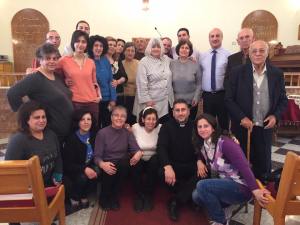
The Bloudan church elders and women's leaders on the chancel of the church. Assis Feras Ferah, who is pastoring the churches in Hasakeh, Kamishli and Malkieh in the northeast, is from this church. Many of these people are family to him. His mother is embraced by Marilyn Borst in the center.

The Bloudan church elders and women’s leaders on the chancel of the church. Assis Feras Ferah, who is pastoring the churches in Hasakeh, Kamishli and Malkieh in the northeast, is from this church. Many of these people are family to him. His mother is embraced by Marilyn Borst in the center.

Upon arriving (finally!) in Bloudan, we were greeted by the faithful elders and members of the Presbyterian church. There have been five years without electricity here. Five years when precious little supplies have made it up the road. Five years of shelling, some of which has hit and killed, including the sone of one of the elders. But in five years this faithful church without a pastor has not missed worshiping the one we call Lord. Indeed, we had an impromptu worship service led by Kamishly pastor Feras Ferah who is from Bloudan. The little children from the KG processed in and recited Psalm 100 from memory, sang us a song and then all bowed their heads and prayed. And as we sat there in this church
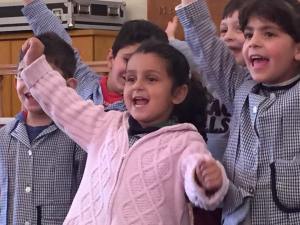
The Bloudan KG kids lead us in worship.

The Bloudan KG kids lead us in worship.

together, we were reminded that they might not have electricity but that the light of Jesus shines brightly in and through them all. In solidarity with the other Christians here who are Greek Orthodox, they will all celebrate Easter together on the Eastern calendar day of May 1. And they were teaching the children this word in song: Jesus is risen! He is risen indeed!

This is the church!

After a refreshing drink from the spring that flows from this mountain place, we headed back down the road, through the ten checkpoints, past the razor wire and the pancaked buildings and back to Damascus for our final night there. Saying goodbye to Assis Butros and his wife Wafaa, we headed to Homs.
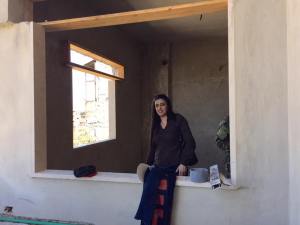
Michelline Koudmani in her Aunt' Mona's house which is currently under reconstruction.

Michelline Koudmani in her Aunt Mona’s house which is currently under reconstruction.

When Marilyn and I last visited Homs with a group from TOF it was November, 2014, and Homs had only been relieved of its near three-year siege for about five months. We visited seven different churches in the old city, which once was home to about 60,000 Christians. The churches, including the Presbyterian church, had all suffered destruction in different degrees. We gathered together as a group with the newly minted confirmation class under a cross-shaped hole in the roof and they sang hymns of joy for us in the promise that this church would be repaired. Now standing inside the beautifully restored church on an April day in 2016, the promise is indeed fulfilled. God is good. All the time. Elder Abdul Almessieh Salta, a civil engineer, pointed out the beautiful wood ceiling panels. Most of them are original but some are made of new materials to replace the damaged ones. The craftsmanship used on the new ones makes them indistinguishable from the original. Assis Mofid and his wife Michelline also walked us through what will be the pastor’s home once it too is repaired and refurbished.
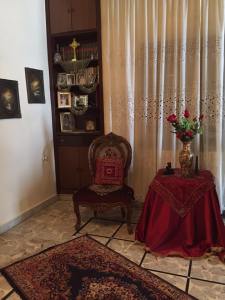
Elder Najwa's home in Homs, now fully restored. This chair is the only one of her belongings to survive ISIS, but her home is filled with the love and light of Jesus, as she lives here with here brother and sister.

Elder Najwa’s home in Homs, now fully restored. This chair is the only one of her belongings to survive ISIS, but her home is filled with the love and light of Jesus, as she lives here with here brother and sister.

Refurbished homes in Homs was our next order of business. Although there is still much destruction all around on a massive scale, people are returning to this place. We were told that about 2,000 of those 60,000 Christians have returned to the old city. Driving through the narrow streets, we saw small shops and restaurants where hopeful people wait on those few who are back. And there is reconstruction going on. The Presbyterian church identified 39 homes of church members that could and should be repaired so people could return home. With several gifts, including one from TOF, a number of those 39 have been completed or are in different stages of completion. We visited the home of Michelline’s aunt Mona where workmen were busy. Although the rear of the fourth-floor walk-up is still open to the outside, structural posts and beams have been replaced, tiles have been laid in the kitchen and bathroom, and six rooms are defined. In my mind I can see Mona back here with her husband.

From there, we drove a short distance to the home of elder Najwa, who had been our constant companion on this visit in Homs. We had first met her on a video at the consultation of this home-rebuilding project in Homs. She was the first one from the church to return to her place and begin rebuilding it even before this project was put in motion. She was a teacher and a principal in a government school, and before the war lived in this apartment with a sister and two brothers. They had precious little time to leave before ISIS came storming in. These radicals had moved all of her beautiful furniture out of the sitting room and just sat on the floor. Before they left, they burned most of it and stole the rest. Now sitting here with her sister and brother (one died before he could return), it was like every other beautiful home we had been invited to on these trips. Pictures on the walls. Rugs on the floor. Reminders of life all around. And one precious original chair, which had somehow survived.

We enjoyed lunch at a newly opened restaurant called Cello, owned and operated by yet another Presbyterian church member named George. It had always been his dream to have a real restaurant in Homs, more grand than his former fast-food operation, and here we sat. Ninety would be here later this evening for dinner and karaoke. Dream realized. Life renewed.

This is the church!

Assis Ma'an Bitar and wife Gwath Hanna of Mahardeh. Ma'an also pastors the church in Hama which is nearby.

Assis Ma’an Bitar and wife Gwath Hanna of Mahardeh. Ma’an also pastors the church in Hama which is nearby.

From Homs we headed back to the road. Faithful Assis Nuhad drove through more unfamiliar roads on a roundabout way to Mahardeh, our final destination in Syria. Through small towns and farm fields, even where all seems peaceful, there are reminders of war. Besides the numerous checkpoints we stop for (maybe 30-40 on this part of our journey) we drive by gas stations where empty pumps stand. We know when a station has fuel because there will be a long line of cars, trucks and motorcycles waiting, sometimes as long as six hours, for maybe five gallons. Nuhad stops periodically at roadside stands. “Benzene?” he asks. As we watch the fuel gauge drop to about a quarter of a tank, his question is answered in the affirmative and a 20-liter container of gas is brought to the side of the car with a funnel and hose. A quick transaction and we return to the journey, but this is daily life here.

Mahardeh. Sitting peacefully on the terrace of Assis Ma’an and his wife Gwath, I have my own dream come true. Six years have passed since I first made this journey with TOF, Marilyn and a group of faithful US Presbyterian women. Sipping a cold beverage, I take in the blooming beauty of roses, onions and parsley in the garden and a view of the church where Ma’an’s father served before him. As we speak about how the war has affected this place in Syria, the only 100% Christian town in the whole country, we hear about the 6,000 mortars and shells that have rained down since the beginning back in 2011. Claude, a young man without family here now except for this church family, obediently retrieves an unexploded shell that had implanted itself in the garden bed right next to the terrace.

The children, teachers and staff of the Mahardeh KG. The little five-year-olds on the far right will graduate in May.

The children, teachers and staff of the Mahardeh KG. The little five-year-olds on the far right will graduate in May.

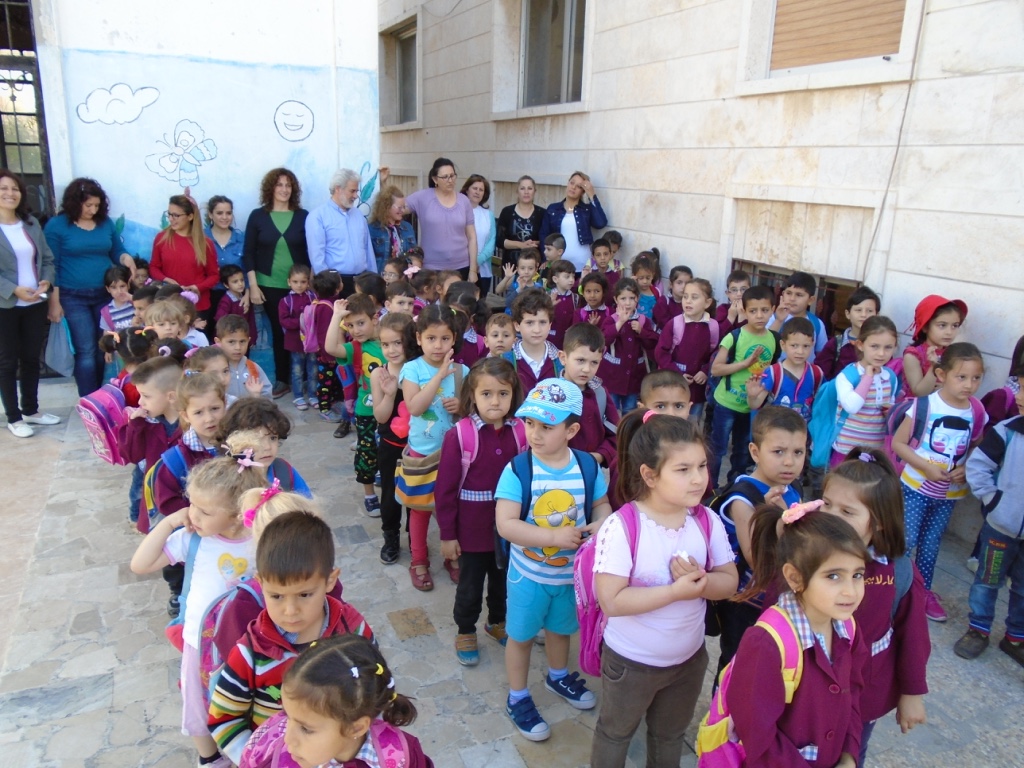
A bright beautiful morning greeted us after a peaceful night’s sleep in the Bitar’s home. Breakfast of fried eggs right from the chicken, homemade zatar, dried figs, birthday cake (another story!) and coffee gave us strength for this day. If you think our energy tanks were empty, we quickly had them filled with a visit to the KG run by this church and led by Gwath. 70 precocious children had arrived in the church yard and were standing in lines organized by age groups, singing a welcome for us. Dark hair, blond hair, brown eyes, blue eyes, some in their official KG uniforms, they said in unison “Good morning! We welcome you! Thank you for everything!” This vital ministry has never stopped and its importance cannot be over emphasized. These children will be the reconcilers of this land in the future as they learn the ways of Jesus.

Looking a little closer beyond the group to an individual, we look into the deep dark eyes of three-year-old Fala. Clutching her rolled up bread sandwich, taking intermittent tiny bites, her eyes never leave Marilyn’s face. We are told that her father suffers from mental illness and the church has tried to help him find a job, and to supervise his taking his medication so he can remain stable. This KG is a place of peace and solitude for this precious little girl and all the Falas like her.

Finally we spend some time with about twenty men of Mahardeh who have organized themselves into a kind of national guard unit to protect this place. They have 13 separate points around the city where they take turns on patrol and duty. When shells do hit homes and buildings in Mahardeh, they immediately repair the damage because they are determined that they will remain in their homes. We walk to a place where we can look just a short distance down into the valley and see how close the front line is. All of these men are volunteers with every day normal jobs: contractor, painter, carpenter, engineer, teacher. They are men of the chuches – four Greek Orthodox and one Presbyterian. They are men with families, and their families have suffered loss, but they remain constant and determined. One man named Simon who acts as the leader, invites us into his home and we are served refreshing lemonade and the always present cookies by his wife Reema. And before we leave, in solidarity as brothers and sisters in Christ, he gives us each a Russian icon of Jesus which reminds us that we are one in the Lord.

This is the church!

This is the joy I have as I travel with The Outreach Foundation: the church, The Church, THE CHURCH! I am humbled to be a part of a global body, to be present with them in times of war and in times of peace. To mourn with them. To rejoice with them. To walk with them and to sing with them and to dance with them. I pray it for each of you who reads this: to lift them up daily and see their faces when you close your eyes to pray. They are you and you are them, and we are one together in Christ.

Encountering the other

Many of the members of the consultation in Lebanon meet with the Syrian ambassador to Lebanon in dialogue about the situation in Syria.

Many of the members of the consultation in Lebanon meet with the Syrian ambassador to Lebanon in dialogue about the situation in Syria.

Our last full day at the consultation of global partners was a full day that once again began with worship and reflection. Elias Jabbour of Aleppo led us through the music of a Taize service and voices were raised in English, Latin and Arabic. Najla Kassab, who not only runs this conference center but is also in charge of Christian education in NESSL, offered a meditation on 2 Cor. 5:16-21. This portion of Paul’s letter to the church in Corinth is about reconciliation and offers that since we now know Jesus, it is through those lenses that we should look as we seek to reconcile one to the other. We need to look “beyond the flesh” and get beyond those prejudices and hatreds that hinder reconciliation. It is not a process that takes three days or months. This is April 13, the 41st anniversary of the start of the civil war in Lebanon that last for fifteen years. The process of reconciliation is ongoing here, and that was the message that Najla wanted us to hear. Reconciliation is a long journey, but we must do it from a perspective that is beyond the flesh.

Our speakers today had the task of reflecting biblically, theologically and personally on encounters with the other, and in the context we are in here in Lebanon/Syria, those encounters are of the interfaith variety: Christian to Muslim, Muslim to Christian. Rev. Agnete Holm of Denmark and Rev. Hadi Ghantous of Minyara, Lebanon, friends of long standing, carried us through several biblical passages – Old and New Testament – where these encounters take place. And Hadi offered this thought to us about how we read and understand the Bible. The Bible is about encounter. From the beginning God created someone to have an encounter with. Not only does it show us what we are meant to be, but what we really are…what we should NOT be! It is a mirror. The bible is not telling us to do that, but to learn from that.

Agnete reminded us that interfaith dialogue is about building loving relationships, but there are always ups and downs. We fall out, disagree, hate, debate. It is not about agreeing or reaching consensus, or creating harmony. It is about maintaining relationships no matter the fallings out or the comings together. That is long-term vision, not built up in three days, but three decades, the slowest type of ministry you can engage in and the easiest to destroy.

And from there we moved into an actual interfaith dialogue as Dr. Ibrahim Shamseddin, a Shi’ite Muslim, deeply religious man and friend of the Synod, came to the podium. His first words to us were that he had come with a prepared, written presentation, but as he listened to Najla’s reflection and those of Agnete and Hadi, he offered this: “We change our text when we dialogue.” He talked of the diversity of God’s creation: this is his will and should remain this way until he calls us home. If he had wanted merely clones, he would have made us this way. “Interfaith dialogue is about making relationship with others. We see ourselves in the other. Christ is a part of me as well.” And he finished with this thought, which is a good place to leave the formal part of this day: This is an earthly experiment, to live peacefully with each other. I can be with you fully without fitting into your doctrine or dogma. We do not need to clone each other. Diversity is salt, is wanted, and will remain a part of creation.

Rev. Tim McCalmont from California offers Christ's body, broken for us all.

Rev. Tim McCalmont from California offers Christ’s body, broken for us all.

And should you one day make the journey to this part of the world, you would be blessed to come to the end of a conference or consultation where the body of Christ is invited to his table. Lebanese, Syrian, American, Danish, French, Swedish and German followers share the peace of Christ and remember his sacrifice in broken bread and shared cup, for this is the encounter that changes us all.

Jars of Clay

The eight Presbyterian pastors serving in Syria (back row left to right) Jacoub Sabbaagh, Fairouzeh; Mofid Karajieli, Homs; Salam Hanna, Latakia; Elias Jabour, Aleppo; (front row left to right) Firas Ferah, Hasakeh, Kamishli and Malkieh; Ma'an Bitar, Mahardeh and Hama; Butros Zaour, Damascus; and Ibrahim Nsier.

The eight Presbyterian pastors serving in Syria (back row left to right) Jacoub Sabbaagh, Fairouzeh; Mofid Karajieli, Homs; Salam Hanna, Latakia; Elias Jabour, Aleppo; (front row left to right) Firas Ferah, Hasakeh, Kamishli and Malkieh; Ma’an Bitar, Mahardeh and Hama; Butros Zaour, Damascus; and Ibrahim Nsier.

“But we have this treasure in clay jars, so that it may be made clear that this extraordinary power belongs to God and does not come from us. We are afflicted in every way, but not crushed; perplexed, but not driven to despair; persecuted, but not forsaken; struck down, but not destroyed; always carrying in the body the death of Jesus, so that the life of Jesus may also be made visible in our bodies.” 2 Cor. 4:7-10

Marilyn led us in worship Tuesday morning around this passage of scripture which is incarnated for us here by the serving Syrian pastors who have been among us and are the reason we came: to sit with and listen to them tell the stories of affliction, persecution and perplexity of their home places, but also the resurrection stories that come from those same places. This is the church of Lebanon and Syria, and why we need each other. The global church models perseverance for us, and that is Paul’s theme. The church remains hopeful, constant. This text refers to the faithfulness of the church over the long time through difficult circumstances.

This is what the stories of the church in Lebanon and Syria do for us in the west: they become a living epistle. We lift up these stories of faith and faithfulness in Aleppo: Walking up five flights for worship because the building has been destroyed, and then building a new building because they may be struck down, but they are not destroyed as a body. Starting a water ministry for the community to love their neighbors. Or the stories from Homs: Nurturing a community in diaspora. The evangelical school that never closed despite mortar shells and bullets. The elderly home, not only providing loving care to this vulnerable population, but providing a place for worship when the church was bombed. A confirmation class that was conducted from home to home that took two years, but on Easter, 2015, the whole class was brought together. In Kamishli, the church found a way to be present to the Yazidi refugees by providing a source of fresh water and sunk a well. It seems that in these times the church could just hunker down and take care of itself. But the church is not called to survive, but to thrive. In Damascus, the church women devised a project for the refugee women to regain their dignity with the needlework project. In Mahardeh, the continuing education of young children by the kindergarten keeps faithful life incarnated. Mathilde Sabbaagh, a fourth-year student at the Near East School of Theology, who chooses not to flee to Canada because “God has not given me a word for Canada, but he has given me a word for Syria.”

Story upon story, picture upon picture, video footage that brought smiles one moment as smiling Sunday school children in the northeast of Syria showed their Christmas projects, and then sadness the next when a series of coffins was displayed, victims of a series of cruel bombings in the same city.

But as we hear the sadness and overwhelming circumstances of life in this war-ravaged clay pot of a country, we experience the resurrection as well. In Homs, a city under siege for almost three years, churches are being rebuilt and homes are being repaired and families are moving back in.

This is the church we have come to be with. This is the church we are a part of. This is the body of Christ and its life of faith and hope and love and endurance is the witness to the glory of God. May it ever be so.

Narrowing the distance

20160409 cranes photoHere we go again.

Steve and I are sitting in the airport in Minneapolis as we wait for our flight to Paris to board. From Paris, it is on to Beirut, Lebanon, and a rendezvous with our precious brothers and sisters in the National Evangelical Synod of Syria and Lebanon. As always, we are traveling with The Outreach Foundation and our intrepid leader, Marilyn Borst. After being in a consultation with NESSL and their global partners, we will make our way back into Syria.

It always make my heart sing to be setting off on the long journey to an ancient land, a land where the church was born and even Saul-turned-Paul saw the light, was blinded, healed and rose from the darkness to preach the light of the gospel of Jesus Christ.

This time I am going not as a church employee but as a theology student, and I just wanted to start this trip out with a short blog reflecting some truth from one of my classes: THL331, Jesus Christ: Liberator, led by Dr. Thomas W. Kelly, professor theology at Creighton University.

One of our texts for that class is a book that Dr. Kelly wrote with a very appropriate title for me coming from a church with the vision statement, “…on the journey with the living Christ.” The name of his book is When the Gospel Grows Feet, and it is about a Jesuit martyr from El Salvador, Rutilio Grande, and the church in El Salvador, and the gospel of liberation that has been preached from the first day of Jesus’ ministry. I have brought that book and my other required readings with me to keep up with the classes I will be missing and as I sit here in the airport, this is what I read:

“The Eucharist is the symbol of a shared table, with a stool for each person, and tablecloths long enough for everyone. It is the symbol of Creation, which requires redemption. It is already being sealed with martyrdom!” (From Fr. Grande’s last homily before he was assassinated)

This all-inclusive meal, the Eucharist, was the symbol par excellence for Rutilio that God wanted everyone to have a seat at the table of creation. He wanted this symbol of Jesus’ final meal to influence and structure social relationships very concretely. What followed in his homily was a careful argument for what the role of the church should be in the context of El Salvador, how that role should imitate the incarnation of Christ, and how it should perceive the world and its people. After a brief introduction of a church in service to the world, fragile but incarnated in history, the homily is divided into three distinct parts: (1) equality of the children of God, (2) the risk of living the Gospel, and (3) persecuted like Jesus of Nazareth. (Page 208)

There are a lot of geographical miles between El Salvador and Syria. But this I know: the church and its saints in El Salvador and Syria bring me closer to the meaning of this Gospel and that distance should be made smaller as we draw closer to it.

Dona nobis pacem.

Heartburn

That's my trip journal for four trips to the Middle East. The spine is busted from stuffing it full of inserts of hymns, printed prayers, photos and bios of my teammates, devotionals I've led and other memories on paper too important to discard.

That’s my trip journal for four trips to the Middle East. The spine is busted from stuffing it full of inserts of hymns, printed prayers, photos and bios of my teammates, devotionals I’ve led and other memories on paper too important to discard.

I was looking through my dog-eared, spine-busted journal tonight for an email address. There are so many inserts into this broken-backed book! And while I found the email, I also found this. On this night, before I begin my journey into a master of arts study of ministry at Creighton University, it reminds me of one of the big reasons I am stepping out.

I wrote this article in May, 2013, shortly before my second trip to Lebanon. I am so happy to share it tonight.


Wading Into Deeper Waters

There is a difference between heartburn and a heart that burns. The former is felt usually around some poor eating habits or gastrointestinal issues. It’s very uncomfortable if you’ve ever experienced it, but you can take a pill. The latter can also be uncomfortable, but I would describe it more as comfort-afflicting. If your heart has ever burned for something or someone, your only response is action. If you don’t do something about it, it just gets worse. There is no magic pill.

My heart has burned for the situation across the Middle East since I was in high school and my step-brother Charlie worked for NBC News in Lebanon, covering their civil war which raged for fifteen years. Every night we would watch the news and see pictures of the atrocities that Charlie had stood in the midst of to get the story to us in the U.S. It was hard to watch and understand why these things went on, but more than anything, we hoped Charlie would be safe.

My heart kept burning through the years and then I met Maya in a women’s bible study here at West Hills. A native of Lebanon, she returned there to visit family in 2006 and was stuck in the middle of another war. When she came back thoroughly shaken, heartbroken and angry, reliving her childhood, she shared with us her story. This woman of faith simply asked, “Why do they hate us?”

Then I met Marilyn Borst of The Outreach Foundation and she was taking a group of faithful women to visit the churches of the Synod of Syria and Lebanon. We would travel to Beirut and visit the churches founded by missionaries in the 1800s. We would travel to Damascus and Aleppo in Syria, doing the same. We shared worship. We shared time at a women’s conference. We were welcomed into their homes. We shared coffee and tea and sweets. We met with Iraqi refugee families who were being cared for by the church. We heard stories of courage and of love and of faith, a faith lived out for over 2,000 years.

And I came home with new friends and new connections in this global gathering we call the Body of Christ. And my heart burned to return, to be back in the company of those women and those churches, to share life together again. And we would have returned the following year, 2011, but once again, war broke out.

This time the war was in Syria – first an uprising in a small town, now a two-year old war – and we couldn’t go back because it wasn’t safe…for us. It’s not safe for them either, but they live there. Or they did.

The Presbyterian Church in Aleppo, Syria, where we sang Amazing Grace and shared with the families who were caring for Iraqi refugees was completely destroyed in November, 2012. We got this news from synod officials who had traveled to be with us in a large gathering in Erbil, Iraq. Those of us in that room who had worshipped at the church in Aleppo were grieving: grieving for the ministry that would no longer be done in that neighborhood, grieving for the plans of the renovation of a Christian high school that would have served all faiths, grieving for the work that Assis Ibrahim and his congregation had done together as incarnational witnesses. Their church home was destroyed, many of their own homes were destroyed, their jobs were gone. Those who cared for refugees were now refugees themselves as they fled to safe parts of their country or to Lebanon.

In some of Paul’s epistles he refers to a collection for the church in Jerusalem. The churches created from his and other missionary journeys were collecting money for the benefit of the persecuted church there. The Outreach Foundation and other churches in our denomination are doing the same thing for the present day persecuted churches in Syria. They are collecting money to send to the Synod of Syria and Lebanon to aid these now displaced brothers and sisters in the small but important ways they can. And the people of our church have responded to that plea in the form of a $10,000 gift granted by our Mission Team. And my heart burns with gratitude at this response. We are not called to suffer as they have been. But we are called to stand with them: to show up when we can, to release the resources that God has provided us to be used in their time of need.

This burning heart of mine will return to Lebanon in May. My prayer is that these people of God will know his peace that passes all understanding. That they will be comforted by his gracious Holy Spirit. That they would have abundant life restored to them. That they would continue to shine the light of Christ wherever they are. And that they will be strengthened in this time of trial.

“I consider that our present sufferings are not worth comparing with the glory that will be revealed in us.” Romans 8:18

And now in January, 2016, I am happy to reflect back on this. The church building in Aleppo has been rebuilt in a safer place and the saints worshipped there for the first time on Christmas. The church body never stopped meeting, climbing five flights of stairs to meet in an apartment together for the last three years.

The Aleppo College for Boys, that Christian high school, has never closed its doors during the continuing conflict, now approaching its fifth anniversary. It continues to be a place where Christian and Muslim learn side by side.

My church, West Hills Presbyterian, has given other gifts to the Syria Appeal of The Outreach Foundation totaling some $25,000. (You can give too! http://www.theoutreachfoundation.org)

I have traveled back to Lebanon three times and to Syria twice. Steve and I will be returning to both again this spring.

And the inspiration of the church in persecution has put a vision of ministry in front of me, and the fulfillment of that vision begins tomorrow night when I take my first class at Creighton University.

May God continue to cause my heart to burn, and may he inflict you with that as well.

Dona nobis pacem.