Camp Creek 21 July 2014

It was a great weekend! Loved being in Waverly, snapping my own photo of the little horse and enjoying some ice cream with my family. This was our fourth time there and we are already looking forward to next year!

Sally Gerard's avatarSally Gerard

4Starcolthand sheller

We spent the weekend visiting family and attending a really awesome farm show put on by the Camp Creek Threshers. This show has been going on for 39 years on the current show site, but we were told by one of the founding member’s sons that they started counting when they formed the club. They actually held threshing bees for several years before that!

Preserving the rural traditions that built this country is so important. Many people have no idea where their food even comes from, but think it must just appear in small colorful boxes in the freezer section of their grocery store. At this show, bunches of kids think it is the greatest thing since sliced break to run a hand corn sheller and then see the corn ground into meal by a gristmill. What? That makes corn bread, that powder? Cool. Then they go into the shed…

View original post 162 more words

A Fragile Hope

Iraq is a place with many people. They are Arab, Kurd, Turk. There are descendants from the African slave trade. They are Sunni, Shiite, Christian, Yazidi. Each of them is unique, as are we all. Each one made in the image of God and together making up the amazing spectrum of humanity. Can you imagine what the face of God looks like with each of us reflecting just a small piece of the whole?

There is also great diversity just in the Christians in Iraq. Those are the people I have gone to visit, to learn from, to encourage and to be encouraged by. There are Chaldean Catholics, Syrian Catholics, Armenian Orthodox, Syrian Orthodox, Protestants of several denominations including Presbyterian, plus others. There are churches there that go back to the beginning of the church, and they have lived with their Muslim neighbors since the founding of Islam in the seventh century. They have not always gotten along easily, but they have been neighbors and shared life together.

At one time, before the war we started in 2003, there were some 2,000,000 Christians in this ancient land of the church. That number had decreased to something like 600,000 since 2003. And they continue to leave due to sectarian violence, especially now from extremists who believe they have founded a new caliphate in Syria and Iraq.

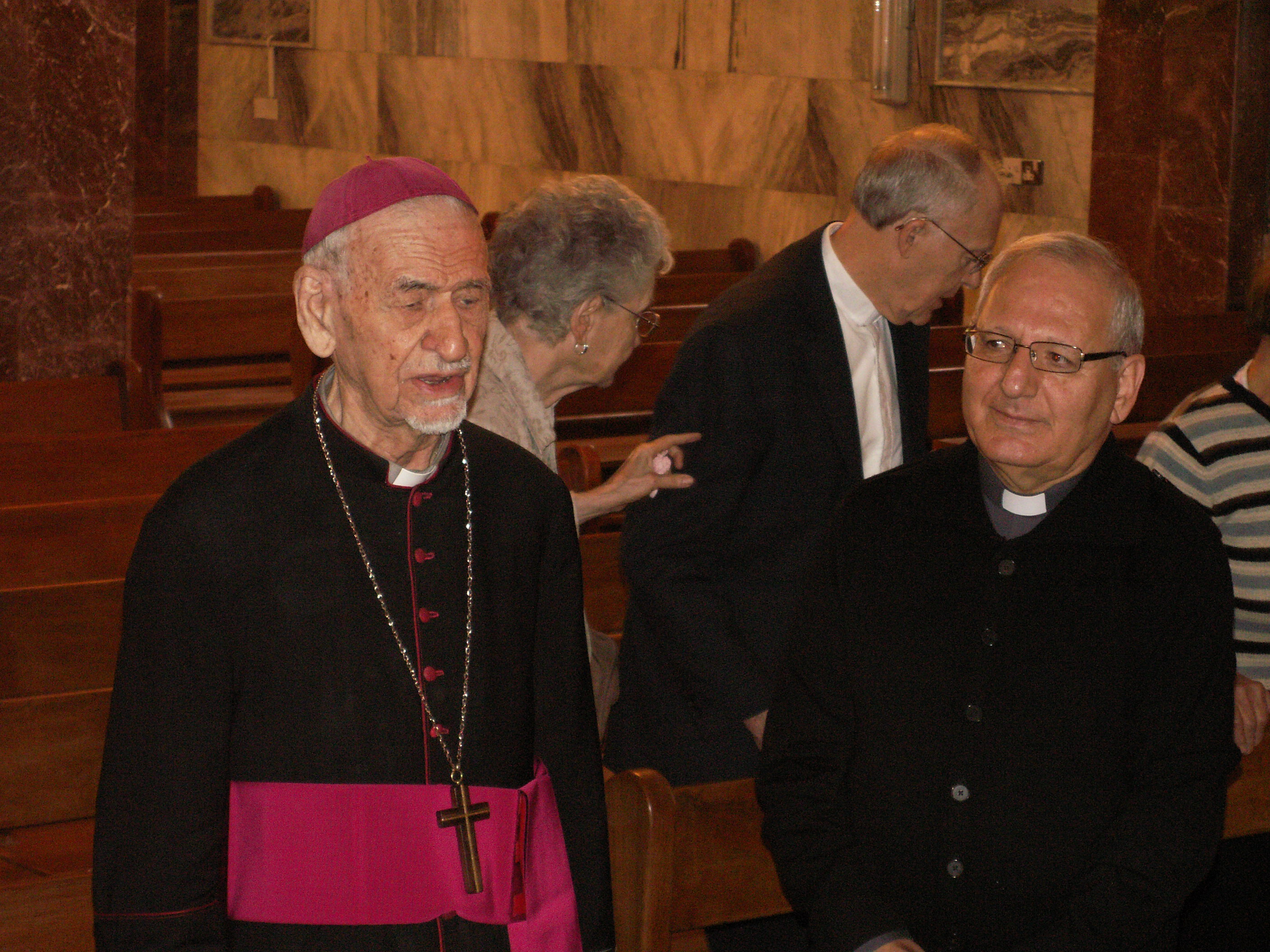
The then 93-year old former Chaldean Archbishop of Kirkuk chants in Syriac inside the sanctuary of the Chaldean Catholic Church in Kirkuk. Msgr. Louis Sako is on the right. (Nov. 2012)

The then 93-year old former Chaldean Archbishop of Kirkuk chants in Syriac inside the sanctuary of the Chaldean Catholic Church in Kirkuk. Msgr. Louis Sako is on the right. (Nov. 2012)

I have met a man named Louis Sako. When we first met he was the Chaldean Catholic Archbishop of Kirkuk. He has since been elevated as the Patriarch of this ancient church. He is a very learned man who speaks multiple languages, including Syriac, which is very close to the Aramaic that Jesus spoke. And he is a man of grace and peace, with a strong but quiet voice.

A group of us had an audience with him in his salon on the church grounds in

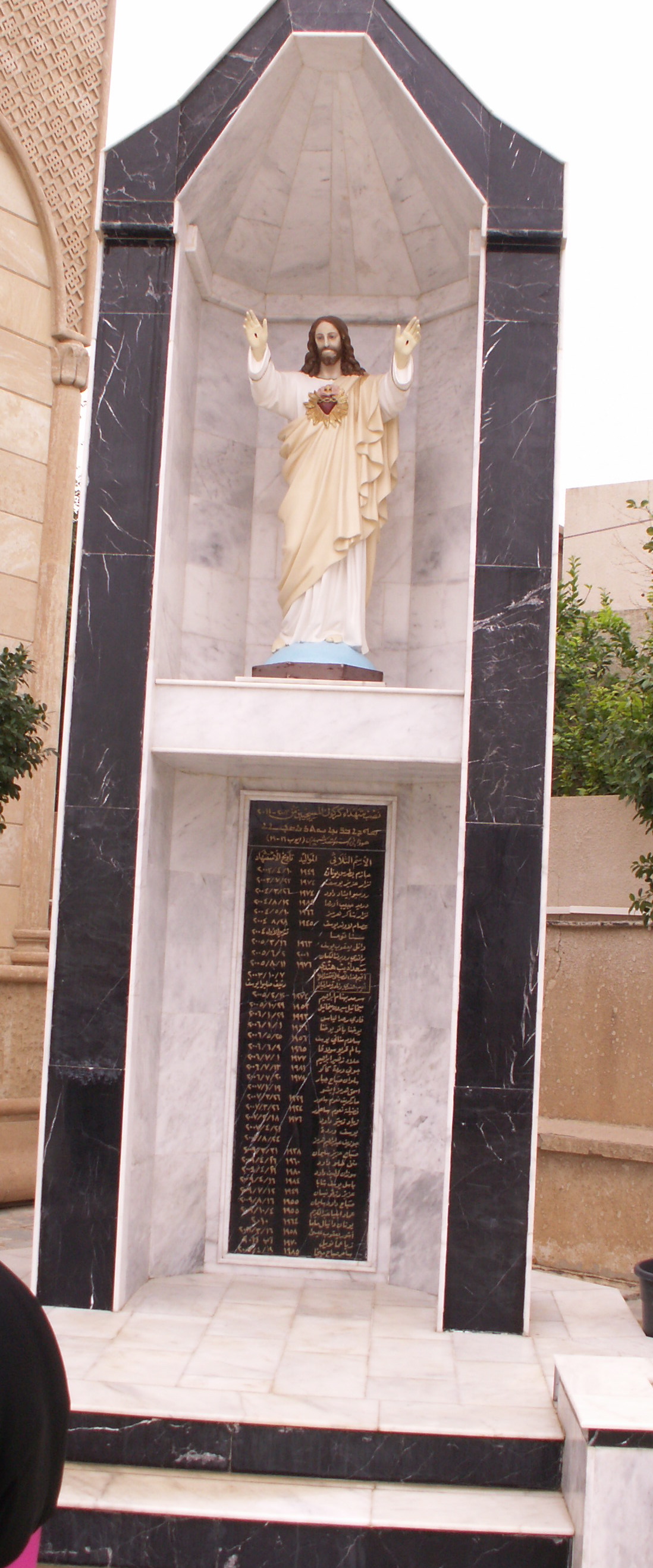
On this monument are the names of the martyred priests of the Chaldean Catholic Church since 2003.

On this monument are the names of the martyred priests of the Chaldean Catholic Church since 2003.

Kirkuk. We shared coffee and sweets; always the hospitality of the Middle East is shared with visitors! We saw the grounds of his church compound, including the school where children were learning, playing and laughing, just like any school anywhere in the world. He took us into the sanctuary of the church where his 93-year old predecessor offered ancient hymns of worship in the ancient language of this ancient church. He took us to the roof of the school and cautioned us not to take photos. There were snipers in the upper floors of buildings nearby, perfectly willing to take out those who were pointing anything at them. He showed us the sign at the front of their grounds containing the names of priests of this church who had been martyred since 2003, evidence of their journey which has not been easy or cheap, and a reminder that when Jesus calls us to follow him, that road leads to the cross.

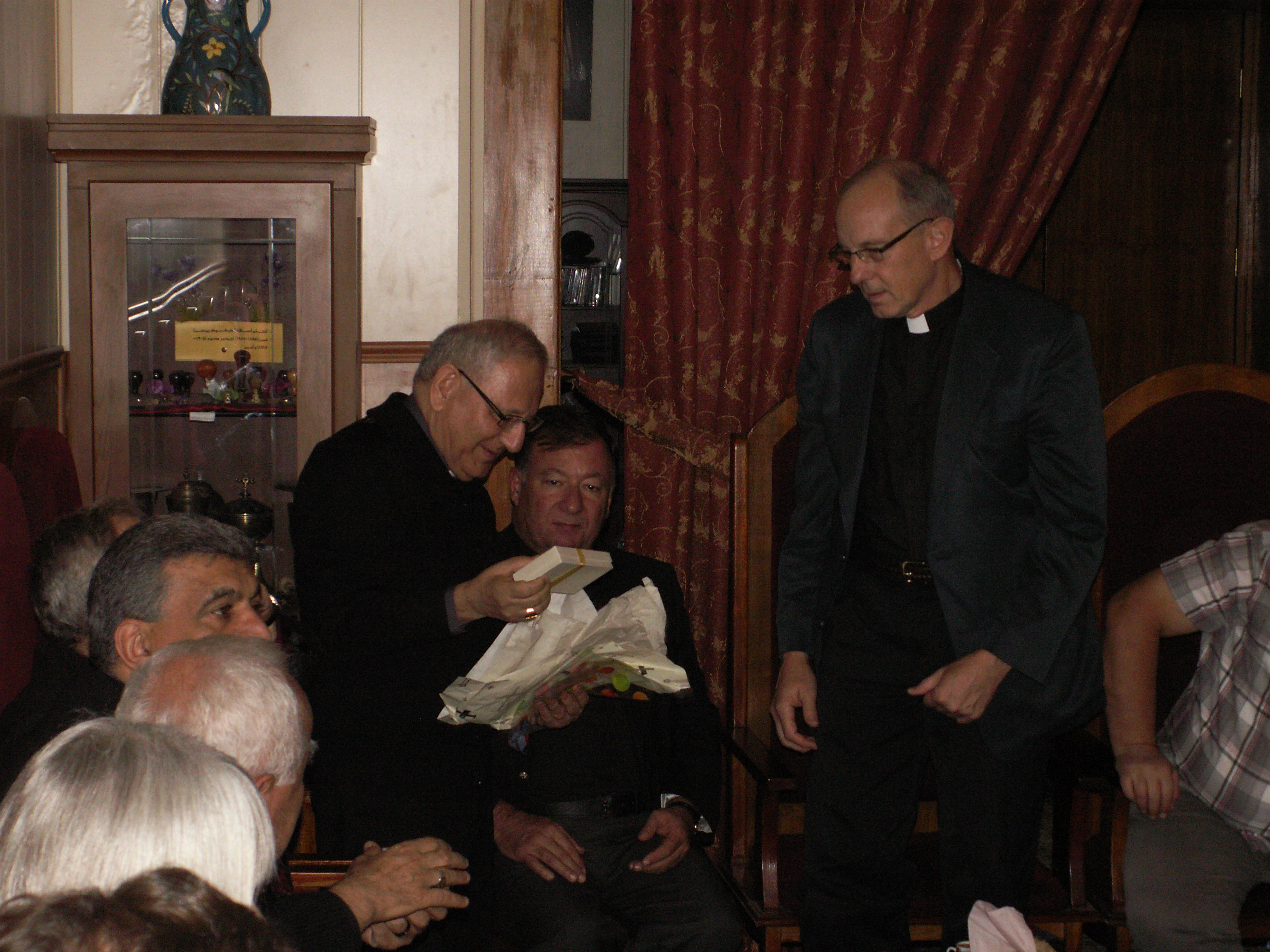
Msgr. Sako receives the cross from Rob Weingartner of The Outreach Foundation in Kirkuk, Iraq, November, 2012.

Msgr. Sako receives the cross from Rob Weingartner of The Outreach Foundation in Kirkuk, Iraq, November, 2012.

Back in his salon our leader presented him with a simple gift, a crystal cross. This symbol is the mark that we share as brothers and sisters in faith. No matter how we express that faith or what adjective we use to put in front of “Christian,” it is the cross that every one of us has in common. On the cross Jesus modeled for us what love costs.

And as Patriarch Sako opened it and accepted it he gave us these words: “It is fragile. Like our hope.”

The book of Hebrews tell us that “faith is being certain of what we hope for and sure of what we do not see.” Even when that hope is fragile.

Mourning for Mosul

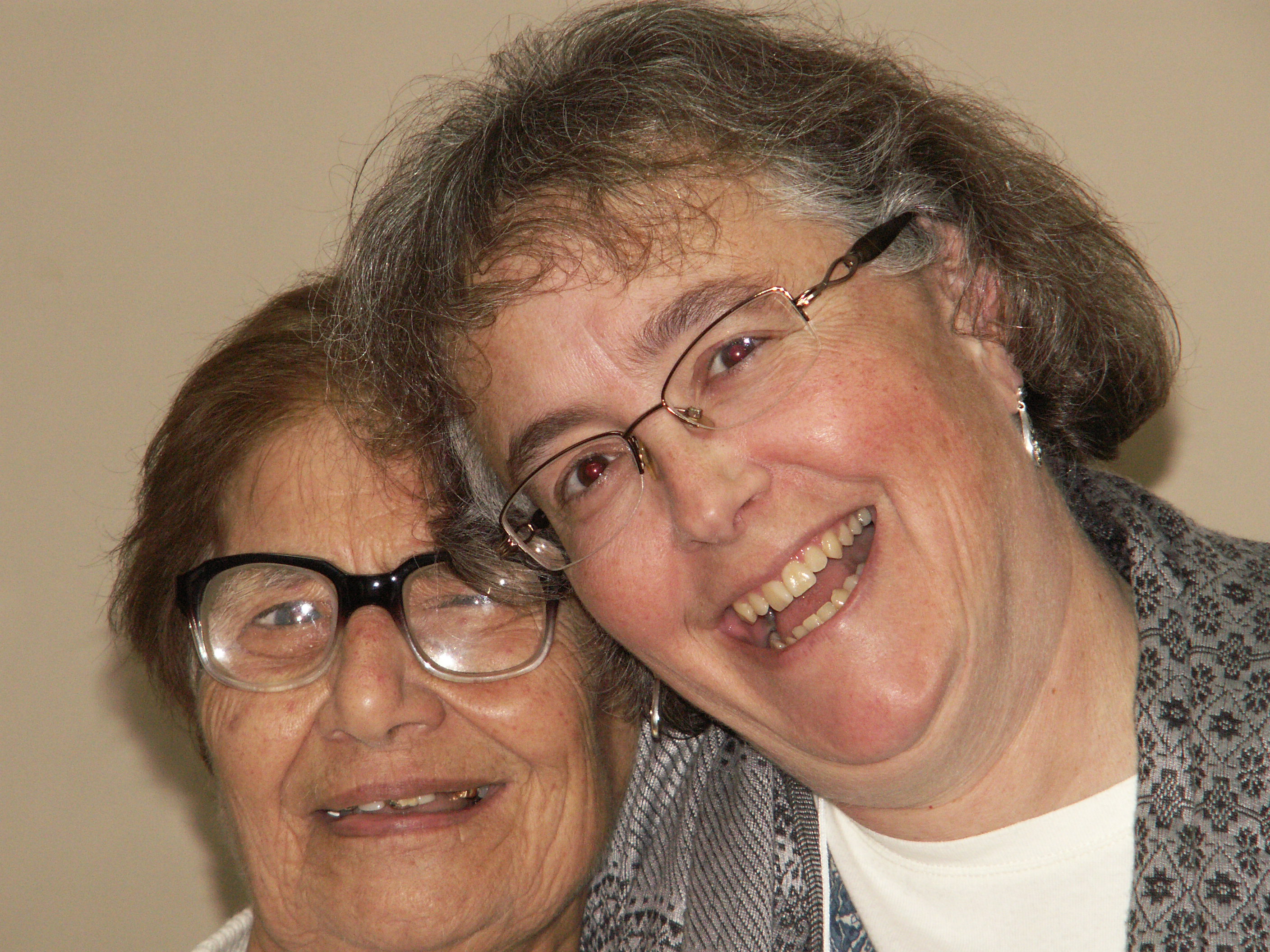
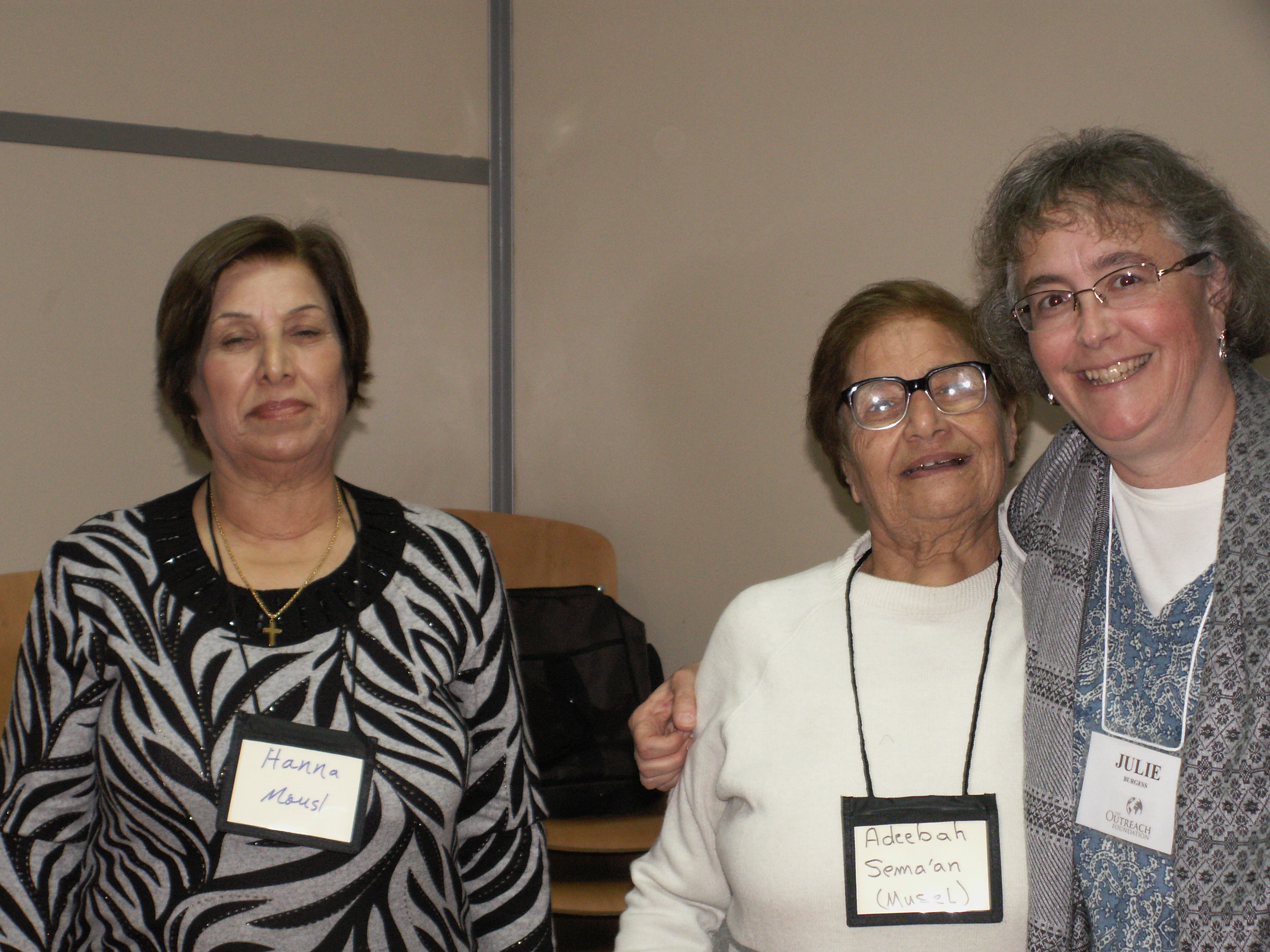
Adeeba and me

Adeeba and me

I have been privileged to travel to Iraq three times since November, 2011, to spend time in fellowship and worship with my brothers and sisters in Christ in the evangelical, or presbyterian, churches. I have been in Basrah in the south three times! I have visited Kirkuk and Erbil, and also met some wonderful people from Baghdad and Mosul. As a matter of fact, I have met the entire remnant of the church family of Mosul. Four of them are sisters, Mary, Hana, Nadira and Adeeba.

Hana, Adeeba and me in Erbil.

Hana, Adeeba and me in Erbil.

The Presbyterian church in Mosul, Iraq, was the original of a small but thriving protestant church family that was founded by missionaries in the 19th century, part of the great missionary movement of that time. These four sisters had a brother who was an elder in the church. After the war which began in 2003, insurgents came to Mosul and it became very difficult to be a professing Christian there. The brother was kidnapped and assassinated. The family was asked to pay for the bullet which killed him. I can hardly recount the memory of hearing this story from these women without seeing their faces in my mind, sorrow evident at such a loss.

They stayed in Mosul and found a way to protect the historic building of their church, even though they could not worship there any more. It was located in a very dangerous part of a city in a dangerous part of the world. Yet they managed to hire a guard who would stay there and protect it. It was more than just a precious place to them for the value of a building: it was a reminder that the church was born in places like this at the very beginning. not long after the resurrected Christ instructed the disciples to become apostles and sent them out to build the church. And they did. Mosul was the home of Chaldean Catholics, Syriac Orthodox, and others, including the Presbyterians.

Today I received word that ISIS, this conquering, brutal, extremist group that swept into Mosul a few weeks back and took control, has ordered that all remaining Christians leave or face the consequences. Death. That is what they mean. And so the remaining body of Christ in that place moves into the diaspora that is happening in other parts of the world.

I do have word that these dear sisters had already moved to a safer place in the north, leaving behind the beloved church building they had long protected since the death of their brother. And this must make the sting of his death hurt afresh. I know my heart breaks again for them and for all the faithful in a place where Jonah the prophet was buried. It is an ancient place and a reminder that the faith I profess has been handed down through generations of saints and martyrs who suffered to share the good news with us all.

All four sisters are in this photo along with our small group in Erbil. Mary is next to me and I came to understand why she would never smile with us. Her pain is great and today I am sure it has grown.

All four sisters are in this photo along with our small group in Erbil. Mary is next to me and I came to understand why she would never smile with us. Her pain is great and today I am sure it has grown.

In an upper room in Erbil, Iraq, in November, 2012, we worshipped in song and prayer. Adeeba and her sisters sang out at the top of their lungs because they could, which was something they couldn’t do in Mosul then. On a later bus trip that we took to Kirkuk, Adeeba broke into “Oh, Come All Ye Faithful.” It was the most joyful rendition of that Christmas carol I have ever heard and we all joined in.

When I wrote about “peace through music” yesterday I wasn’t thinking of that. But I am today and I am longing that Adeeba, her sisters, and all the faithful of that place will find peace again and be able to raise their voices in musical celebration.

Peace through Music

I love this video clip. It’s Jeff Vojtech, Mike Geiler, me and Alisha Sauer singing this beautiful hymn by Stuart Townend. I love the music. I love the text. I love the harmony. And when I sang it with these three, and when I listen and watch now, I feel peace.

I think music is one of those places where we do find peace. It strikes me always when I watch the musical, “The Music Man.” My favorite part of that movie is when Professor Harold Hill diverts the school board from investigating him for fraud by forming them into a barbershop quartet. These four quarreling men who seem to really have no respect for each other, blend their voices into perfect four-part harmony by simply singing the words “ice cream,” each on his own note. It’s beautiful. It’s perfect. And the fight is over; there is peace.

I wrote a lengthy essay on that topic a few years back and the thought comes back to me now in this time of global crisis. Wars in Syria, Iraq, Israel/Palestine, the Ukraine. All over the world we are experiencing the lack of peace in the form of conflict and people – people just like you and me – are being killed and maimed and are suffering in so many ways.

It is hard to watch this on a daily basis and feel inadequate to do anything about it. I pray. I cry. I shout at God and say, “Why?”

And then I think back on that fictional account of four school board members in River City, Iowa, singing together. Their fight is over and music was the answer. And I know that is very simplistic thinking.

But that is my dream and my prayer and maybe it is just that simple.

Wouldn’t it be amazing to organize the world’s largest choir? I am talking one or two or six billion people! I imagine that we would all sing just one word – peace – in whatever language was our own, in harmony. And for the briefest of moments, there would be peace and harmony.

And maybe it would lead to more moments. And maybe there would be peace.

On days like today when planes are shot out of the sky, and armies march, and missiles fly, and children die, that’s what I think about.

From, through, to

Preposition: (noun) Any member of a class of words found in many languages that are used before nouns, pronouns or other substantives to form phrases functioning as modifiers of verbs, nouns, or adjectives, and that typically express a spatial, temporal or other relationship…

“From him, through him, to him are all things.”

These words form the bridge of a beautiful worship song called To You Be the Glory, by David Nasser, Mac Powell, Shane Everett and Shawn Lewis. I was part of the worship team which presented this beautiful piece on a recent Sunday at church. Our topic for worship that day was Soli Deo Gloria…to God alone be the glory. You should find it online and listen. Better yet, sing along and offer that praise to the one who is alone worthy of it.

But that bridge…those three prepositional phrases are what really struck me. At our church we talk about being relational, and so when I revisited the definition of a preposition, there was the idea of relationship in this particle of speech. This is how the relationship between us and our creator works. I know it is so obvious, but sometimes it just hits me in a fresh new way.

From him…are all things. Everything is a gift from God, not of our making or our work.

Through him…are all things. God, this infinite creator, is the means by which they are given and received.

To him…are all things. God will reconcile all back to himself for his glory.

I am constantly amazed to be one of these “all things” and I pray that this thing does reflect his glory.

Abraham: Father of Many

It is the end of  day and time for sleep. My nightly ritual as I lay in bed is to say my prayers. As I expressed before in an earlier blog, most of my prayers are of gratitude. And those follow my prayers for peace. In between, I pray intercessory prayers for specific individuals. For the past fifteen months, since April 22, 2013, I have prayed for a father named Abraham.

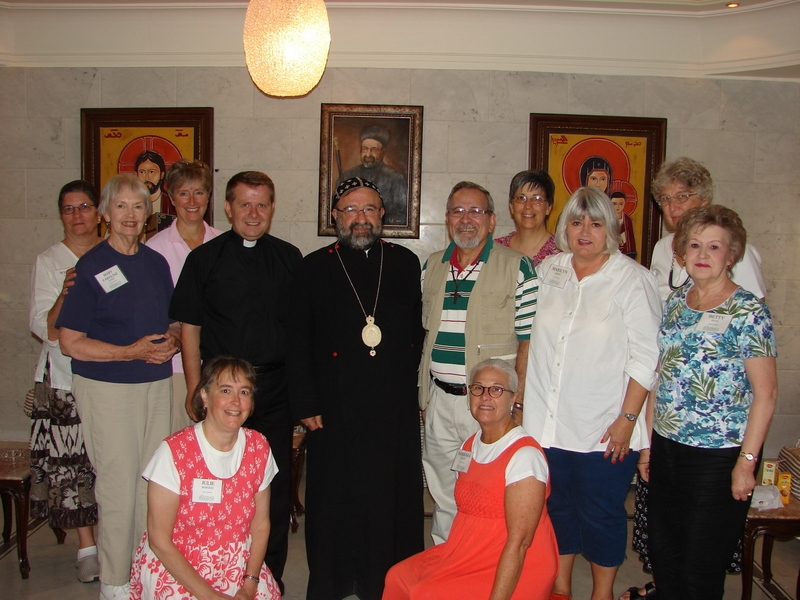
With Bishop of Syrian Orthodox ChurchIn this case, the father is actually a priest, and more properly, an archbishop. He is in the center of this photo from my trip to Aleppo, Syria, in August, 2010. His name is Yohanna Ibrahim (Ibrahim being the Arabic form of Abraham) and he is the Syriac Orthodox archbishop of Aleppo, Syria. As I look back on this photo, he is surrounded by a group of women who made this journey together – faithful women, we were called for this trip – to travel to Lebanon and Syria and learn of our brothers and sisters in Christ in a land so far from home. (How is it possible that a woman who grew up in the middle of the U.S., in Omaha, Nebraska, could travel so far from home and meet such an eminent representative of a faith that can trace its origins back to the original apostles? On this side of heaven, I will never know!)

He is an important figure in that ancient church, a church that has schools and hospitals, and has a liturgy in a language that is similar to what Jesus spoke while he was here on earth. And after the war broke out in 2011, he was a voice for peace and reconciliation. His voice was silenced along with his Greek Orthodox colleague, Archbishop Boulos Yazigi, when they were kidnapped on that day in 2013, April 22. The story is they were negotiating the release of other hostages when they were taken themselves. There has been no evidence to this day that they are alive or dead. No remains found. No ransom demanded. Just silence. And so I pray nightly between my prayers for peace and my prayers of gratitude for their safe release. They are fathers of many and they are loved and missed. Their voices for peace and reconciliation are missed. Their example and their witness are missed.

Assis Ibrahim and Abuna IbrahimWe were introduced to Msgr. Ibrahim that day by one of his clerical colleagues in Aleppo, another Ibrahim: Assis (Rev.) Ibrahim Nsier, the Presbyterian pastor of the church in Aleppo. Before meeting the archbishop, Assis Ibrahim introduced us to yet another colleague this one named Efrem, a Syriac Orthodox priest (Abuna Efrem) who served with the archbishop in Aleppo. One of my most endearing and enduring memories of that day is this photo of  Assis Ibrahim and Abuna Efrem. They were having a conversation in Arabic together, smiling and laughing as they talked. I asked them what was so funny and they told me they were talking about the differences between different branches of our faiths. “It’s a language issue,” they said. “We split over things we don’t have the words to explain. How do you find the words to explain the mystery of the divine and human natures of Christ in one being?” To this day, it strikes me that I went halfway around the world to see a pastor of our reformed faith having this amazing conversation with a priest of the ancient faith that began in the Middle East. This faith had traveled from one side of the world to the other, reforming and refining as it went, and it still exists in all these expresssions so many decades and centuries later…and we can talk together about it even if we understand it differently. There was peace; there was reconciliation; there was collegiality and conversation. It was the most marvelous picture of the church I have ever experienced.

Abram was called out of his homeland by God and told his descendants would be more numerous than the stars in the sky. God changed his name to Abraham, father of many. And tonight I am thinking of his decendants that I met in Aleppo and praying that those who call them Archbishop, Pastor, Father, will be able to do so again in peace, continuing the reconciling mission of Jesus.

Amen.

The Gift of Choir

2012 Worship Arts ladies ensembleI said to someone the other day – it was a choir director, actually – that my favorite place to be is in the middle of the choir, creating a collective offering of music from many different voices and sending it out to be received as the gift it is. My second favorite place to be is in the audience receiving that gift.

I joined the chancel choir at our church in December, 2000. I couldn’t resist the invitation to be a part of the group that was offering beautiful seasonal music back to our creator God whose incarnation we were celebrating. It was a chance to give a birthday gift to the one has given us everything! And I have been a part of that group ever since.

It was a big step for me. I have always loved to sing, but most of my singing was done in the quiet of my room where no one could hear me. I did sing with my sisters as we played our guitars and enjoyed camp songs and folk music. I sang next to my musical dad in church for many years as well. But at some point in time I became aware of my own singing voice and I didn’t think it was very good. I had last sung in a choir in high school. As girls glee ended for our sophomore class, the next step was to audition for the upper level choir which was known as Warrior Voices back in the dark ages of 1975 B.S.C. (That’s “before show choir.” I am pretty sure they hadn’t been invented yet.) The audition required sight-reading a piece of music (I can read music) and singing “My Country “Tis of Thee” alone, a cappella, for the choir director. All that came to my mind when I pictured that was…horror. It couldn’t be done by me. Fear overcame my desire to sing and that was the end of it for me. Being shy and overly self-conscious is not a good combination for stepping out in courage or faith.

Forward the calendar twenty-five years to 2000 and somehow the desire overcame the fear and I joined that chancel choir. And now you can’t keep me out of one. I have become the choir cheerleader, excited at every new person who steps through the door and wants to join. Welcome! Let’s get you some music! Let’s find you a folder and a robe! Are you soprano or alto? Tenor or bass? Come meet someone! Come sit next to me! I’m an alto and we are the friendliest group. Let’s blend our voices and make this offering to the Lord together. I drive some people nuts in that group, but they love me anyway and I love each of them.

Music really is a gift to be given and we give it all the time in our choir. But here is the other thing about the choir: it is a gift of community. You have to work together. You have to listen to each other. You need to follow the one who will bring all the parts together into a glorious whole. You have to set aside your agenda, your desires, your needs. To make it work and work well, the individual voices need to become one voice. And in the midst of our context at church, the best part of community is that we are there to care for each other: to mourn with each other at a loss, to celebrate the joys when they happen and to follow the one who calls us to be there. I think it is the best kind of community and I am so overwhelmed at rediscovering it fourteen years ago. If I could have had the kind of understanding of the community of choir in my youth, I could have filled those missing twenty-five years with precious memories, gifts of another kind.

But I try not to look back and mourn. I look forward…to Sunday. Here comes another chance to give the gift.

When we present our anthems in worship, we are of course facing our director. His name is Michael Dryver and he is an amazingly gifted musician who trusts us with some very difficult pieces. When we get it right in rehearsal he always says, “Just like that.” We know we’ve done it well in worship when his face just lights up at the end. I wish the congregation could see him the way we do. This much I know, God above, who is our only audience, can see his face. And I think in that moment his favorite place to be is in the middle of the choir with us (because he is there!) and also in the audience, receiving the gift. And I’m pretty sure he says, “Just like that.”

Choir: the gift of music and community.  Just like that.

The last rosemary

“Do unto others as you would have others do unto you.” It’s the Golden Rule and it seems so easy to follow. But you don’t often experience it at the grocery store, where everyone seems to block the bread aisle just when you need to find that one kind of bread that your husband loves. (For mine, it’s the Pepperidge Farms oatmeal bread.) I think to myself, “I want you to find your white Wonder Bread with no problem, so you can continue to make peanut butter and concord grape jelly sandwiches for those kids who are trailing behind you, especially that one who keeps ramming the kid-sized cart into everyone else in the aisle. Please, go ahead of me so you can get your bread. My husband’s needs will take the backseat to your needs, because, well, that’s one way I can follow the Golden Rule here in the bread aisle of HyVee.” There is not just a helpful smile in every aisle, there is me, trying to follow the Golden Rule. Please don’t hear what I’m not saying. This is not a sacrifice for me. I love to move over and make room for others. My needs are no more important than someone else’s. Saturdays are my days to take it easy and not try to keep to a schedule. It’s my day of rest and I am so happy when I can make someone else’s trip to the grocery store easier. I think it would be amazing if we could all just realize that our own immediate wants (needs?) are no more important, possibly even less life-and-death as the next person. I don’t need the shortest line. I don’t need the closest parking space. I don’t need to pass the person in front of me on the interstate, because we both need to get where we’re going safely. So rosemary. I had rosemary on my grocery list today. It goes in the brining solution for the chicken we will grill tomorrow. I am standing in front of all the lovely fresh herbs at the HyVee. I know they are presented to us alphabetically in the display. Between the mint and the sage is where the rosemary should be, and yet, I made it to thyme. It wasn’t there. And then this sweet bearded man was there beside me, after me really. And he was looking for rosemary too. We were both bemoaning the fact that it was gone and I said, “We have two plants growing at home.” He said he had had a large bush in his yard but it hadn’t survived the winter. I told him I thought it was too tender of an herb to survive our winter in Omaha, and that’s why we grew it inside. Just then he espied one package of rosemary. It was hanging BEFORE the mint. My alphabetical mind just hadn’t gone there. And then, he said, “Well, you were here first. You should take it.” There it was: the Golden Rule in action! And I said, “No. You found it. You should take it. We can cut some from our plants.” And he left with the prize in hand and a smile on his face. And that was more than enough for me.