Models of Faith

arabic letter n

Today, the voice from Sojourners Verse and Voice blog:

“If nothing else, prayer was the glue that enabled my freedom, an inner freedom first and later the miracle of being released during a war in which the regime had no real incentive to free us. It didn’t make sense, but faith did.” – James Foley, journalist who was executed by Islamic State jihadists this week, on his captivity in Libya in 2011, as written in Marquette Magazine

Again, the prayers of the faithful remind me that when nothing else makes sense, walking with God in faith frees and heals. I will remember James Foley, not for how he died, but for the memory of his life and his witness in a very dark place. May his parents, family and friends find comfort knowing he is in the arms of a loving God. Those left behind who shared space, indeed were shackled, with him tell stories to us of a man of God, a man who encouraged them even as he was singled out for the most harsh treatment.

I never had the chance to meet James Foley, and now I never will. There is another man of God whom I know only through the stories told by others. I will never meet him either, although I hope to walk in the city where he walked and is buried in November.

Father Frans van der Lugt was a Dutch priest, a Jesuit, who lived nearly fifty years in Syria, serving Christians and Muslims alike. He first came to my attention when I heard about him in May, 2013. The Christian community of Homs, Syria, which numbered in the tens of thousands before the war began in 2011, had been decimated. Many had been killed and many, many more had fled. About 75 remained and Fr. van der Lugt stayed with them. None of them were Catholics, but that did not matter to Fr. Frans. He stayed with them through all the days that Homs was under siege: through bombardment, through lack of utilities, through the hunger that ensued. I saw a video of him pleading to the world in Arabic to remember that they were still there. He was a shepherd, caring for his flock, and they knew his voice.

He stayed with them until he was abruptly called home to Jesus on April 7, 2014. He was killed by extremists, the same kind that took James Foley’s life in the middle of the desert this week. It was not the same group, not the same manner, but it was the same hatred, the same lack of humanity. And I know the grief of God above was the same, too.

I don’t know if my faith will ever be tested this way. I pray that it never is. But if it ever is, I want to be found encouraging those with me. I want to be found sharing what I have with those who have less. I want to be raising my voice so others will hear and respond. I want to be a witness to my God, father and creator, savior and redeemer, counselor and guide. I want to be found faithful, faithful as James Foley and Fr. Frans van der Lugt.

There are other models of faith to me in those places, still serving like Fr. Frans: Assis Mikhael in Sidon; Preacher Rula in Tripoli; Assis Ramsey in Zahle; Assis Hadi in Minyara; Joseph, Adeeb, George and Fadi, all pastors in Beirut; Najla and Mary, preachers in Beirut; Assis Boutros in Damascus; Assis Maan in Mahardeh; Assis Saoud in Hesekeh; Assis Firas in Kamischli; Assis Mofid in Homs; Assis Haitham, Assis Magdy, Elder Zuhair, Assis Farouk, Assis Magid, His Grace Patriarch Louis Sako, Saidna Habib, Msgr. Emad, Father Aram, Father Turkum, all in Iraq. These are the ones I know and have worshiped with. These are the models I pray for regularly. They are my friends, my brothers and sisters, my heroes of faith.

My friend Assis Salam Hanna at the grave of Fr. Frans van der Lugt in Homs, Syria, May, 2014.

My friend Assis Salam Hanna at the grave of Fr. Frans van der Lugt in Homs, Syria, May, 2014.

Several weeks after Fr. Frans was murdered, the two-year siege of Homs was lifted. My friend Assis (Rev.) Salam Hanna posted this picture at his grave. He also posted a video of the church bell being rung at the Evangelical (Presbyterian) Church of Homs, where his father Samuel had served as pastor for decades. Salam and Samuel were fellow ministers with Fr. Frans in Homs.

The Evangelical Presbyterian Church of Homs, Syria, May, 2014.

The Evangelical Presbyterian Church of Homs, Syria, May, 2014.

That church building, like many others in Homs, suffered damage during the siege, but the church body had returned to start repairing it even before their own homes. With God’s blessing Steve and I will walk in that place in November when we return to Syria with a team of fellow sojourners.

And this will be my prayer (thanks again to Sojourners) that I will pray at Fr. Frans’ grave:

O God our deliverer, we thank you that you have not left us alone. Thank you for the Spirit who intercedes for us. Give us wisdom beyond ourselves that we might see the path you have set before us. Grant us words that bring life to the broken, the suffering, the addicted, the lonely, and those who long for the fulfillment of your kingdom. Amen.– From Common Prayer

And I would add “those who long for the fulfillment of your kingdom, like your faithful sons James and Frans.”

Amen.


May God Bless Me This Way Too

St Francis

May God bless you with discomfort at easy answers, half truths and superficial relationships, so you may live deep within your heart. May God bless you with anger at injustice, oppression and exploitation of people, so that you may work for justice, freedom and peace. May God bless you with tears to shed for those who suffer from pain, rejection, starvation and war, so that you may reach out your hand to comfort them and turn their pain into joy. And may God bless you with enough foolishness to believe you can make a difference in the world, so you can do what others claim cannot be done.
– Franciscan Prayer

A woman stopped into church today with a flier she wanted us to post. It’s for a prayer vigil for Pastor Saeed Abedini, a reformed pastor in Iran who has been in a horrible prison since September 26, 2012, because of his faith. Folks in our church have asked for prayers for Pastor Saeed several times, I told her. They would want to know. So I have joined her Facebook group, Nebraska Prays for Pastor Saeed and the Persecuted Church, to get regular updates and to join with others who are praying for his release.

September 26, 2014, will mark two years of imprisonment for him and there will be a prayer gathering in Lincoln, Nebraska, at the west plaza of the capitol at 7:00 p.m. People across the world will be praying for his release. If it is possible for me to attend I will, but I will also honor her request to let as many people know as possible. You can read more about it here:

http://beheardproject.com/saeed

She was directed to me because of my heart for the people and the church in the Middle East, now under pressure in so many places. She seemed weary with her task. She had tried at her previous church and her current church to get the word out. One response was, “That’s the weekend of the men’s retreat.” That’s nice. Maybe the men of a church in Omaha could devote a small period of time during their retreat to pray for a brother imprisoned in another land for shepherding others who declare faith in Jesus. Or maybe not.

She seemed weary and said, “I’m just one person.” And that is where I tried to encourage her. “You are one person called by God for this purpose!” He doesn’t call the equipped, so the saying goes, he equips the called.

I am just one person, too. And yet God has placed a huge vision on my heart to help bring relief to the church in Syria and in Iraq in their work with refugees.

2 Timothy 1:7 says, “For God has not given us a spirit of fear, but of power and of love and of instruction.” (That is quoted from the Aramaic Bible in plain English. If Aramaic was good enough for Jesus, it humbles me to quote it here.)

He has taken my former timid, shy, scared self and given me power and love to do his work. I am walking into that these days with my big project. I have been bold to ask those gifted in ways I am not to help, and they have said “yes.” I may be only one woman, but I have the gift of community and I believe this project will succeed because it is not my vision, but God’s.

God has blessed me in the ways that the Franciscan prayer above puts into words. My tears don’t stop, my anger builds, I have grievous discomfort over what I see and read on the news every day. And I am foolish enough to believe that one woman can make a difference.

The Lord’s Prayer

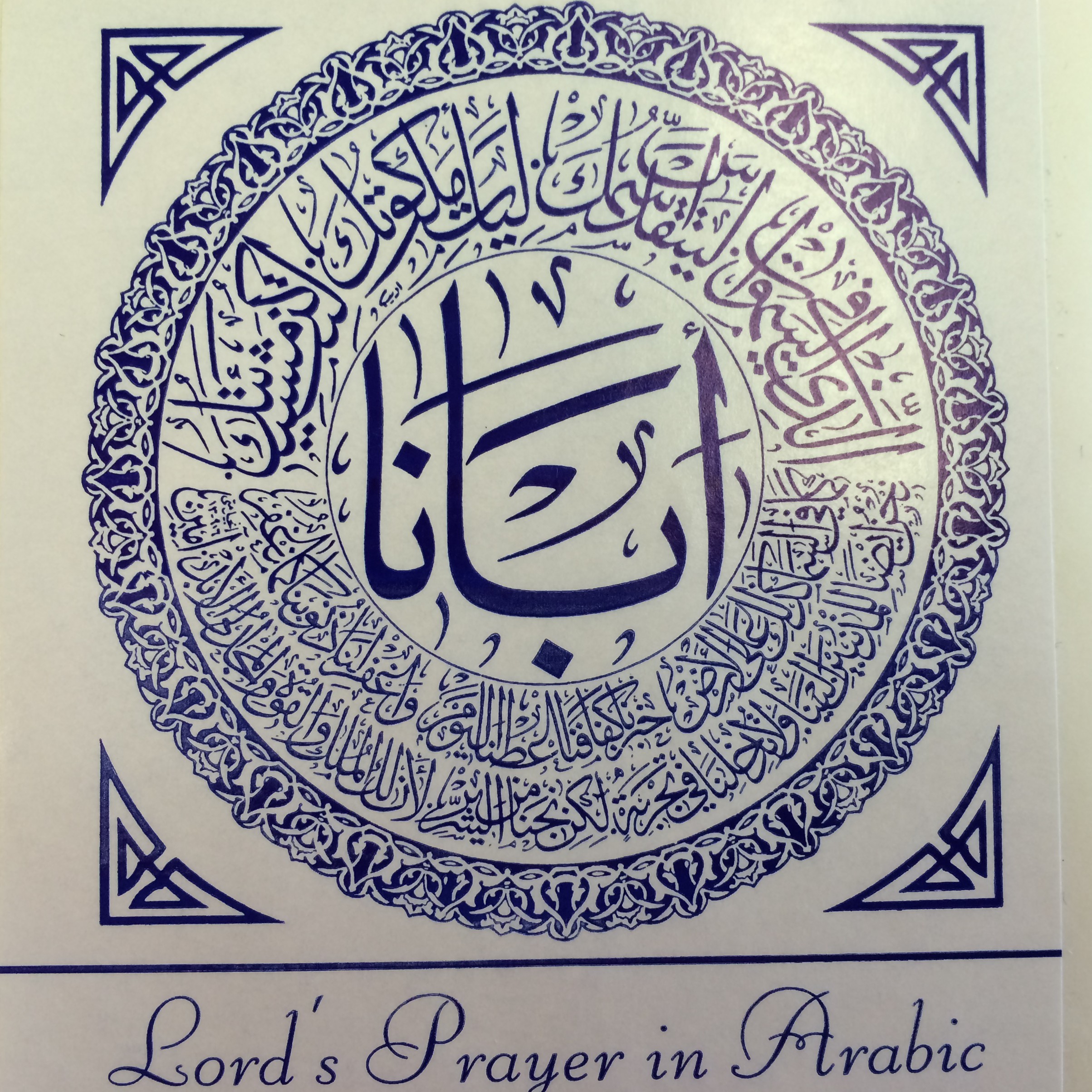
Arabic Lord's Prayer

Every night for as long as I can remember, (and I can remember a long, long time back!) I have prayed the Lord’s Prayer before going to sleep. It used to come in a long litany of prayers starting with, “Now I lay me down to sleep…” and ending with “Glory be to the Father, and to the Son and to the Holy Ghost…” And in the middle of all of those prayers came my own personal petitions of, “God bless this and God bless that. God protect him and her…” through multiple verses and choruses until I had named every family member, every cousin, aunt, uncle, friend… It was usually a very long time before I could actually fall asleep.

But the Lord’s Prayer, the “Our Father” as I called it, was the main point for me. The words of that prayer have brought me comfort in sorrow. They taught me a new way to pray one night, as if I really meant it. The night Jana and Susan were hit by that train 31 years ago, I finally listened to my heart as I said the words, “Thy will be done.” Did I really mean that? And it forced me to come to God in total humility as I prayed for his will to be done in the lives of my two sisters. I didn’t pray for their survival or a perfect recovery or that they would be without pain. I prayed that “thy will be done” and for me to accept that, even if they didn’t survive. That was one of the biggest lessons in my life.

The words of that prayer have joined me in community. I have prayed it in English while others around me were praying in Spanish, Italian, Czech, German and Arabic. I have been in the midst of the body of Christ all over this globe and been amazed at the wonder of its poetic meter. No matter what language the body was praying in, we always ended our phrases at the same point. Miraculous? Maybe. Purposeful creation? I’m pretty sure!

The first time I went to Lebanon and Syria, Dr. Emily Brink, one of our faithful women, brought us some songs to learn that they would sing in Arabic in the church. One of them was “Abana in Heaven,” the Lord’s prayer in Arabic. This is how I imagine we will all sing it in heaven someday:

I close my eyes and I’m there. Hauntingly beautiful, isn’t it?

But it was in Iraq this past March that someone else gave me an even more wonderful picture of this prayer, and so I would just close my post today with the blog I wrote that day in Basrah as we were preparing to leave our family there once more.

The Bread We Need (March 19, 2014)

We have come through our last full day in Basrah with an ending culminating in the centuries old tradition of baking naan, the Arabic flatbread served with schwarma. Bread. It is served at every meal. Daily. And it was the focus of Meryl’s devotion this evening. The Lord’s Prayer, found in Matthew 6:9-18: so familiar! Say it with us now, Give us this day our daily bread.

Meryl led us through several translations of this line from the familiar one above from the Greek to the one they use here in Arabic: Give us our bread sufficient for the day. It’s interesting how the focus changes from one of time to one of amount; the difference between a western understanding and an eastern understanding. And when the Greek is translated backward to Syriac, so close to the Aramaic which was the language of Jesus, it comes out this way: Give us today the bread that doesn’t run out. It’s the promise of sustaining life. It’s a prayer to deliver us from fear. It’s the vision of the great banquet with Messiah. It’s communion.

From our visit with the Chaldean church earlier this week, to our visit with the dear Armenian Orthodox Abuna (Father) Turkum today, to every moment with the Basrah Evangelical Church, it has been a time of holy communion.

Basrah crossThe benediction for today came at the end of our schwarma – our communion – this night. We shared words of gratefulness, words of love – the words that families share when they don’t know the next time they will gather. Hugs all around! Kisses galore! One more backward glance at sweet new babies, playing children, nodding elders. And as we left this place with gifts in hand and hearts full of pictures and stories, we walked one more time under the light of the cross at the top of the church. May it shine in this place for generations to come.

Inshallah

Thin Places

Thin places are those places where you can just reach out and grab a hold of God or feel that he has grabbed you in a big bear hug. I love those hugs and try to give as many as I can. I gave one to Julia Ann, also known as Peg, yesterday, and she hugged me back. I received an embrace from Jesus yesterday in the arms of an elderly lady with beautiful white hair. A thin place. The veil was torn. The divine invaded the mundane in an incarnational and relational way as we would say here at West Hills Church.

I have experienced those places on my holy trips to Lebanon and Syria and Iraq as well.

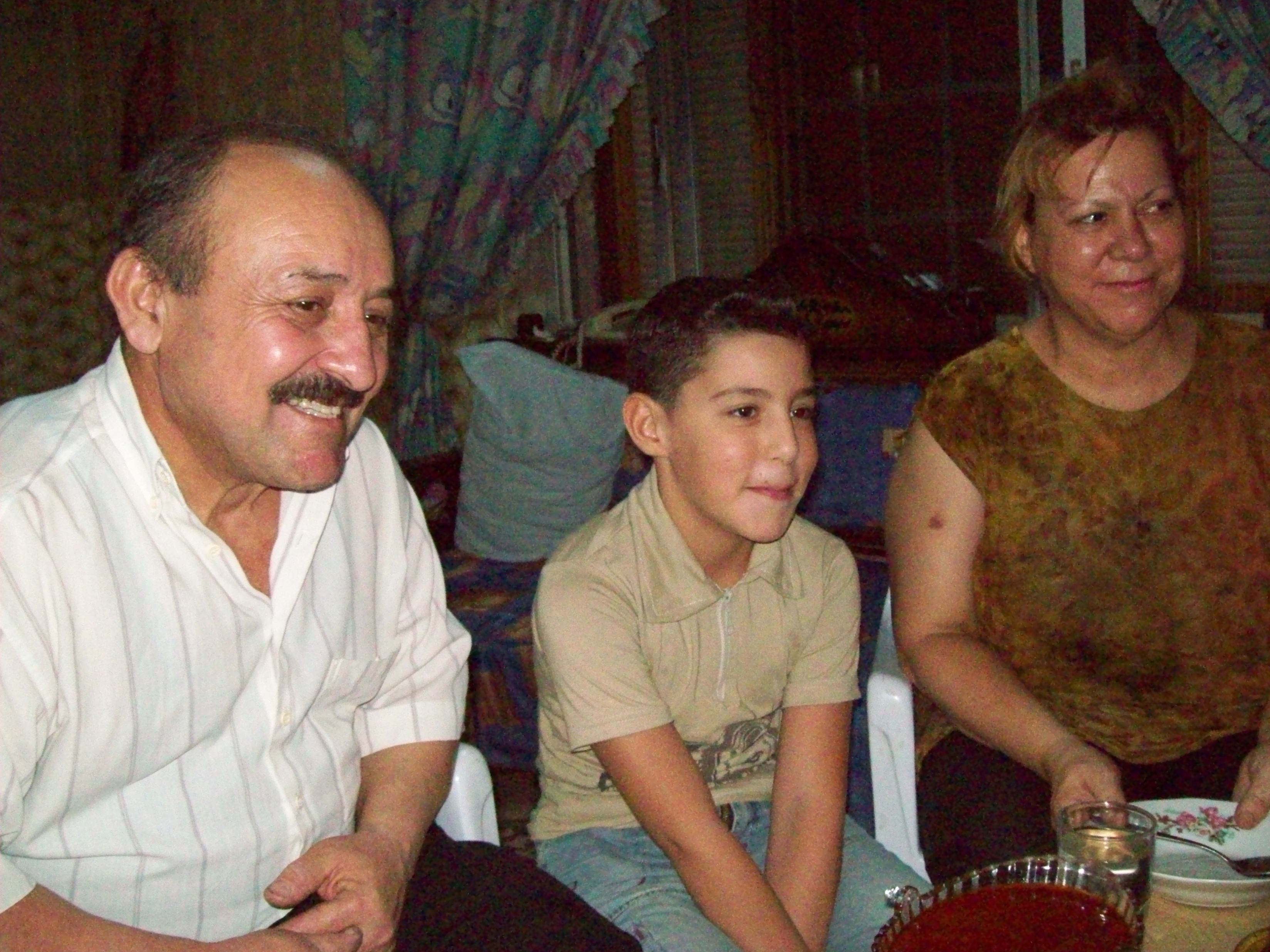
The Aziz family, refugees from Iraq living in Aleppo, Syria, August, 2010.

The Aziz family, refugees from Iraq living in Aleppo, Syria, August, 2010.

Can you imagine being invited into the home of an Iraqi refugee family in Aleppo, Syria? Neither could have I, but it happened. The Aziz family had found their way to Syria to escape the sectarian violence of Iraq due to our invasion and subsequent war in 2003. Why would they invite in the source of their loss and pain? Why would they use their meager treasure to prepare a banquet for us? Why would they let us share their dreams of a bigger and better life for their lively son Martin? Why indeed. The hospitality they offered to three American women around that table in a place not their home was the communion table that we are all invited to. It was a thin place.

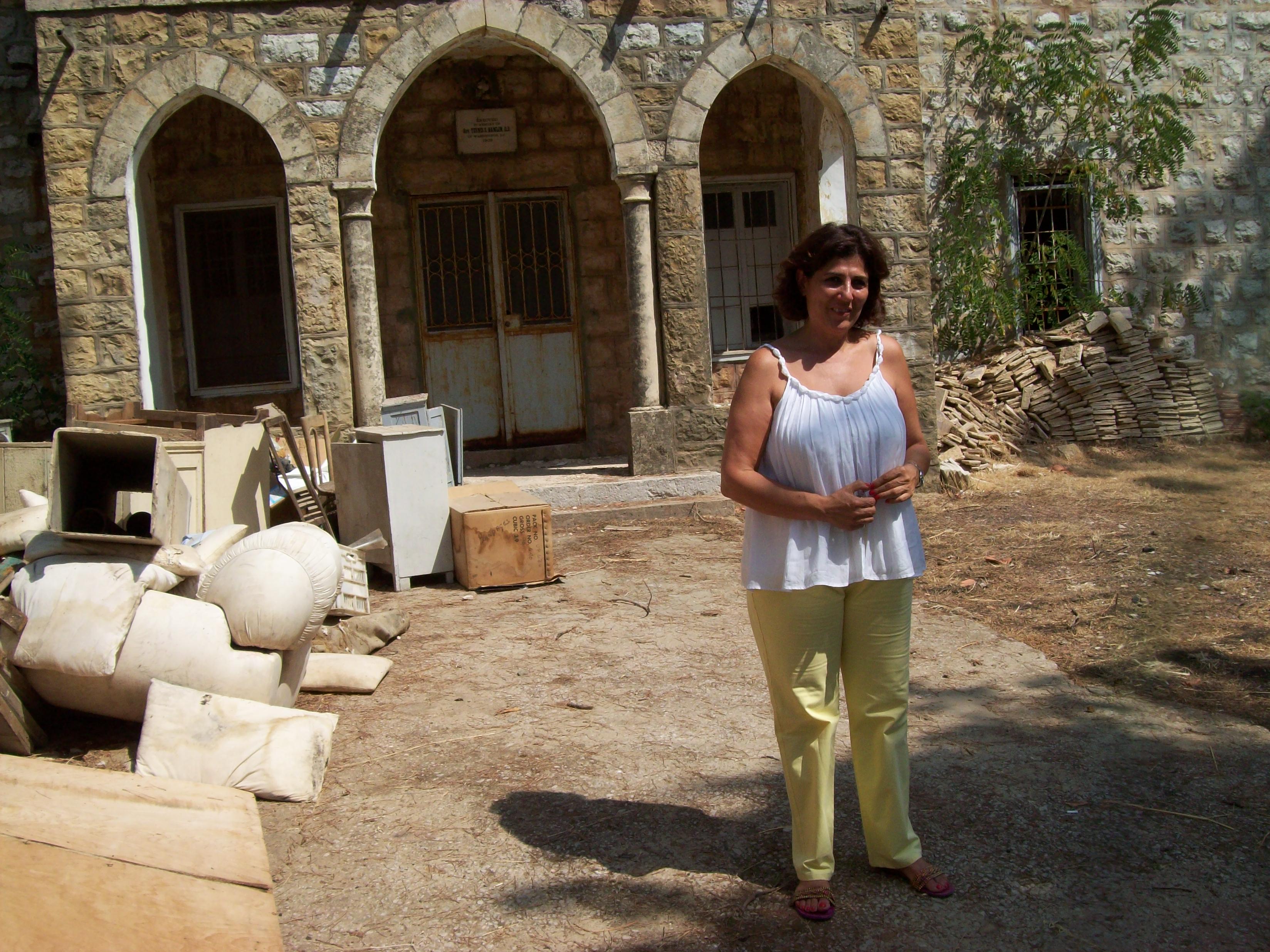
Sanaa Koreh in front of what used to be the nursing school at Hamlin Hospital. Her vision is to remodel it and give it life again as a nursing school. And when Sanaa sees it in her head, it usually happens!

Sanaa Koreh in front of what used to be the nursing school at Hamlin Hospital. Her vision is to remodel it and give it life again as a nursing school. And when Sanaa sees it in her head, it usually happens!

I have experienced that same thin place in the mountains above Beirut at a place called Hamlin Hospital. Started by missionaries to treat those with tuberculosis, it is now an elder care facility run by Jesus incarnate, also known as Sanaa Koreh. In the most holistic and gentle ways possible, Sanaa and her staff care for those near the end of life whose families cannot bear the burden anymore. Christian, Muslim, Druze, it doesn’t matter. Each is a soul loved with beautiful mountain air, fed with homemade food that was grown in the gardens, clothed, sheltered and loved amid music, games and play. When I have been to Hamlin, I have walked as close to heaven as I can get in this world.

Our presbyterian church home in Basrah with radio antenna.

Our presbyterian church home in Basrah with radio antenna.

In Iraq – in Basrah and Kirkuk – I have heard the stories of an amazing radio ministry that reaches out kilometers across the country to share the good news with those far and near. One of those stories was about a young jihadi who had been bent on killing his own sister for what he thought were violations of some religious code. And then he heard the story of the woman about to be stoned for adultery. You remember it, it’s in the book of John. “Let any among you without sin cast the first stone.” And they all walked away. And so did this young man. He walked right into the arms of Jesus because of what he heard on that radio station. He is now a pastor, working to plant churches. And I imagine he is somewhere in the north, caring for those who have fled from the fires of hell in the form of ISIS.

And another story of the radio ministry: the signals from the broadcast tower itself miraculously kept a car bomb from exploding in front of the church. It was abandoned there, ready to be exploded by remote device because the driver who was supposed to blow himself up with the church got scared and ran. The robots of the bomb squad showed up and were stopped in their tracks too. It was only after the police learned that the radio signal was being broadcast at that time that they figured it out. The frequency of the signal had stopped the remote blaster from working as well as the robots to defuse the bomb. All came out well in the end. Saved by a holy frequency! A thin place indeed.

I know when I go back to Lebanon and Syria in November I will have these encounters again, feeling those embraces from a savior who walks with me, invites me to his table in communion with family and shows me over and over again that the promises in that holy word are true.

I wrote this poem in Basrah in 2012. I come back to its message time and time again, like yesterday when Julia Ann, also known as Peg, tore down that veil once more.

“Thin Places in Him” (11-12-12, Basrah, Iraq)

Sometimes we get a chance to see
A glimpse of heaven, gloriously
Where life mundane and life divine
Come close together, intertwine
We stand upon such sacred ground
We experience love that is so profound
It happens when his word is spoken
It happens when the bread is broken
It happens when FM radiowaves
From towers emit and lives do save
It happens in him and nowhere else
It happens when we forget ourselves
And look into another’s life
And share their joy and share their strife
When we find these places thin
When we choose to enter in
We look upon his loving face
We feel the warmth of his embrace
There is no time, there is no space
There is only His amazing grace!


500 a day

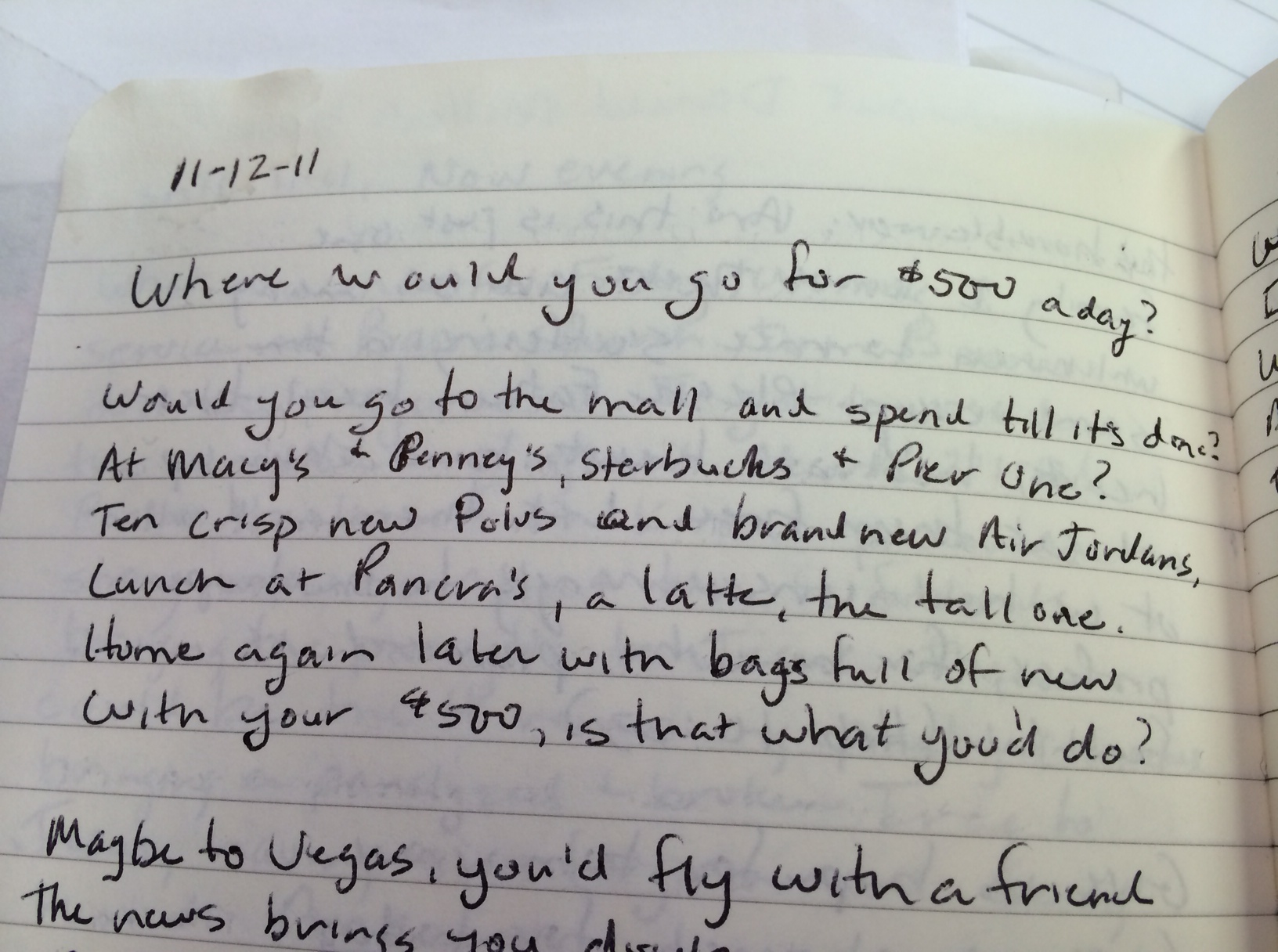
That was my journal entry for Nov. 11, 2011, while in Basrah, Iraq, and it became the first poem from my journeys. It is mostly how I journal now on those trips.

That was my journal entry for Nov. 11, 2011, while in Basrah, Iraq, and it became the first poem from my journeys. It is mostly how I journal now on those trips.

My friend Barbara and I had a great discussion in the summer of 2011 about our proposed further travels to the Middle East with Marilyn and The Outreach Foundation. We had been to Lebanon and Syria the summer before and were so excited to return, maybe even helping to plan another women’s conference that would include sisters from Iraq. We would meet at a location in eastern Syria for that to happen…and then the war broke out in March, 2011, and the trip didn’t.

Feeling so called to go back and learn from and about the church, I asked Marilyn if there was another trip going that I could participate in and she said, yes. Iraq. She was taking a group of people to Iraq because elder Zuhair had said it was safe now for us to come as American Christians. Wow. Just wow.

We had been introduced to an Iraqi refugee while we were in Damascus that 2010 August named Edward. We had the most amazing conversation about our foreign policy as Americans and our hubris in invading his home. His home was near Baghdad and he was so insistent upon returning there with his family that they did not register as refugees with the UN so they could be sent somewhere safer to begin again. He wanted to go home. To Iraq. It was Edward’s face I saw and Edward’s voice I heard and Edward’s longing to go home that put no pause in my answer when I said “yes” to Iraq.

And so Barbara and I talked. She had been in Iran with Marilyn. (“Come and See.” That was the theme of that trip!) As we roomed in Beirut that hot summer of 2010, she told me the safest place to be was in the call of God. She also said she would travel to the gates of hell with Marilyn. Fearless and faithful, that is Barbara. She’s got the lion’s heart for justice and a Free Palestine sticker on her bumper. I love her, and she goes out with Micah 6:8 on her heart like me.

And so we talked about this trip, a trip to a country torn apart (again) by a war our country had gifted to them to take out their leader. (You can argue with me about whether that was good or bad, but you can’t deny the consequences for the minority Christians and Yazidis and Turkomen who are now paying a very high price for taking out that dictator, whom we supported at one time. Go figure.)

This trip would be for eight days and that included the getting there and the coming home. It was really six days on the ground in Basrah, but we were gone for eight. The cost figured out to be $4,000. $500 a day. We laughed about the ways we could spend that easily on a long weekend or a lovely trip to Rome or Paris. But this was $500 a day to Basrah, Iraq, and back. And we said we didn’t know a better way to spend this money and we went.

We went with those four pastors who served communion at the church for the first time in over two years. We spent time listening to a woman from Mosul – Hana, later we would meet her sisters on a second trip – whose brother the church elder had been killed by Islamic extremists. We heard about the amazing ways the church ministers in a place where it is hard – but historical – to be a Christian. They have kindergartens where 98% of the students are Muslim and they teach their parents how to pray! They have elder homes to care for those seniors left behind when their families move to safer places. They have radio ministries to share God’s love in the reading of his word and his comforting presence when people call in to the shows seeking answers.

That's my trip journal for four trips to the Middle East. The spine is busted from stuffing it full of inserts of hymns, printed prayers, photos and bios of my teammates, devotionals I've led and other memories on paper too important to discard.

That’s my trip journal for four trips to the Middle East. The spine is busted from stuffing it full of inserts of hymns, printed prayers, photos and bios of my teammates, devotionals I’ve led and other memories on paper too important to discard.

My journal is full of these stories. It’s full of sheets of paper that people gave to me: hymns in Arabic, prayers in Syriac, photos and biographies of those I travel with and those we traveled to be with. The binding is broken but its contents are precious reminders of the Body of Christ that I am connected to. In the bigger picture of the body, I am probably the tear ducts and I will accept that description. I’m not the brain and I’m not the best hands and feet, but I can weep. And I do. A lot.

It was on that trip that I started journaling in verse. And it was that thought of $500 a day that poured out of my pen one morning with Barbara. And it still drives me today when I think about where I can spend the resources that God puts in my hands.

$500 a day (2011, Basrah, Iraq)

Where would you go for five hundred a day?

Would you go to the mall and spend ’til it’s done?
At Macy’s and Penney’s, Starbucks and Pier One?
Ten crisp new polos and brand new Air Jordans,
Lunch at Panera’s, a latte, the tall one.
Home again later with bags full of new
With your five hundred, is that what you’d do?

Maybe to Vegas you’d fly with a friend.
The news brings you down; to cheer up why not spend?
The night and the day there are both oh so bright.
The spinning and rolling and dealing delight.
For three days you bask in the decadent fun,
Fifteen hundred later, you’re back. It’s all gone.

No! I’ve got it! To Paris and then on to Rome!
You’ll stay a bit longer before coming home.
The Tower Eiffel, the Louvre with her Lisa,
The forum, St. Peter’s, and then… off to Pisa! T
he wine and the pasta, the chocolate, the cheese,
On five hundred a day, the living’s a breeze.
Take a cab here and tip like a king.
Life is a banquet; it makes your heart sing.
Your tour is over, your wallet is empty.
Back to work and to dreaming…Tahiti sounds tempting.

What we’ve done on this trip to spend the same money
Is fly off to Basra. I know, it sounds…funny.
We’ve followed a call to meet with God’s faithful
And discovered his light in the midst of the rubble.
This city is large, there’s a million times two.
Our corner is small, and it feels cramped too.
From the fourth floor you can see quite a ways,
There are taxis and mosques, in the distance, a haze.
Looking straight down at the view of the street
there’s a guard with a gun and all the cars beep.
The few steps we take when we leave from this place
Lead to the church, where we’ve passed our days.
We’ve gathered to learn, and to worship, and pray;
We’ve gathered as family; we’ve watched children play.
We’ve broken the bread and dipped in the hummus,
In fact, every day, they’ve overstuffed us!
In all of the talking and laughing and tears,
We’ve drawn closer to Him who calms all our fears.
We’ve heard many stories not seen on our news.
It’s not very pretty, and yet we must choose
to take every moment to listen, to learn,
to take it all home and then to discern
how to bring it to you and then how to share it.
The weight is enormous! Just how will we bear it?

But that is the wrong thought, and this is the right:
“Your yoke it is easy. Your burden is light.”
You carried the cross for the sake of us all.
You ransomed your children with grace from the fall.
When we choose to pick up our cross and to follow,
You don’t promise us ease, or a safer tomorrow.
You ask us to sell all and give to the poor.
You ask us to love and to care for our neighbor.
Sometimes that love will come at this cost:
Five hundred a day. It doesn’t seem much.

So what would you do with this bounteous treasure?
What would you use for your unit of measure?
Would you shop ’til you drop? Would you show up to be seen?
Would you archive your memories on an iPad…or dream
of a journey that follows the missio dei,
Would you give up your treasure to follow the way?
What would you do with five hundred a day?

First Communion

I remember mine and I have told this story many times.

Julie's first communionMy mom died on March 22, 1966, just a few months before I made my first communion at Christ the King Catholic Church in Omaha, Nebraska. All the other little girls in my second grade class that fall had their moms to make sure their hair was nicely done so their communion veils would sit prettily on their heads. I had a group of nuns – Sr. Mary Christine, Sr. Mary Amy and Sr. Mary Thomas – who did that for me. They took me out that day to get my hair done and just enjoy a day of fun before the big moment at mass that night. When that moment did come, those three ladies saw the distress of a shy, introverted seven-year old, and they hustled me out of mass so I could throw up in the bathroom instead of the pew. After mass was over, they brought me back into the sanctuary, up to the communion rail, so Father Hupp could serve me the body of Christ, represented in that flat, embossed wafer. I have never forgotten that moment. And every time I have come to that part of a church service anywhere, I remember who served me: Jesus. And sometimes he comes in the form of 1965-habited nuns.

Communion is important to me because of the community we become at that meal, the experience that is shared together. I posted this on Facebook on Easter Sunday this year:

“When he was at table with them, he took the bread and blessed and broke it and gave it to them. And their eyes were opened, and they recognized him.” Luke 24:30-31

Post-resurrection, they recognized the one who loved them and gave his life for them in the breaking of bread, the sharing of a meal. May we recognize that same love in our breaking of the bread and sharing hospitality. May we look across the table, into the eyes of others, and see what God saw when he made us: a reflection of the divine, something he called very good. And may we know his peace.

Happy Easter to all! Special prayers for God’s beloved in Syria, Lebanon and Iraq.

I know how important communion is in the church. I remember the look on Father Hupp’s face when he put that wafer on my tongue. I was part of something bigger than me that I would carry throughout the rest of my life.

When Jesus invites us to the table to remember him by serving others, it is a pretty important moment.

But I discovered just how important communion was to others in the church when I went to Iraq for the first time in November, 2011. I was traveling with a group of folks who are now part of the community of my life: Barbara, Marilyn, Tom M., Mark, Tom B., Elmarie and Chris. Four of these saints are pastors and even though it was important for all of us to be there, their presence was a gift beyond measure.

The Presbyterian church in Basrah had been without a pastor since 2004, when the last one fled in the midst of sectarian violence brought about by the U.S. invasion in 2003. A dear elder in the church, Zuhair Fathallah, had been leading this amazing congregation since. In their tradition, it was so important for the pastor to say the words of institution for communion, “On the night he was betrayed, Jesus took…”, and they didn’t have a pastor. There were and are very few pastors in Iraq, so they didn’t have communion in Basrah very often. Not every Sunday like in my young life in the Catholic church, not once a month like at my current reformed church, and not even once a year. They had communion when a pastor could be there, and when we showed up that November it had been over two years since they had celebrated it.

I don’t have a picture to show you, but I remember Marilyn taking a picture of the congregation. Almost to a person there were tears, and they were commemorating that event with their own cameras. I immediately thought back to Father Hupp and the joy that was on his face when he gave me that wafer. Communion is a meal with the divine among the mundane and it should be marked and remembered. And they did and it was.

One year later we returned to Basrah. They still had no pastor and Elder Zuhair was still running the church. (He also made the wine for communion!) And we had 50% more pastors in our group for a total of six: Mark, Tom, Elmarie, Rob, Larry and Marshall. And once again the cameras came out. Here is my picture from that day:

Mark Mueller, Elmarie Parker, Rob Weingartner, Elder Zuhair, Marshall Zieman, Tom Boone and Larry Richards offer communion at the Evangelical Church of Basrah, November, 2012.

Mark Mueller, Elmarie Parker, Rob Weingartner, Elder Zuhair, Marshall Zieman, Tom Boone and Larry Richards offer communion at the Evangelical Church of Basrah, November, 2012.

 “This is my body, which is given for you. Do this in remembrance of me.” Luke 22:19b

The first communion. And I remember.

Torn

I am a liberal in a conservative state. I am a pacifist who abhors violence. I think the death penalty is wrong. And I believe that my faith informs those places where I stand. I was raised a Roman Catholic but am a member of a reformed church in a quarreling denomination. To use Brian McLaren’s words, I have a “generous orthodoxy.”

And today I am torn.

I have said it before and I will say it again, I believe every human – every human – is made in the image of God. There is a reflection of the divine in each of us. I also believe we each have the capacity to hurt one another. Horribly. We covet what is not ours and take it. We wield power at the expense of those with less. We waste. We ruin. We kill. It happens all over the world and it happens because people who were created in that precious and beautiful image of God also have free will, and we exercise it. And God does not violate it.

I am torn because in the midst of what is happening in the world today and has happened in my own family in the past year, my belief that we are all capable of good is being challenged, that there are people who deserve to die.

Cathy smiling down at her nephew, Jared who was just four years old.My baby sister Cathy was raped and murdered in Riverside, California, on March 24, 2013. That was Palm Sunday when we were all singing “Hallelujahs” and waving our palm branches to begin Holy Week. Cathy was 48 years old. It was a horrible, horrible crime committed by a man with a long record of mental illness and criminal acts. My remaining sisters and I are heading out for what may be the only hearing he receives; there has been none to date. We will be invited to give victim impact statements and I have been weighing what words of forgiveness I can offer this man to be a good example to others of Christ’s example to me. But my mind wants to overrule my heart and my conscience and just let him know my hate and my hurt and that of my family and that as he killed Cathy, he should also be killed. Executed.

I am torn.

The news of what is happening in Syria and Iraq and Lebanon, the relentless murdering quest of ISIS to establish their obscene caliphate over the dead bodies of those they deem infidel and apostate has completely messed with my desire for peace through diplomacy. Last night I just wanted to bomb them back to the hell they came from. I want to beg forgiveness from people I know in Iraq who are now suffering even worse consequences from our 2003 invasion. Why they would ever let me in their homes, I don’t know, but they have. I sit here in Omaha on a sunny day in the peace of an air-conditioned building and thousands of them are trapped on a mountain in 130 degree heat watching their children die of thirst and exposure. And I am grateful that we have dropped bombs on the jihadis who have trapped them there.

I am torn.

And it made me think of Dietrich Bonhoeffer, a great reformed theologian of the last century who died in a German concentration camp shortly before it was liberated by Allied forces in 1945. His books are read still today: Life Together and Discipleship remind us of how to walk this journey as Christians. And what was his crime? He was part of a conspiracy to assassinate Adolph Hitler and he was captured, imprisoned and executed for it. He was torn, too.

“We have been silent witnesses of evil deeds. We have become cunning and learned the arts of obfuscation and equivocal speech. Experience has rendered us suspicious of human beings, and often we have failed to speak to them a true and open word. Unbearable conflicts have worn us down or even made us cynical. Are we still of any use? We will not need geniuses, cynics, people who have contempt for others, or cunning tacticians, but simple, uncomplicated, and honest human beings. Will our inner strength to resist what has been forced on us have remained strong enough, and our honesty with ourselves blunt enough, to find our way back to simplicity and honesty?” (Letters and Papers from Prison)

So, I am torn.

But it seems I am in good company. Today I do confess my sins of hatred and hypocrisy. And I know that God hears and he forgives. And today, that will have to be good enough.

The Key

Church keysThose are my church keys. One is the master key and it opens most of the doors here. One is just for the pantry. Sadly, we had to rekey it and carefully distribute the keys, as food and supplies kept going missing. (People never seem to steal our bibles…) One opens the server room and one the mechanical rooms. There is an Allen wrench to dog out the doors from the inside so they will open freely when they’re not locked. There is a key to the safe and a key to the cabinet for important papers. There is a security fob for online banking. There is my flashlight from the Sunday school at the Evangelical Church in Damascus, Syria, which always says to me that even when your light is small, you can still shine it out in love!

And then there is that daily reminder, the most important key of all…pray for the oppressed. It was a gift from a dear friend who opened the doors to me to the church in the Middle East. And if you didn’t already know it, they are suffering greatly these days, and they need our daily prayers.

This came in my email box this morning. It’s the story of another Christian village in northern Iraq – biblical Ninevah – where ISIS has forced the Christians and other minorities out in their zest to create a new Islamic Caliphate and spread their version of a dangerous ideology. http://www.bbc.com/news/world-middle-east-28686998

The town is Qaraqosh and it was one of the places Christians had fled to from Mosul, another ancient place in the history of my faith. The historical loss of artifacts is devastating. The loss of life is too much to bear. And so I pray for oppressed…and the oppressor. This prayer seems to put the words in my mouth and heart that I am just too grieved to come up with myself. Won’t you join me?

From the Book of Common Prayer:

O God, you made us in your own image and redeemed us through Jesus your Son: Look with compassion on the whole human family; take away the arrogance and hatred which infect our hearts; break down the walls that separate us; unite us in bonds of love; and work through our struggle and confusion to accomplish your purposes on earth; that, in your good time, all nations and races may serve you in harmony around your heavenly throne; through Jesus Christ our Lord.

Amen.

And amen.

Dancing in Circles

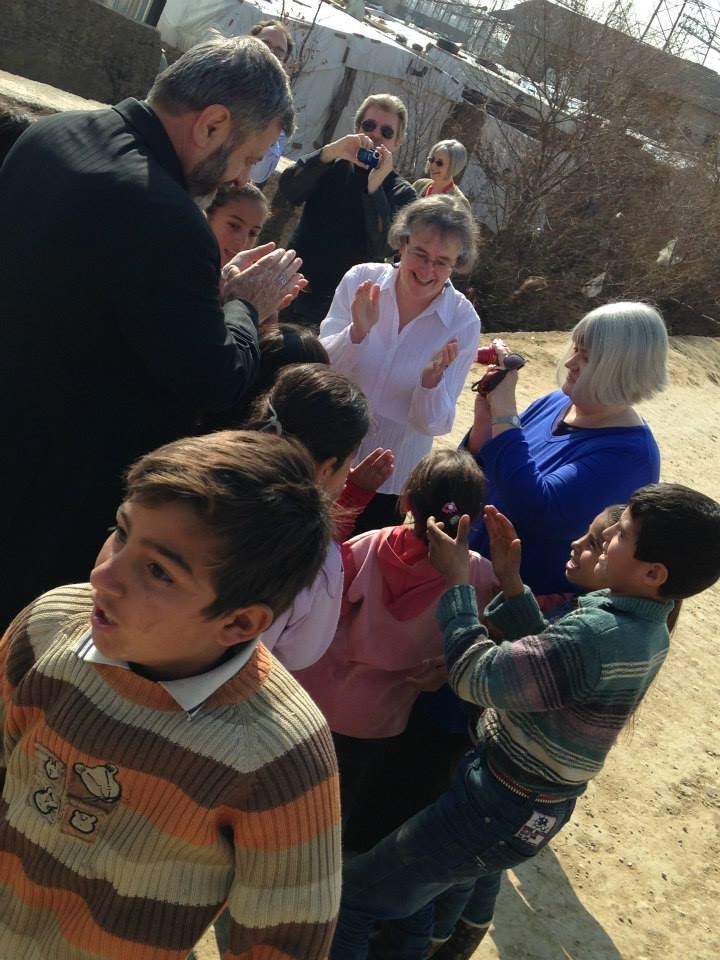
Dancing in circles photoI visited a refugee camp near Zahle, Lebanon, on a trip I made in May, 2013. It was part of a visit of presence to offer fellowship and encouragement to Christian brothers and sisters in the National Evangelical Synod of Syria and Lebanon who were dealing with the refugee crisis from the war in Syria.

Eight months later, in January, 2014, I went back on a similar trip and we visited another camp near Zahle which hadn’t existed eight months before. Instead of visiting a pretty small camp of 45 families, we visited one of two in the area that was now home for thousands of families.

In Lebanon alone, there are approximately 1.5 million refugees from the Syrian war which has raged since March, 2011. It was the onset of that war that had prohibited my wonderful group of faithful women friends from returning to Syria to take part in a women’s conference that would allow more of our Iraqi sisters to join us. So much sorrow and pain is concentrated in this small part of our world. It’s heartbreaking to say it in my most understated words. There is an ever-flowing stream of tears to accompany them.

At that camp last January our group was surrounded by a sight I never expected to see in such a place of sadness. Children singing and dancing came pouring down the dirt road beside the sewage filled canal that drained their camp. Singing. Dancing. Smiling. Laughing. We were swept into their midst and joined in.

From that encounter came this poem:

Down the hill they came running with smiles on their faces
Unusual I thought, in this saddest of places
But they sang and they clapped
Oh my word! How infectious
So we clapped and we smiled in this moment of grace notes.
They grabbed on to our hands and soon came the dance
Round and round we did circle in this desperate land
We kissed and we cooed, just like all children do
Voices raised in sweet choruses of “I love you too!”

It wasn’t ‘til later when I learned that their song
Was a reminder of all in their world had gone wrong
“I used to live in a house” – so it went,
“But now I live here in this land in a tent.
Tomorrow will come and a house there will be
For me and my folks, the whole family.”
It made me so grieved for the horror of loss
I still cannot grasp the heartbreaking cost
Of hatred and war that would drive them away
From the home where they spent every night, every day.

And yet here we were in a circle of glee
And they had this vision, in mind’s eye could see
That where they were now was just temporary
Even though it was alien, maybe even quite scary
It was only a stop on the journey of life
That someday the end would come to this strife
And they would be dancing and singing with glee
Enlarging their circle with people like me
God in heaven above, hear my prayer, let it be.

I came home from that place with an idea I have no clue how to proceed with, but I have. I have a wonderful co-worker, friend and brother in Christ who has taken a version of this poem and put it to music. Mike did it because he could see what I saw with my heart and not with my eyes. I would like to take that song and make a video to share the story of the suffering and the sadness, but also of the hope that exists there, to raise money for the needs of the refugees from this war and the now renewed war in Iraq. I want the video to be able to take on a life of its own – it won’t be mine or Mike’s or whoever can help me make it – but it will be a tool that almighty God can use to bring a small amount of love to a place of overwhelming need.

Please pray with me that God will make a way.

Amen.

A Fragile Hope

Iraq is a place with many people. They are Arab, Kurd, Turk. There are descendants from the African slave trade. They are Sunni, Shiite, Christian, Yazidi. Each of them is unique, as are we all. Each one made in the image of God and together making up the amazing spectrum of humanity. Can you imagine what the face of God looks like with each of us reflecting just a small piece of the whole?

There is also great diversity just in the Christians in Iraq. Those are the people I have gone to visit, to learn from, to encourage and to be encouraged by. There are Chaldean Catholics, Syrian Catholics, Armenian Orthodox, Syrian Orthodox, Protestants of several denominations including Presbyterian, plus others. There are churches there that go back to the beginning of the church, and they have lived with their Muslim neighbors since the founding of Islam in the seventh century. They have not always gotten along easily, but they have been neighbors and shared life together.

At one time, before the war we started in 2003, there were some 2,000,000 Christians in this ancient land of the church. That number had decreased to something like 600,000 since 2003. And they continue to leave due to sectarian violence, especially now from extremists who believe they have founded a new caliphate in Syria and Iraq.

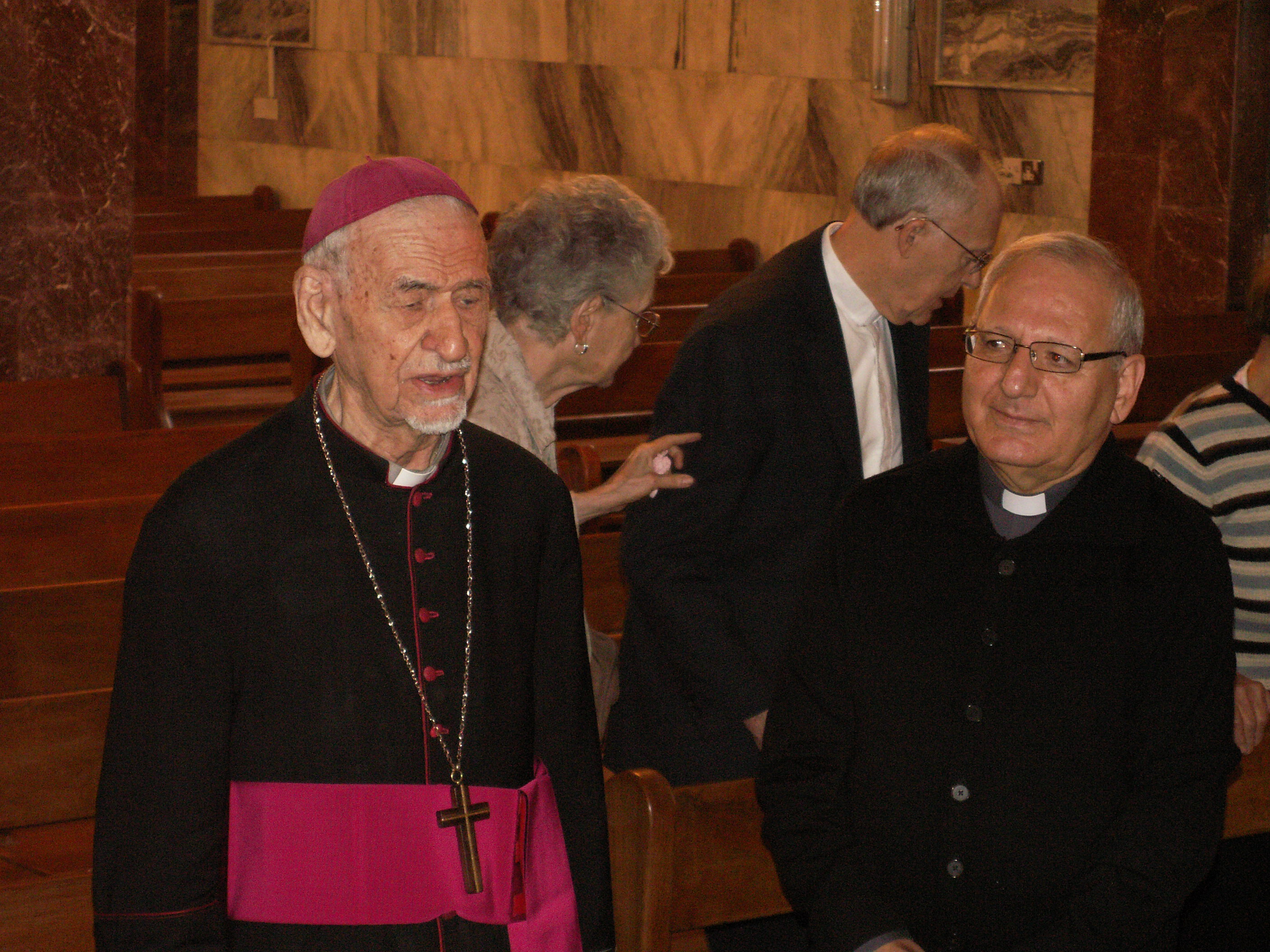
The then 93-year old former Chaldean Archbishop of Kirkuk chants in Syriac inside the sanctuary of the Chaldean Catholic Church in Kirkuk. Msgr. Louis Sako is on the right. (Nov. 2012)

The then 93-year old former Chaldean Archbishop of Kirkuk chants in Syriac inside the sanctuary of the Chaldean Catholic Church in Kirkuk. Msgr. Louis Sako is on the right. (Nov. 2012)

I have met a man named Louis Sako. When we first met he was the Chaldean Catholic Archbishop of Kirkuk. He has since been elevated as the Patriarch of this ancient church. He is a very learned man who speaks multiple languages, including Syriac, which is very close to the Aramaic that Jesus spoke. And he is a man of grace and peace, with a strong but quiet voice.

A group of us had an audience with him in his salon on the church grounds in

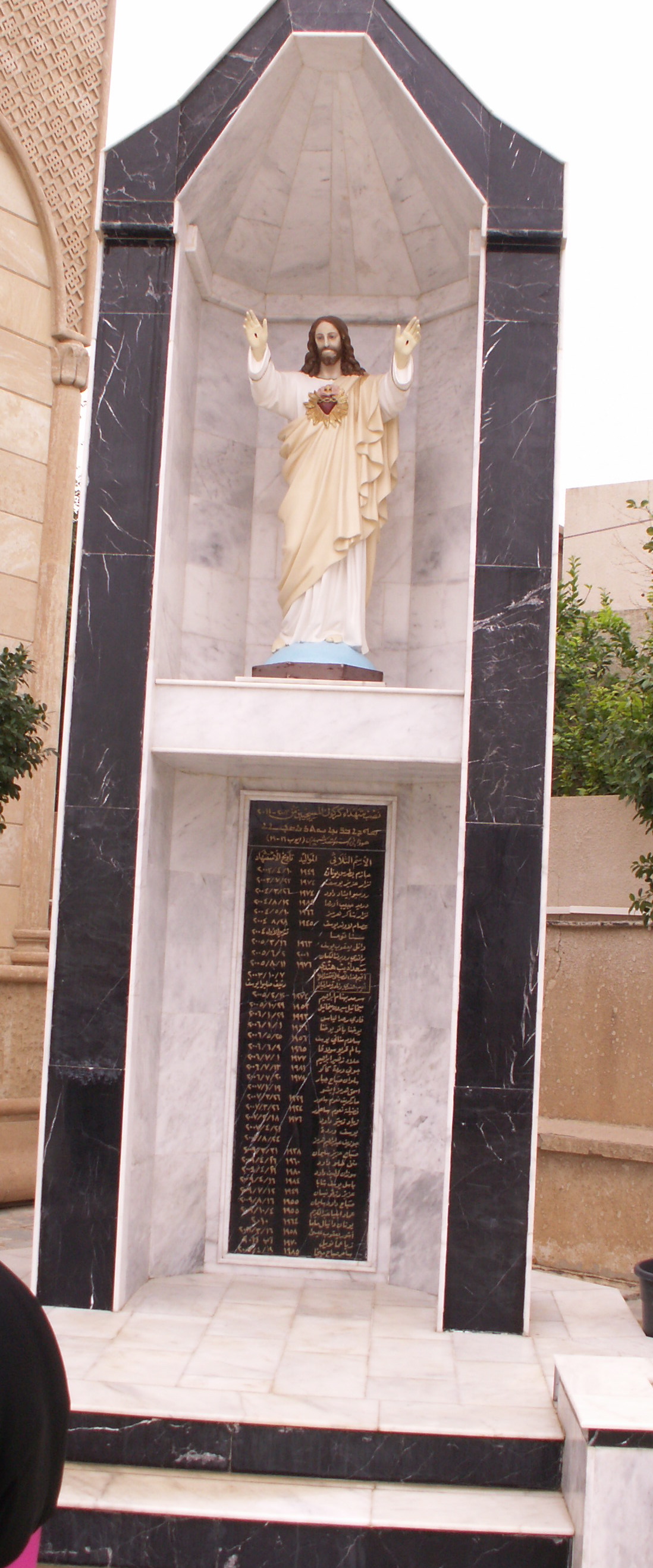
On this monument are the names of the martyred priests of the Chaldean Catholic Church since 2003.

On this monument are the names of the martyred priests of the Chaldean Catholic Church since 2003.

Kirkuk. We shared coffee and sweets; always the hospitality of the Middle East is shared with visitors! We saw the grounds of his church compound, including the school where children were learning, playing and laughing, just like any school anywhere in the world. He took us into the sanctuary of the church where his 93-year old predecessor offered ancient hymns of worship in the ancient language of this ancient church. He took us to the roof of the school and cautioned us not to take photos. There were snipers in the upper floors of buildings nearby, perfectly willing to take out those who were pointing anything at them. He showed us the sign at the front of their grounds containing the names of priests of this church who had been martyred since 2003, evidence of their journey which has not been easy or cheap, and a reminder that when Jesus calls us to follow him, that road leads to the cross.

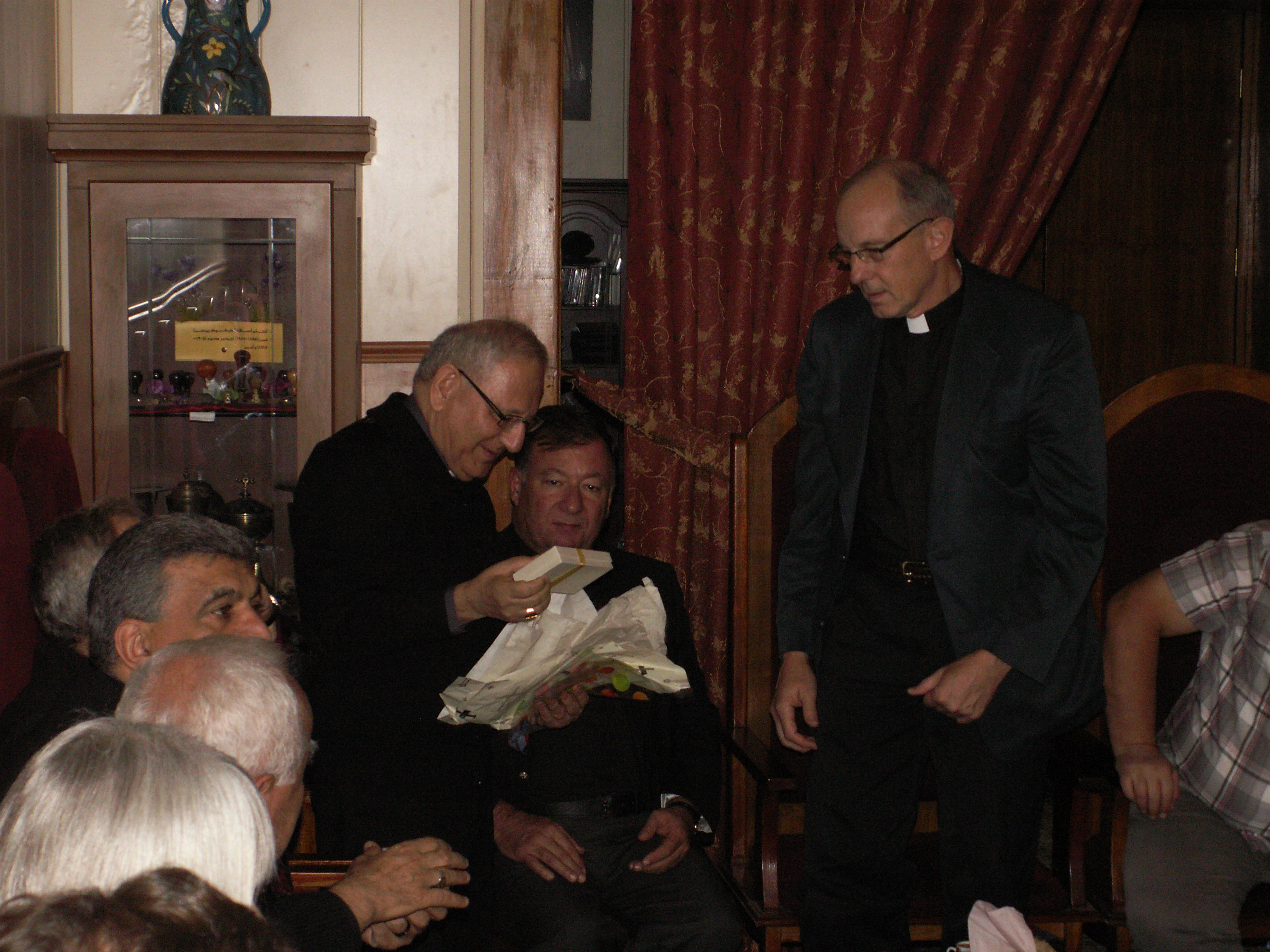
Msgr. Sako receives the cross from Rob Weingartner of The Outreach Foundation in Kirkuk, Iraq, November, 2012.

Msgr. Sako receives the cross from Rob Weingartner of The Outreach Foundation in Kirkuk, Iraq, November, 2012.

Back in his salon our leader presented him with a simple gift, a crystal cross. This symbol is the mark that we share as brothers and sisters in faith. No matter how we express that faith or what adjective we use to put in front of “Christian,” it is the cross that every one of us has in common. On the cross Jesus modeled for us what love costs.

And as Patriarch Sako opened it and accepted it he gave us these words: “It is fragile. Like our hope.”

The book of Hebrews tell us that “faith is being certain of what we hope for and sure of what we do not see.” Even when that hope is fragile.