Voices of anger. Voices of Peace.

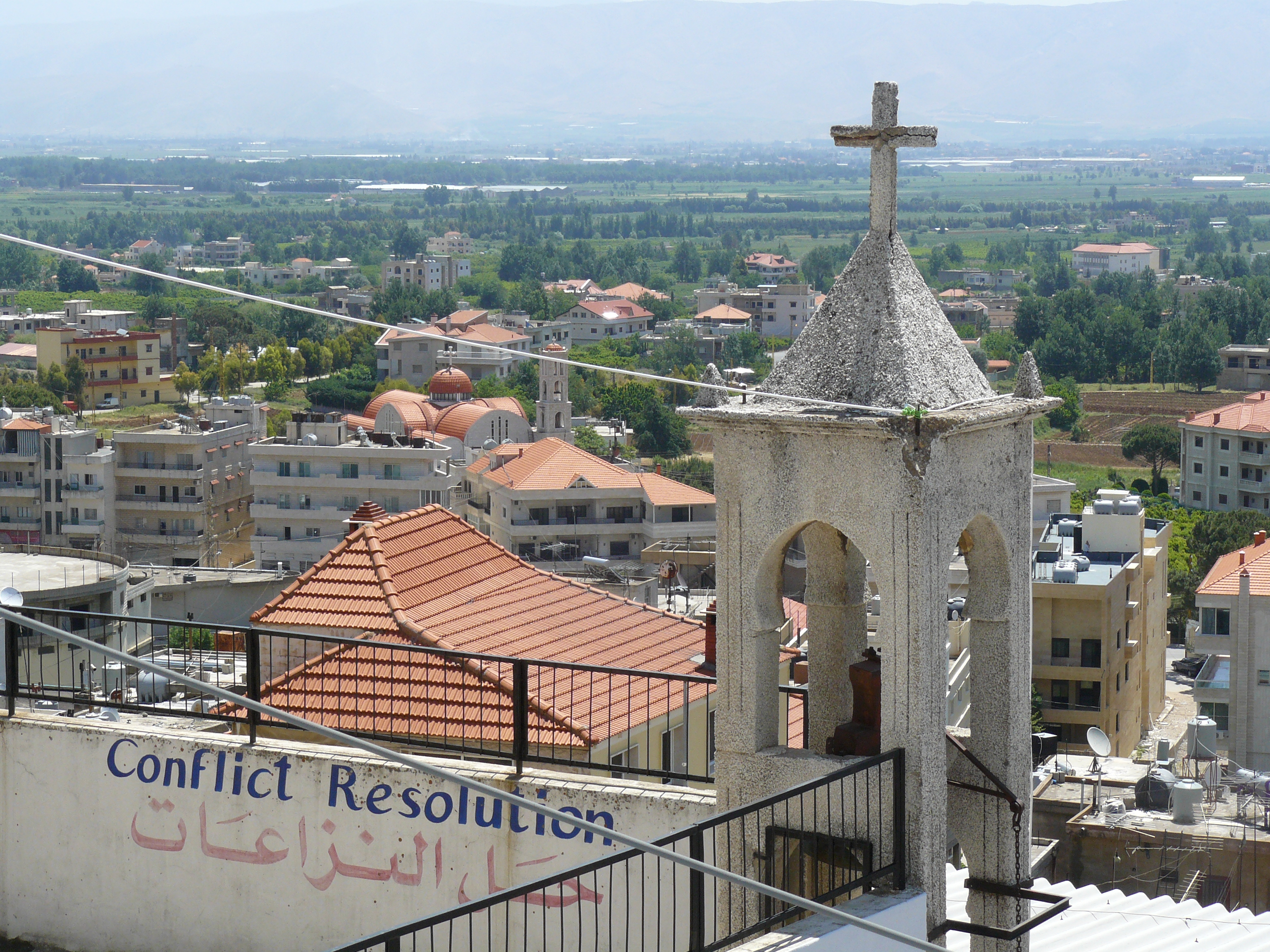
Homs peace signsIt’s the very end of the first week of February, 2016, the month of love as Valentine’s Day looms just eight days from now. I’m four weeks into classes as a graduate student in pursuit of a Master’s of Arts degree in ministry at our local Jesuit university, Creighton.

It’s been challenging in many ways. I still get up every morning, take a shower, make the bed and get Jana down to the print shop. Instead of heading off to a paying job, I wash the dishes, do the laundry, and then launch into studying for the two classes I am enrolled in: The Christian Tradition, Then and Now and Jesus Christ, Liberator. There is so much reading! I have to write papers! I have to use words and a style of writing that are worthy of the academic institution I am now a member of.

Here is the problem: this is not the way I write. If you have read my blog (thank you! if this is so), you may have noticed that I write in the first person and with a lot of emotion. I am a feeler. Look at my Myers Briggs profile. INFP. The “F” there stands for the fact that I tend to make decisions based on feelings or values, rather than logic or reason. As a matter of fact, when I first took the MB profile evaluation I scored absolutely zero on thinking.

I am a feeler. It becomes more clear to me every day.

So this week has been interesting as I have been asked to write academically. Here were my questions on the midterm of my beginning theology course:

How does John’s gospel fulfill its purpose?

What is Augustine’s theology of will?

Why was “The Passion of Perpetua and Felicitas importance to Christians of their age?”

How did Benedict XVI use the philosophical concept of logos in his Regensburg lecture?

It’s hard to write answers as a feeler when what is required is the answer of a thinker.

Somehow, I got through that.

And the assignment for my Jesus Christ: Liberator class, which I absolutely love, was to write a reflection on a movie called Voces Inocentes. This movie is about the war in El Salvador that the U.S. threw its resources into on behalf of the landed, rich minority, represented by the government, against the oppressed majority of the poor. Why do we seem to always find the wrong side to support since the end of World War II?

Since this is a theology class, and we are studying about theology in the form of Christology, Jesus as liberator, our job was to write a reflection on the movie with our texts in mind. It should be thoughtful, not emotional.

So today I wrote my reflection. I tied it to the textbook chapter that talked about a document called Gaudium et spes (the joy and hope), that came out of Vatican II and changed the church’s vision about its mission in and to the world. I tried to be academic even as the feeling heart that is right under my skin wanted to cry out in anger.

Really? How is it possible in this world that eleven- and twelve-year old boys have to choose between being conscripted into an army to fight against their families or join the guerillas trying to overcome injustice in their land? Either choice comes with a price: losing their humanity or losing their lives. Why can’t little boys just kick soccer balls and tease little girls? Why do these same boys have to become “man of the house” because their fathers have left the country to stay out of the war and find ways to support their families in other countries? Why are children in the crossfire? Why are women considered things to be used and discarded? Why does an old woman of faith decide that prayer will not end this war?

Anger. Boiling blood. That is how I wanted to react.

And then I saw a Facebook post from friends in Syria who are living in a war that they experience every day. It takes their neighbors. It takes their sons and daughters. It has torn their country apart and my country and many others are making choices that disrupt their lives. And we pray and they pray and somehow it doesn’t end.

Where is God? Where is grace? Where is peace?

I don’t have an answer to any of these questions. But I am left with this amazing speech by the unnamed priest in this movie that makes the feeling side of me think:

…the word of God must also be heard by those who have not yet found grace within themselves. What is grace? Grace is the presence of the Divine in every one of our actions. Innocence is stolen from our children and hope is replaced by fear. The skeptics say, if God existed, there would be no war. And I respond if men would obey the word of God, then there would be no war! Because God our father has given man the privilege to live in grace, or on the contrary, to provoke disgrace. I assure you when one lives in the grace of God, war does not exist. There are others who choose differently. It is time to raise our voices against them. To defend our right to live! To use our strength to oppose the force of death. Today it is not enough to pray.

It is not enough to pray today. Today is a day to ask people to look in the mirror and see the reflection of God there. And then, to look into the face of the neighbor and see the same thing. Look into the mirror and see Chava the Salvadorean boy, to see Ali the boy from Aleppo, to see John from the streets of Omaha…to see Jesus. Would you throw the rock at Jesus? Would you fire the gun at Jesus? Would you drop the bomb on Jesus? Can we not see the humanity in each face and also see the reflection of the divine? Can we choose to live in grace and not disgrace?

Can’t we have a conversation together about how what I do affects what happens to you? What you do affects what happens to me? Can’t we see that what we have is more than enough and it is enough to share?

I just want to finish by sharing this video which came to me in an email from Creighton University this week. It is a message from Pope Francis about conversations among those who are different in culture and faith. But they are all humans, made in the image of God. And this has helped me with my anger.

https://www.youtube.com/watch?v=-6FfTxwTX34&feature=share

Dona nobis pacem.

Heartburn

That's my trip journal for four trips to the Middle East. The spine is busted from stuffing it full of inserts of hymns, printed prayers, photos and bios of my teammates, devotionals I've led and other memories on paper too important to discard.

That’s my trip journal for four trips to the Middle East. The spine is busted from stuffing it full of inserts of hymns, printed prayers, photos and bios of my teammates, devotionals I’ve led and other memories on paper too important to discard.

I was looking through my dog-eared, spine-busted journal tonight for an email address. There are so many inserts into this broken-backed book! And while I found the email, I also found this. On this night, before I begin my journey into a master of arts study of ministry at Creighton University, it reminds me of one of the big reasons I am stepping out.

I wrote this article in May, 2013, shortly before my second trip to Lebanon. I am so happy to share it tonight.


Wading Into Deeper Waters

There is a difference between heartburn and a heart that burns. The former is felt usually around some poor eating habits or gastrointestinal issues. It’s very uncomfortable if you’ve ever experienced it, but you can take a pill. The latter can also be uncomfortable, but I would describe it more as comfort-afflicting. If your heart has ever burned for something or someone, your only response is action. If you don’t do something about it, it just gets worse. There is no magic pill.

My heart has burned for the situation across the Middle East since I was in high school and my step-brother Charlie worked for NBC News in Lebanon, covering their civil war which raged for fifteen years. Every night we would watch the news and see pictures of the atrocities that Charlie had stood in the midst of to get the story to us in the U.S. It was hard to watch and understand why these things went on, but more than anything, we hoped Charlie would be safe.

My heart kept burning through the years and then I met Maya in a women’s bible study here at West Hills. A native of Lebanon, she returned there to visit family in 2006 and was stuck in the middle of another war. When she came back thoroughly shaken, heartbroken and angry, reliving her childhood, she shared with us her story. This woman of faith simply asked, “Why do they hate us?”

Then I met Marilyn Borst of The Outreach Foundation and she was taking a group of faithful women to visit the churches of the Synod of Syria and Lebanon. We would travel to Beirut and visit the churches founded by missionaries in the 1800s. We would travel to Damascus and Aleppo in Syria, doing the same. We shared worship. We shared time at a women’s conference. We were welcomed into their homes. We shared coffee and tea and sweets. We met with Iraqi refugee families who were being cared for by the church. We heard stories of courage and of love and of faith, a faith lived out for over 2,000 years.

And I came home with new friends and new connections in this global gathering we call the Body of Christ. And my heart burned to return, to be back in the company of those women and those churches, to share life together again. And we would have returned the following year, 2011, but once again, war broke out.

This time the war was in Syria – first an uprising in a small town, now a two-year old war – and we couldn’t go back because it wasn’t safe…for us. It’s not safe for them either, but they live there. Or they did.

The Presbyterian Church in Aleppo, Syria, where we sang Amazing Grace and shared with the families who were caring for Iraqi refugees was completely destroyed in November, 2012. We got this news from synod officials who had traveled to be with us in a large gathering in Erbil, Iraq. Those of us in that room who had worshipped at the church in Aleppo were grieving: grieving for the ministry that would no longer be done in that neighborhood, grieving for the plans of the renovation of a Christian high school that would have served all faiths, grieving for the work that Assis Ibrahim and his congregation had done together as incarnational witnesses. Their church home was destroyed, many of their own homes were destroyed, their jobs were gone. Those who cared for refugees were now refugees themselves as they fled to safe parts of their country or to Lebanon.

In some of Paul’s epistles he refers to a collection for the church in Jerusalem. The churches created from his and other missionary journeys were collecting money for the benefit of the persecuted church there. The Outreach Foundation and other churches in our denomination are doing the same thing for the present day persecuted churches in Syria. They are collecting money to send to the Synod of Syria and Lebanon to aid these now displaced brothers and sisters in the small but important ways they can. And the people of our church have responded to that plea in the form of a $10,000 gift granted by our Mission Team. And my heart burns with gratitude at this response. We are not called to suffer as they have been. But we are called to stand with them: to show up when we can, to release the resources that God has provided us to be used in their time of need.

This burning heart of mine will return to Lebanon in May. My prayer is that these people of God will know his peace that passes all understanding. That they will be comforted by his gracious Holy Spirit. That they would have abundant life restored to them. That they would continue to shine the light of Christ wherever they are. And that they will be strengthened in this time of trial.

“I consider that our present sufferings are not worth comparing with the glory that will be revealed in us.” Romans 8:18

And now in January, 2016, I am happy to reflect back on this. The church building in Aleppo has been rebuilt in a safer place and the saints worshipped there for the first time on Christmas. The church body never stopped meeting, climbing five flights of stairs to meet in an apartment together for the last three years.

The Aleppo College for Boys, that Christian high school, has never closed its doors during the continuing conflict, now approaching its fifth anniversary. It continues to be a place where Christian and Muslim learn side by side.

My church, West Hills Presbyterian, has given other gifts to the Syria Appeal of The Outreach Foundation totaling some $25,000. (You can give too! http://www.theoutreachfoundation.org)

I have traveled back to Lebanon three times and to Syria twice. Steve and I will be returning to both again this spring.

And the inspiration of the church in persecution has put a vision of ministry in front of me, and the fulfillment of that vision begins tomorrow night when I take my first class at Creighton University.

May God continue to cause my heart to burn, and may he inflict you with that as well.

Dona nobis pacem.
525,600 minutes

“525,600 minutes…how do you measure a year?” Jonathan Larson did the math for me when he wrote that beautiful song in his musical Rent.

365 days times 24 hours times 60 minutes equals 525,600 minutes in a year. And today on the first day of 2016, I want to look back and see how my 2015 was measured.

WordPress, this wonderful platform on which I pound my thoughts out to share with whoever wants to read them has measured my year in this way:

A San Francisco cable car holds 60 people. This blog was viewed about 3,400 times in 2015. If it were a cable car, it would take about 57 trips to carry that many people.

There were 102 pictures uploaded, taking up a total of 761 MB. That’s about 2 pictures per week.

The busiest day of the year was January 26th with 189 views. The most popular post that day was Not as she died, but as she lived.

I write the blog for me, but it makes my heart feel joined with you when you stop and read my words, so thank you. If I say something that triggers a response – good or bad – please take a moment and comment. My two most faithful commenters are my writer sister Sally and a sweet padre I have never met named Michael. Interestingly enough, Padre Michael is going to marry Sally to Robert in April so we will both get to meet him!

My sister Susan took this picture as walked on my birthday. On UNO's campus, it is the Castle of Perserverance, one my favorite places.

My sister Susan took this picture as walked on my birthday. On UNO’s campus, it is the Castle of Perseverance, one my favorite places.

My walking app, MapMyWalk, also measured my year. I really started walking seriously in August after I returned from the Middle East. MapMyWalk logged 322 miles on 82 walks that took a total of 88 hours and amounted to 771,000 steps. I lost twelve pounds and hope to lose another ten in the next year. It was a resolution I didn’t make in January!


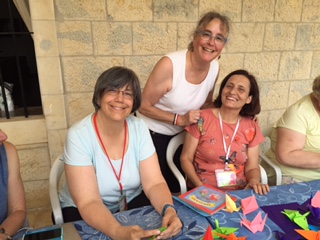
Flanked by Rev. Kate Kotfila of Cambridge, New York, and my new friend Mahsen, from Hasakeh, Syria, we fold peace cranes together.

Flanked by Rev. Kate Kotfila of Cambridge, New York, and my new friend Mahsen, from Hasakeh, Syria, we fold peace cranes together.

I made my eighth trip to the Middle East, traveling to Lebanon with my mentor Marilyn Borst as she led a group of faithful women on behalf of The Outreach Foundation. We spent blessed precious time with our counterparts, women from Presbyterian churches in Lebanon, Syria and Iraq. We worshiped. We had communion. We laughed and cried. We went on a memorable field trip to a Bekaa Valley winery on three buses and each bus rang out with singing and shook from dancing. We folded paper cranes for peace together on a quiet porch in hot weather. One hundred women with ten thousand stories to tell of love and loss.

Paper cranes 209Besides the cranes I folded there, I have folded 500 here at home, with 500 more to go to make my 1,000. Each one has been prayed over at least four times: as I write the name or memory on the paper, as I fold the paper and rewrite the words on a wing, as I string them together in strands like rosary beads, and as I hang them in the flock in my office. The first 323 had two additional prayer times: as I removed them strand by strand from the church office where they flew initially and the rehung them reverently in my office at home.

Dona nobis pacem. Dona nobis pacem. Dona nobis pacem.

Write. Fold. Repeat.

I can measure this year in uncountable songs. The worship set that plays randomly in my ears as I walked those 771,000 steps. The choir anthems sung on Wednesday night rehearsals and most of the 52 Sundays in the year. Hymns and praise songs on Tuesday night worship team rehearsals with two or three voices and an amazing band that are lifted to the glory of God on Sundays as well. Singing Handel’s Messiah for the eleventh time in thirteen years with the Voices of Omaha, a choir this year of 165 voices.

2015 marked some endings.

We finished the addition to our home so that Jana can have a safe place to live. No more stairs for her to go up and down. Her seizures make that a gamble for her safety we could not live with. In the process we said good-bye to a tree that had been planted in Daddy’s memory.

My Aunt Heddy died on Christmas day. She was my dad’s last sibling and she lived for 95 years, longer than either of her parents and all of her four siblings. She taught me how to embroider when I was a little girl and she became my mentor and guide into the world of quilting.

Sami Sadeeh was killed in Syria, defending his country from rebels. He was one of four national guardsmen who watched over our safety as we journed through Syria in 2014. God rest his soul.

My friend Hala, a religion teacher and a preacher who lives in Beirut, lost her father. He died in Aleppo, Syria, and she could not be there to say good-bye because of the war. May God continue to comfort her as she lives not so far in miles from her mother and siblings, but an uncrossable distance in time of war.

I left a job I had held for ten and a half years as director of Support Ministries at West Hills Church. It was my own decision and I was and continue to be at peace with it.

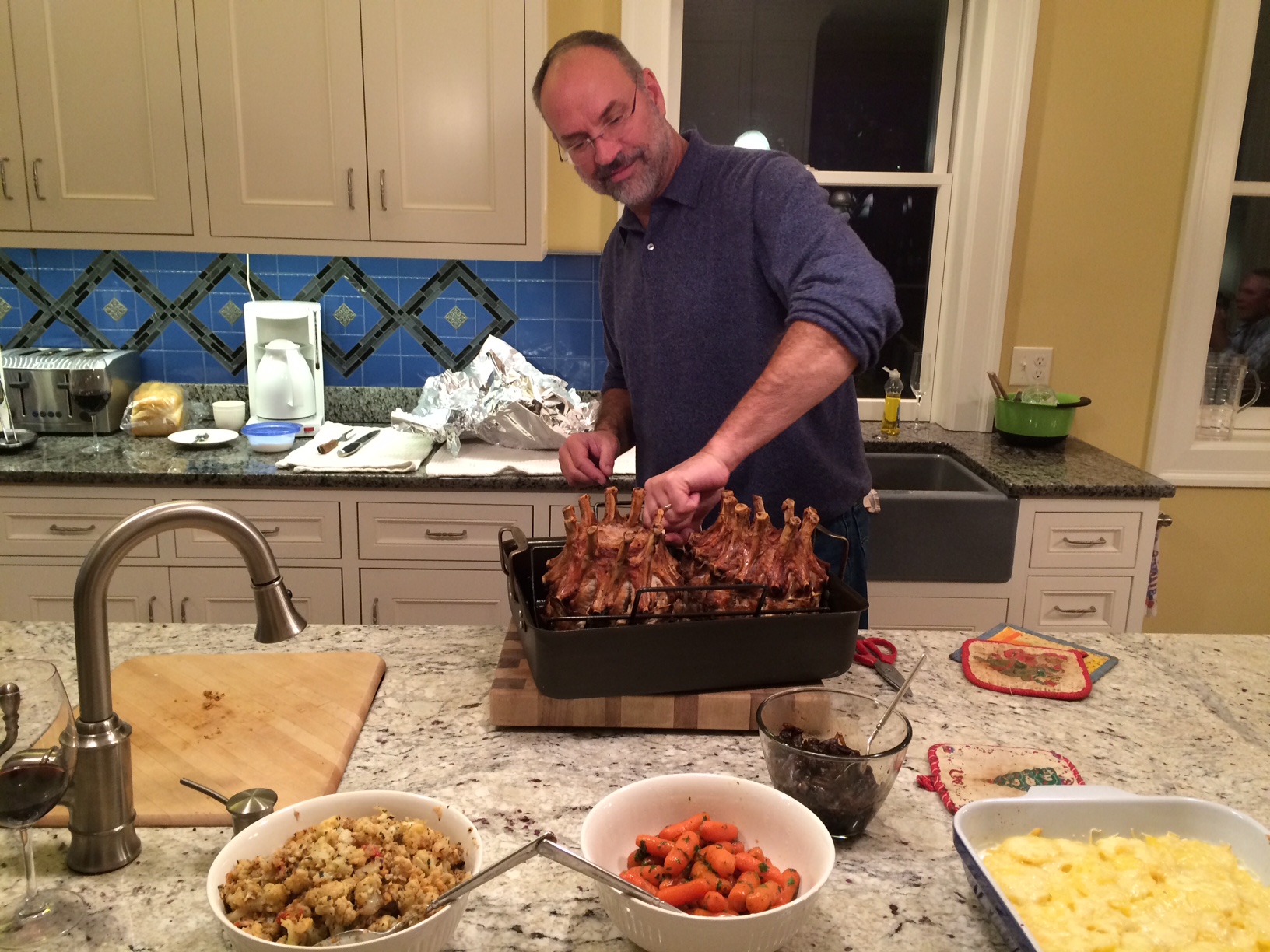
Julia Child SteveIn those 525,600 minutes of 2015, there were celebrations, too! Steve and I marked thirteen years of wedded bliss. We opened the year with his 57th birthday and closed the year with mine. All my siblings – the Omaha ones and the Colorado ones – made it to 722 N. Happy Hollow to celebrate Christmas together on my birthday weekend. All these moments were marked with Steve’s amazing cooking and good bottles of red wine.

Even as I get ready to step into a new year of adventures – back to school for goodness sake! – I marvel at this year that was. And the thread through the whole 525,600 minutes is the faithfulness of God experienced in whatever place I was standing in each of those minutes. And I know that this golden thread of his love will continue to weave and tie and hold together the minutes of life to come.

So happy new year. And it’s leap year, so we get 527,040 minutes. I know they will be as full and memorable as the last 525,600.

Let’s get started…

Light in the dark places

And he came to Nazareth, where he had been brought up; and he went to the synagogue, as his custom was, on the sabbath day. And he stood up to read; and there was given to him the book of the prophet Isaiah. He opened the book and found the place where it was written,

“The Spirit of the Lord is upon me, because he has anointed me to preach good news to the poor. He has sent me to proclaim release to the captives and recovering of sight to the blind, to set at liberty those who are oppressed, to proclaim the acceptable year of the Lord.”

And he closed the book, and gave it back to the attendant, and sat down; and the eyes of all in the synagogue were fixed on him. And he began to say to them, “Today this scripture has been fulfilled in your hearing.” And all spoke well of him, and wondered at the gracious words which proceeded out of his mouth; and they said, “Is not this Joseph’s son?” And he said to them, “Doubtless you will quote to me this proverb, ‘Physician, heal yourself; what we have heard you did at Caper′na-um, do here also in your own country.’” And he said, “Truly, I say to you, no prophet is acceptable in his own country. But in truth, I tell you, there were many widows in Israel in the days of Eli′jah, when the heaven was shut up three years and six months, when there came a great famine over all the land; and Eli′jah was sent to none of them but only to Zar′ephath, in the land of Sidon, to a woman who was a widow. And there were many lepers in Israel in the time of the prophet Eli′sha; and none of them was cleansed, but only Na′aman the Syrian.” When they heard this, all in the synagogue were filled with wrath. And they rose up and put him out of the city… Luke 4:16-29a NRSV

P1080389This passage came back to me this week as I have been reading Kenneth E. Bailey’s Jesus Through Middle Eastern Eyes. It took me back to a staff retreat day in March, 2010, where I first met my friend and mentor Marilyn Borst of The Outreach Foundation, a day that changed my life. She used this passage of the inauguration of Jesus’ ministry to launch into her topic which was the church in dark places.

This week as I read Dr Bailey’s chapter on this passage, I was struck anew as to just how radical Jesus was with his message of loving God and loving our neighbors. Dr. Bailey writes that Jesus took a very familiar passage from the book of Isaiah, chapter 61, verses 1-7, and edited it as he read to bring a new message to these people. These folks knew this passage as a prophecy which would put them in charge and their oppressors underneath them, to be dealt with as they had done. And Jesus turned it on its head. He uses sermon examples of Gentiles being open to faith in Yahweh, the God of the Israelites, not of conquering Hebrew heroes like David or Solomon. And where they had thought his sermon started out well, in the end they just wanted to kill him.

The points that Bailey makes that strike me are these:

  • Salvation comes from beyond the community; it is not community generated.
  • Ministry involves proclamation, justice advocacy and compassion. Compassion is meant to inform both witness and advocacy.
  • And lastly, “Jesus refuses to endorse the narrow nationalism of his own community. Instead he stands in prophetic judgment over it.”

It’s not really a text for Advent, and yet that is when I am taking this all in, and recent news stories cause me to stop and think about it.

I wonder what Jesus would think coming to the U.S. as many of us light the candles of Advent leading up to Christmas?

Watching the news yesterday morning I heard a story about one of the most popular Christmas gifts this year: a new gun. The store owner interviewed even stated that “best way you can show love to your loved ones this year is “to give them a gun.” For the ladies they even had thigh holsters covered in bling.

We have had the president of a Christian university declare to the student body that if more of them had concealed-carry permits, “we could end those Muslims.”

We have presidential candidates talk about shutting doors to Muslims, carpet bombing Syria until the desert sands glow, hating the media (“But I wouldn’t kill them,” added as an afterthought), and insulting every ethnic/gender/faith group except the one that looks like them.

We have people saying, “Merry Christmas!” like it is a threat instead of an invitation or salutation.

We get up in arms because a huge chain of coffee shops has a red “holiday” cup instead of a “Christmas” cup, but pay $7 for the coffee anyway.

But where are we when the only cup that really matters is lifted humbly with a plate of bread? The cup poured out for all that we might have life. The cup of the one for whom we light those candles each week.

I am grateful for that day back in March, 2010, when Marilyn introduced me to the church in dark places, for I have been gifted to walk with them in Syria, in Lebanon, in Iraq. They remind me that Jesus is not an American, not a pandering politician, not a guy peddling $7 coffee in a red cup, not a guy carrying a gun with a concealed-carry permit, not a it’s-Merry-Christmas-not-happy-holidays! season’s greeter yelling back at the customer service rep.

He is the Christian woman declaring on a bus stopped by Syrian rebels that the young Alawite man next to her is her son, and they may not take him.

Basrah crossHe is in the Shi’ite neighbors guarding the church in Basrah, saying that rebels will not bomb this church.

He is in the evangelical school in Tripoli, in Sidon, in Kirkuk, in Baghdad, in Aleppo, in Homs, educating Christian and Muslim together in the ethics of reconciliation.

He is in the woman of the Bekaa Valley who ministers to the refugees of the war next door, knowing that her own family is in danger.

He has come from outside of every community, in judgment over our selfishness, our hatred, our greed, our twisting of the meaning of his birth.

He offers us the compassion of his lifeblood poured out for us and invites us to the table of grace.

He is the mighty God, prince of peace, wonderful counselor. He is Immanuel, God with us.

He is the light of the world.

Let us light the candles for this one.

(References from Dr. Bailey’s book, Jesus Through Middle Eastern Eyes, are found in chapter 12, The Inauguration of Jesus’ Ministry.)

All is well

Pam Kragt and I worked together for eight years at West Hills Church. Pam left her job this past January to pursue her dream job. It didn’t turn out to be the dream, but it in a period of waiting this summer, that dream did materialized for her. She is serving the people she loves the most, the Greatest Generation. It is her mission call and she was gifted by God for that purpose. She does it well!

I left six months after her and am in my waiting period as my new journey of school begins in January.

We are two women who found a way to be friends and sisters in Christ even though we represent the two ends of a political spectrum that can be very divisive. We had our moments, oh yes, we did. But at the end of the day and the end of our time on staff together, we were grateful that the common ground we shared was much broader and connecting than our political divide. We remain friends.

But now that we are not serving together, we haven’t seen each other since January.

Until today…

Pamela Sue, as she is known professionally, came to sing the Christmas program at church for our 55 and over group. Yes, I qualify. I earned my way in two Decembers ago when I hit the double nickel birthday. I didn’t really want to go, but Jana did, so we went. I was happy to see Pam again and hear her sing.

When we served on staff together, there were times when we would just start singing a hymn in the workroom at church. I would take the melody and Pam would just purr out her beautiful deep alto harmony. She learned all those hymns growing up in the church in northwest Iowa. For me, they were all fresh and new and singing with Pam in the workroom was just a joy.

The Lemon Sisters sing for the first time, West Hills Church Super Supper, 2007. Kathy Padilla, me, Pam Kragt

The Lemon Sisters sing for the first time, West Hills Church Super Supper, 2007. Kathy Padilla, me, Pam Kragt

One year for the annual church meeting known as the Super Supper, we formed a fabulous trio with our friend Kathy Padilla: The Lemon Sisters. Our motto was “When life gives you lemons, make lemonade for the Lord!” Our original song, West Hills Mission Trip, sung to the tune of Route 66, was a big hit that year.

This little group would pop up periodically to provide light entertainment and provoke laughter as we did in a sadder moment at church in 2013. Pam Moore was heading to Colorado Springs to take a new job after the death of her husband and our pastor George the year before. We gathered together as a staff to send her off and the Lemon Sisters were there to do it up right. This little video always makes me smile at the memory.

And so today we went to hear Pam sing. I had so many things to ask her and to tell her about life since we last shared time together. Upon seeing each other we just had a great big hug and it was such a gift. But then she said, “Oh Julie! I am so glad you are here. I was praying that you would come because there is a song I wanted to do for you.”

She had prayed. For me. She wanted to do a song. I thought maybe she was going to sing Sentimental Journey which we had done as Lemon Sisters, or maybe I’ll Fly Away. But that wasn’t it.

She couldn’t look at me as she introduced the song because she started tearing up. The truth is as she began to talk, I teared up myself. She said as she rehearsed it she would see me and my heart for the people of Syria. We had talked so many times about the places God has called us to, her to senior citizens and to Honor Flights and me to the church in the Middle East. She had heard me ask for prayers so many times for them, that they would know peace. And so many times in staff prayer she would be prompted to pray for them.

Always, even in our differences, we would find the words to pray for each other’s hearts.

And today, for me and for the peace of Syria, she sang this song by Michael W. Smith.

All Is Well

All is well all is well
Angels and men rejoice
For tonight darkness fell
Into the dawn of love’s light
Sing A-le
Sing Alleluia

All is well all is well
Let there be peace on earth
Christ is come go and tell
That He is in the manger
Sing A-le
Sing Alleluia

All is well all is well
Lift up your voice and sing
Born is now Emmanuel
Born is our Lord and Savior
Sing Alleluia
Sing Alleluia
All is well

I have written before about my birthday season. I have a season because my birthday is in the time of Advent, the Christmas season. The gifts I receive come on many days, not just the nineteenth of December. And so officially, today, December 4, 2015, my 57th birthday season began with the gift of song from my friend, Pam.

All is well.

Born is Emmanuel.

Let there be peace on earth.

Sing Alleluia.

All is well.

Thanksgiving 2015

Every day is a day to give thanks, and I try to do that every night in my evening prayers. But in the U.S. we set aside the fourth Thursday of November as a special day.

Happy Thanksgiving!

On this fourth Thursday in 2015, I have so much to be thankful for.

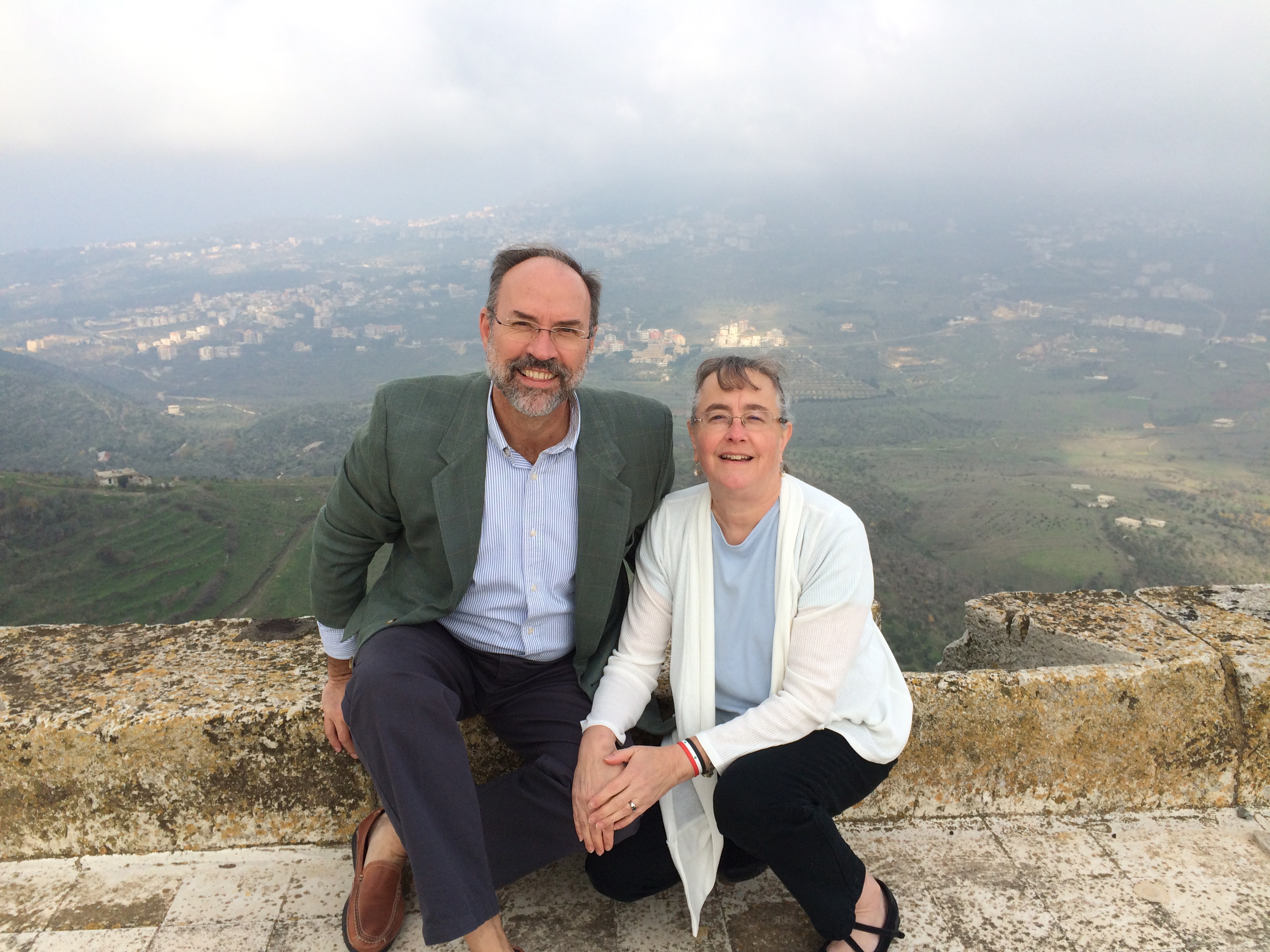
Steve and I on the top of the Krak de Chevaliers, Wadi al Nassara, Syria, November, 2014.

Steve and I on the top of the Krak de Chevaliers, Wadi al Nassara, Syria, November, 2014.

First on my list is my husband, Steve, who is standing in the kitchen chopping vegetables for a savory bread dressing, a staple of the meal that goes with this day. I am thankful for the miracle he is in my life; not looking for a life mate, our paths crossed fourteen years ago and here we are today. Sharing life. Sharing love. Sharing joy and sorrow. ‘Til death do us part.


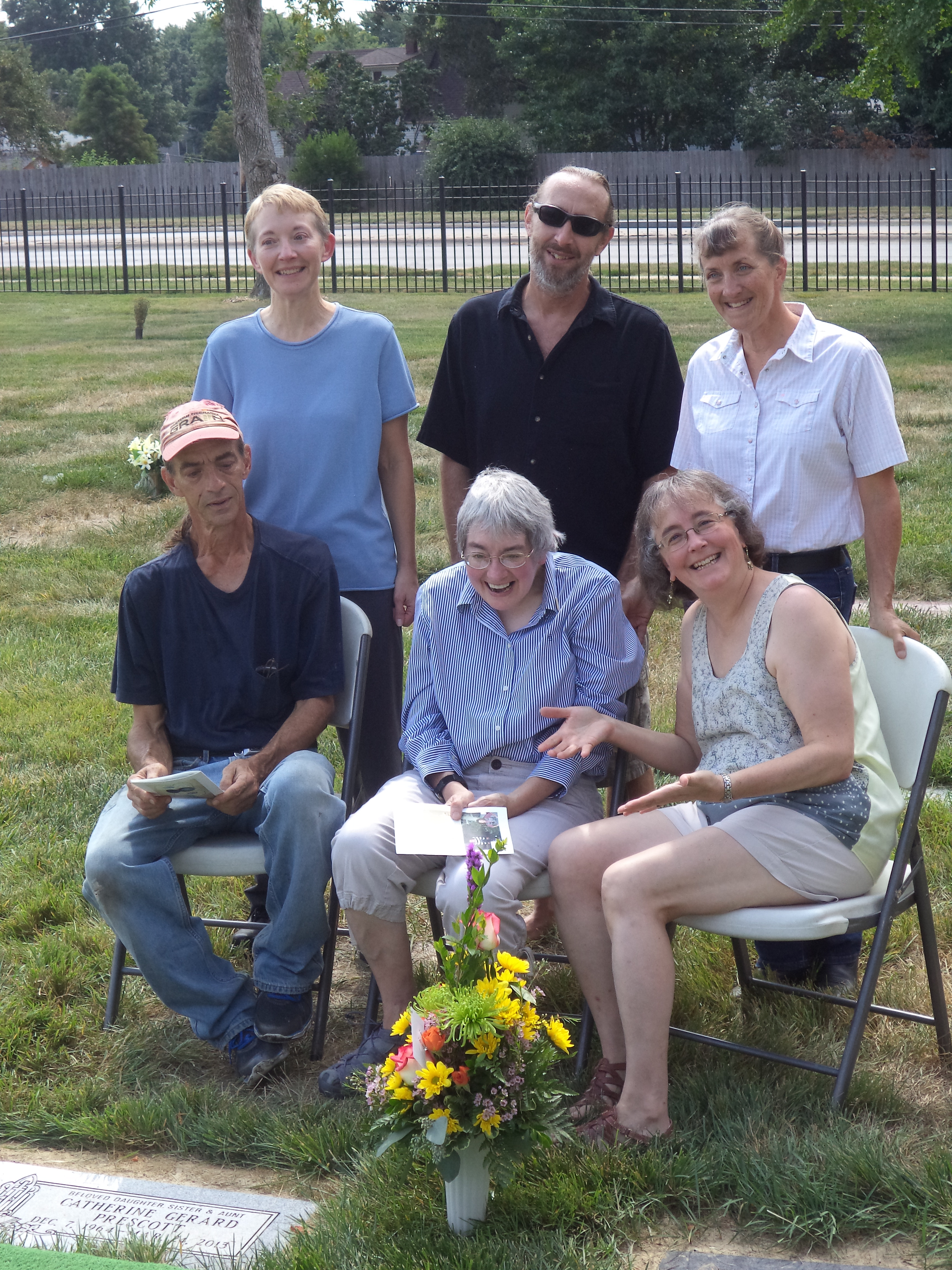
Six siblings at the memorial service for the seventh, our baby sister Cathy.

Six siblings at the memorial service for the seventh, our baby sister Cathy..

I am thankful for brothers and sisters who have walked through the hard times of head injury, of broken marriages and of new marriages, of loss through disease and grievous loss through crime. We once were seven, and now we are six, but the six remain a unit bound together through love. We are family.

I am thankful for friends who open up the world as a place to experience God’s glory and his grace. They encourage. They grieve for, mourn with, and on the other side they celebrate in joy. They are faithful women. They are lay and clergy – men and womenI am thankful for friends who open up the world as a place to experience God’s glory and his grace. They encourage. They grieve for, mourn with, and on the other side they celebrate in joy. They are faithful women. They are lay and clergy – men and women.

Flanked by Rev. Kate Kotfila of Cambridge, New York, and my new friend Mahsen, from Hasakeh, Syria, we fold peace cranes together.

Flanked by Rev. Kate Kotfila of Cambridge, New York, and my new friend Mahsen, from Hasakeh, Syria, we fold peace cranes together.

They sing. They dance. Their tears flow with mine. Their laughter is a symphony. They will go anywhere. They will do anything. Even when it is so hot the sweat pours off their faces; even when they are drinking their tenth cup of deep, dark, sweet Arabic coffee when they would rather have an iced tea. They will venture to places that cause people to say, “You are so brave!”, even when they know it is not their courage, but the courage of others that draws them into participation in life because they know where real courage comes from.

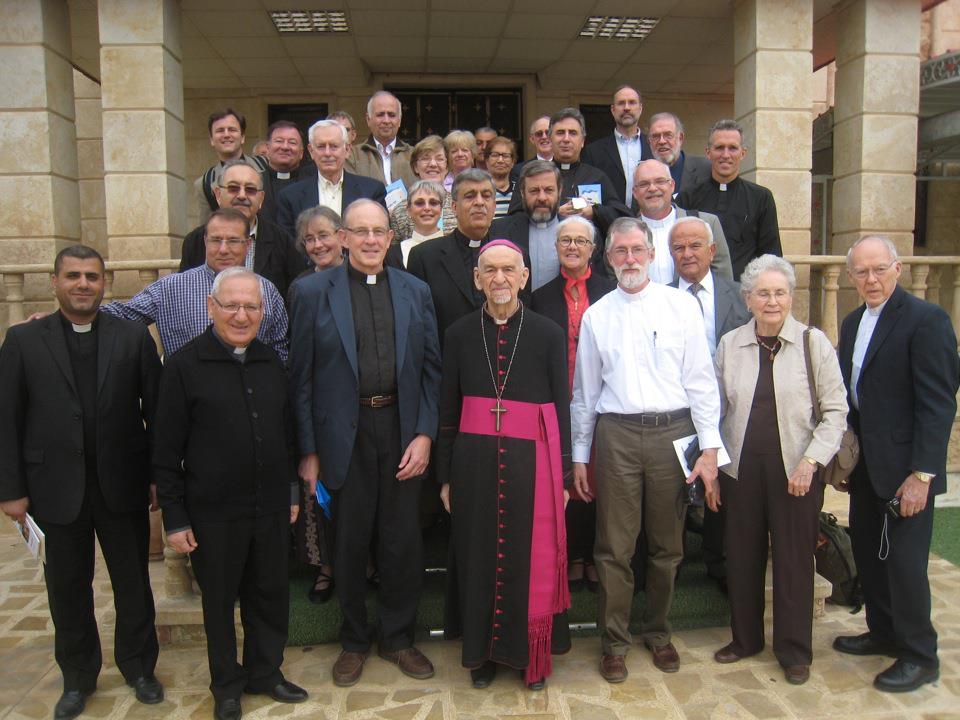
Kirkuk, Iraq, November, 2012, with The Outreach Foundation. The gentleman in the front row, second from the left, is now the patriarch of the Chaldean Catholic Church, His Grace, Louis Raphael Sako.

Kirkuk, Iraq, November, 2012, with The Outreach Foundation. The gentleman in the front row, second from the left, is now the patriarch of the Chaldean Catholic Church, His Grace, Louis Raphael Sako.

I am thankful for the church I have come to know in Lebanon and Syria and Iraq. I am thankful that when I say I believe in God the Father almighty, and in his son, my savior Jesus Christ, and in the Holy Spirit who is my guide and comfort, that I say it in community with the saints of old and the saints of now. They are embodied in Catholic, Orthodox and Reformed congregations and the faith and courage and perseverance they model every day in the midst of war and terror and death is a reminder to me of what it means to follow this triune God. He does not promise us life without loss, but he does offer us life abundant. And when I see how abundant life is in the church in these hard places, I have seen this promise lived out daily.

I am thankful for grace. For I have deserved it not, earned it not, purchased it not. But it has been freely given at great cost.

Happy Thanksgiving.

Dona nobis pacem.

Welcomed to the table

I learned a Greek word last week in Bible study: prosdechomai.

Now that I am not working but anticipating heading back to school in January, I started attending this wonderful gathering of women on Thursdays at church with my sister Jana, who has been going for over twenty years. There is always a delicious spread of food to feed our bodies even as our souls are fed on the word. This is an experienced group of Bible students and they are being led by three gifted teachers this year who are all friends of mine. Lou and Jackie and Jessica have taken us through 2 Peter, 1 and 2 John, and this past week, 3 John.

Lou took us through this short but meaty epistle where we met three men known by John and actually named: Gaius, Diotrephes and Demetrius.

The word – prosdechomai – was associated with something Diotrephes was not doing. He was not welcoming, not receiving, early missionaries into his home as they traveled with the good news. Indeed, he was even putting people out of the church who did open their homes. We had a good discussion about hospitality in the church, especially as it pertained to those who come to our church from other places to tell the stories of how God is working in this world. In a large church of 750, we have a hard time getting 25 to come to a lunch to hear what they have to say. We chewed on that a bit. And John says in verse 11: “Beloved, do not imitate what is evil but imitate what is good.” Don’t be like Diotrephes!

And then on Sunday, just three days later, we dove back into Luke 15 and the story of the prodigal son as our pastor Derek continued his two-part sermon about “the gospel within the gospel.”

Luke 15 starts out this way:

Now all the tax collectors and sinners were coming near to listen to him. And the Pharisees and the scribes were grumbling and saying, “This fellow [Jesus] welcomes sinners and eats with them.” (Luke 15:1-2 NRSV)

As I first heard from Lou, and was reiterated through Derek who was using a Ken Bailey book (The Cross & The Prodigal) to guide his sermon, the Greek word dechomai means to receive. With the prefix pros- added to it, the meaning becomes deeper: to welcome into fellowship.

So here is what causes the grumbling from the righteous: that Jesus would not only welcome the unrighteous (me and all the rest) for conversation, but that he would go even further and eat with them. He would fellowship with them.

And, of course, we know this from coming to the Lord’s table for the Lord’s supper in communion. This group of unrighteous, undeserving sinners – we the people – are invited to sup with the Lord God almighty.

It is an amazing thing. God invites to his table in fellowship those whose sins have nailed him to the tree. His enemies. Us. Grace at the table of the Lord.

This word came to me in an interesting time. There have been ISIS bombings in Baghdad, in Beirut, in the air over Egypt as a Russian airliner was taken down, and in Paris. And the big message that I have heard is that our country is now wary of Syrian refugees. Somehow the work of a very small group of radicalized terrorists has caused governors in our country (mine included) to say, “No. There is no prosdechomai for the fleeing victims of terror in our state. They might be our enemies.”

And as I walked yesterday and the day before thinking about this word – prosdechomai – a picture from 2010 came to my head and my heart.

August, 2010, Aleppo, Syria (before the war) – Nine women had traveled to Lebanon and Syria on a trip to meet and learn about our brothers and sisters in the National Evangelical Synod of Syria and Lebanon. We worshiped with Middle Eastern Christians. We laughed with them. We baked in the sun with them. We had our minds and our hearts and our world expanded by this family connection we now had experienced.

While in Aleppo for three days with the church there, we had the humbling opportunity to visit in the homes of Iraqi refugees who were being cared for by the Aleppo church as they waited for new homes in other parts of the world.

Why were there Iraqi refugees in Syria? Because the U.S. government had invaded their homeland in 2003. Faulty intelligence that said Iraq was responsible for harboring Osama bin Laden, a friend of Saddam after all, right? Faulty intelligence about weapons of mass destruction. Faulty, faulty, faulty. And Iraqi families paid a heavy price.

They were in Syria, chased out of their homes in Iraq because we had unleashed Armageddon on them. And so they sought refuge, and they found it in Syria.

And so it came to pass that nine American women were invited into the homes of three Iraqi families. Three families with nothing. Scare furnishings in their homes, donated by Aleppo church families. They were surviving on what was left of the savings they ran from Iraq with, much like what is happening today in Syria and Iraq.

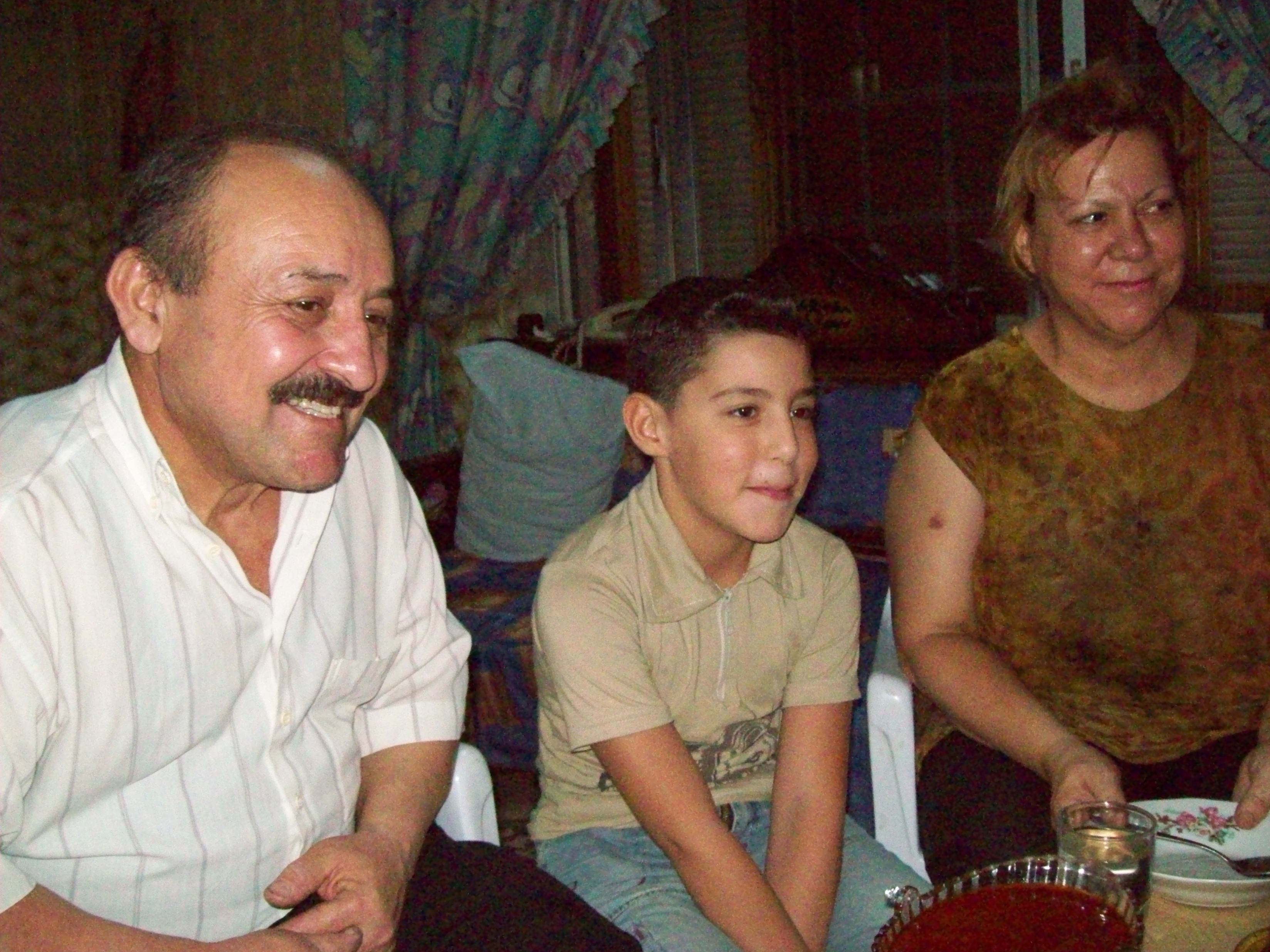
The Aziz family, refugees from Iraq living in Aleppo, Syria, August, 2010.

The Aziz family, refugees from Iraq living in Aleppo, Syria, August, 2010.

My group of Betty and Sue and me was prosdechomai-d by the Aziz family. And there we sat – sumptuous meal in front of us, tea and coffee and sweets – with people driven out of their homes by the actions of our government, the actions of we the people.

Grace at the table. Prosdechomai.

In his book The Irresistible Revolution: Living as an Ordinary Radical, Shane Claiborne says this in a footnote about a story of being in Baghdad during the U.S. invasion:

That night in Baghdad, I read Psalm 23. It’s the one folks usually read at funerals: “Though I walk through the valley of the shadow of death.” And I felt like I was. But I noticed something I have never noticed before. The psalm says that a table is prepared “in the presence of my enemies.” I remember thinking, why are our enemies there? What if after we die, God brings our enemies to the table and asks how we treated them? What if Jesus asks them, “Shane here claims to follow me. Did he love you? Did he feed you and pray for you like I taught him to?” What would our enemies say?

The story of the two sons and the loving father told in Luke 15 ends in an open manner. The father has killed the fattened calf for his younger son who earlier in the parable wished his father dead. And now he calls the older son, who in his righteousness also wishes his father dead, to come to the table. Is this not a setting of table in the presence of his enemies? Two brothers, both sinners, both wanting their father dead. But there is the father desiring to prosdechomai with both.

And so in a week of learning about prosdechomai from the word of the God I love, I believe, I humbly and haltingly try to follow, I thought of the Aziz family. I thought of how they welcomed enemies to the table and ate with us.

And I pray that we will do the same.


Fathers loved. Fathers lost.

Easter Sunday, 2007. Daddy is on the far right of the couch in the light blue shirt.

Easter Sunday, 2007. Daddy is on the far right of the couch in the light blue shirt.

I lost my dad on April 23, 2007. As a family, we knew it was coming because he had decided to stop dialysis after one year. Three days a week he was tethered by tubes to a machine for four hours. The machine would do the work his kidneys could no longer accomplish due to the ravages of diabetes. A good man of sound mind, he made the decision for himself. As his children we were glad he could make this decision, but we knew it would mean we would no longer have him and his sense of humor and his love for high notes.

We were all by his bed in the hospice house when he took his last breath. We had been sitting with him for thirty hours, rushing there when the nurse told us to come. He wasn’t awake. His breathing was labored. The end was coming. It was the most precious time we have ever had as brothers and sisters with this man who had brought us up day by day. Since Mom died in 1966, it was his love and persistence and faith that held us together without her, and it was that same love and persistence and faith that brought us to his bedside for that very long night.

He donated his body to the medical center and a whole group of young doctors-to-be learned about the anatomy of a human body from him. I am most positive that they were even able to identify his funny bone, and were amazed by the make-up of his vocal cords, even though they never heard him nail a pun or sing “Danny Boy.”

We lost him that early Monday morning eight years ago. And as I was supposed to receive his ashes back after the anatomy department was finished with him and then never did, I thought, “Well, I guess he won’t get to lay next to Mom at Calvary Cemetery.” It was okay. I knew where he was and that Mom was there with him, rooting us all on in the lives we had left to lead.

And then Daddy came back to me.

My stepmother had apparently been the recipient of his ashes back in 2008. She recently passed away and my sister-in-law asked me what to do with Daddy’s ashes.

“You have them?” I asked, astounded at the information.

“Yes. We can put them in with Pat, or you can have them back,” was her end of the conversation.

Knowing that my sisters and brothers would, like me, want them with Mom, I asked for them back.

My lost father is now in my laundry room. I need to convince the cemetery to let us bury them with Mom and our sister Cathy, who are resting side by side. Again, I know my dad’s essence is not in those ashes. Mom and Cathy are not in the ground. They are all living in heavenly glory, free of the grief and pain and troubles on this side of life.

But there is a place we can gather as a family when we need to to remembere them together.

There was no impediment to us gathering to sit with Daddy in the moment he passed. Some had to come from miles away, but good roads and peaceful times make roads shorter.

And I think sometimes we take that for granted. It’s 2015, for Pete’s sake. There is nothing hard about traveling from one side of this big country to the other.

I pray that it would be that easy in other parts of the world.

My friend Hala lost her father this past week.

IMG_0019I pieced it together from the weirdness of Facebook’s Arabic translation and the photos Hala had posted of her dad and her on her wedding day and when she was a child. It became very clear when I saw photos of his service posted from the church in Aleppo, Syria. I knew it was Aleppo because Assis Ibrahim was in the pictures. Again the Arabic translation indicated that the coffin pictured contained the earthly remains of a person named Bitar, which is Hala’s last name. It was confirmed when I exchanged messages with this dear sister in Christ.

And so I am grieving with and for Hala and her family. Grieving for the loss of a father, something I know well.

But my grief for her is compounded by the circumstances of this death. You see, Hala lives and works in Beirut. She is an amazingly gifted and educated teacher at the Beirut Evangelical School for Girls and Boys. She teaches religion and leads chapel services for students who are Christian and Muslim. I have been the recipient of her gift of teaching as she led our summer group of women in a study of the book of Ruth.

Hala lives in Beirut, but she is from Aleppo, and that is where her parents live.

Aleppo. Syria. Where war has destroyed 60% of a city of two million. There are no safe roads in or out.

And so where me and my brothers and sisters could gather at my father’s bedside in response to a phone call in the middle of the night, Hala could only pray and grieve from a distance. It used to be only a few hours’ drive from Beirut to Aleppo. Now, it is a journey that is impossible.

I am grateful that there was a church community to celebrate the resurrected life of Edward Bitar with his family still in Aleppo. There was the family of God to grieve his loss in Hala’s absence and to comfort her mother as the man who said, “I do, in sickness and health, in good times and bad, till death do us part,” was laid to rest. These are the tender mercies of life in Christ.

But sitting in my home, eight time zones west of Hala, I grieve with her. And I share the deep feelings of loss as a beloved father is gone. I wanted Hala’s words to be in this essay and I take comfort from her description of her father. I see in her words that she loved him as the father and teacher and faithful man he was. So hear my sister’s voice:

My father’s name is Edward Bitar, and my mother is Najah. We are four in the family, Amal, Bashar, Manar and me. My father was more than a father, he was my example of faith and love. He never received a day without the Bible in his hand, and never ended a day without having his knees down to the ground praying, asking for blessings.

He was a teacher, but not like any teacher I ever met. He taught English, he dedicated his time to his students and us. He used to go around from one library to another to check out new novels and we were his first audience and listeners.

As a woman living in the Middle East I was raised by one of the most well educated and open-minded persons. His dream was to see me and my sisters happy, but happiness had to be through finishing our college degrees and continuing education. I shocked him when I decided to study theology, but knowing I will dedicate my life to serve God gave him extreme joy. He used to tell me whenever he used to see me tired and depressed, “Hala, you are serving a powerful lord, depend on Him and he will be beside you.”

His memory, his picture, his smile, his hands touching my face and head will never leave my eyes. His spirit is a source of joy, and I will never forget him. Having a father like him was so helpful to understand the meaning of the word “the fatherhood of God.” I will never forget him Julie. I will never.

Fathers loved. Fathers lost. Tender memories of times shared and lessons learned.

My prayer for Hala is that peace will return to Syria, and the road from Beirut to Aleppo will be as in the days of her childhood. That she will be able to travel that road and sit by his resting place, mark it with flowers and in the silence, hear his gentle voice and leading. She will know that she can depend on the Lord, the same one she learned of from Edward Bitar. This same Lord who was beside him, and continues to be by her side and by mine.

Fathers loved. Fathers lost.

The Father who finds us. We are sisters in him.

A prayer to open a new door


So grateful to be accepted to this program, here is my letter of application:

My name is Julie Prescott Burgess and I am applying for acceptance to the master of arts in ministry program at Creighton.

By way of introduction, I am 56 years old, married for thirteen years to my beautiful Steve, and live with and care for my head-injured older sister Jana, who is one year older than me. She was hit by a train 32 years ago in Longmont, Colorado. It was a turning point in her life and mine as well.

Baptized in the Roman Catholic church shortly after I was born before Christmas in 1958, I made my first communion in the second grade. It’s a moment that marks my life in many ways. My mom had died a few months earlier leaving seven children with my dad, ages nine to fifteen months. I was seven. On such an important occasion in the life of a young Catholic girl, I was enveloped in the love of the Servants of Mary who were teachers at Christ the King School where we attended. Being a shy, introverted young one without a mom, three wonderful sisters took me to get my hair done, took me out for lunch, and hustled me out of mass later that evening as the gravity of approaching the altar to receive the body of Christ caused me to get nauseous. Those same three women brought me back to the rail after mass was over so I could receive communion for the first time. One of those nuns was my first grade teacher, Sr. Mary Amy, whom I recently became reacquainted with through my blog. Her name is Joyce Rupp and she is quite a leader for those seeking a deeper walk of faith. The first word I remember learning from her was SURPRISE. It was a lesson that stuck with me and in our correspondence, she said she remembered it too.

I tell you that story because it was a marker in my life. Surprise. Remember. Communion. Those three things are the descriptors of my life.

Two months ago I left my position at West Hills Church here in Omaha, where I served for thirteen and half years, the last ten as the church administrator. I was called to employment there by an amazing pastor who mentored me, discipled me, pastored me and was my friend. He died in November, 2012, four days after I returned from my second trip to Iraq to be with the Presbyterian church. Because of George’s belief in me, I found the strength to step out of Omaha and travel all over the world to experience the church in many contexts.

I spent time in southwest Germany, including a short stay with a German family. As a group, we celebrated Corpus Christi Sunday. Even though we were there with the protestant church, the local Catholic priest gave us all the opportunity to receive communion. As a baptized Catholic, but now a member of a Presbyterian church, I thought this was a wonderful moment of communion and community. It was a surprise!

I had the opportunity to travel to Cameroon in west Africa twice, spending time with the Presbyterians there whose church was founded by German and Swiss missionaries. In those travels I met a Cameroonian Sunday school organizer, almost exactly one year my senior. Joe had only a fourth grade education, but he had a call to be a pastor. With the prayers of my family – husband and sister – we managed to see him through four years of seminary, and he is now ordained. As two families – one Cameroonian, one American – we walked this journey together. Surprise! Communion. And I remember.

And then the Middle East happened. I traveled first to Lebanon and Syria in the summer of 2010. Although it was to learn about Presbyterian churches started in those places in the 1850s, we had amazing meetings with Greek and Syrian Orthodox clergy. I met Syrian Archbishop Yohanna Ibrahim in Aleppo, a man who was kidnapped in April, 2013, and has still not been heard from. My nightly prayer is for his release. I met Iraqi refugee families who were being cared for by the Presbyterian church. I ate dinner in the home of the Aziz family and heard firsthand of the devastation of our 2003 invasion on their lives. But I also experienced the hospitality and faith of this Syrian Orthodox family. Surprise. Communion. I remember.

I have traveled back to Lebanon and Iraq and Syria a total of eight times. And each time I come away convicted that the most important word in the Bible is “with.” I have spent time with the church – the body of Christ – in worship, in fellowship, in communion. I stood on the Chaldean Catholic Church rooftop in Kirkuk, Iraq, with the man who is now their patriarch, Louis Raphael Sako. As we stood there and looked around, he reminded us that there were snipers in the buildings around us and we needed to be careful, but he stood there with us so we could pray for that city. When we presented him with the gift of a crystal cross, he remarked that it was fragile, like their hope. His honesty in that moment was a surprise, and he shared that candor with our community.

All these surprises, these moments of community, these memories, have weighed on my heart in the last two months. My friend Kathy Padilla called me one day a few weeks back and suggested that this program would be a good fit for this Catholic Presbyterian blogger traveler whose heart is just longing for God’s peace to reign. I said, no, I was too old. And then I went back to Lebanon…

In the waiting for a visa to return to Syria to once again be with the church there in this very difficult time, I had one of those surprising moments of community with the now retired president of the Near East School of Theology, the seminary in Beirut. Her name is Mary Mikhael and although now a Presbyterian, she grew up in the Greek Orthodox Church. As a small girl, she wasn’t allowed behind the iconostasis like the boys, so she crawled through a barred window at every opportunity to see what was back there that girls couldn’t see. Mary has had an amazing life of ministry since those days, and there was no barrier put in her way that would keep her from her call to serve. The only barrier in front of me is, well, me. In that moment, I knew I would apply.

And so I am. I hope this letter isn’t too long, but I wanted you to know some touchpoints in my journey of faith.

I have come to know and love a cloud of witnesses who have helped me put hands and feet to my faith. People like the al Saka sisters, formerly of Mosul, driven from their home last July by ISIS. Their brother was murdered by extremists in 2006, and they took as their duty the protection of their church for all those years until they had to leave. People like Rev. Ibrahim Nseir and his wife Tami of Aleppo, whose church building was destroyed in 2012, but have held it together and continue to meet in a fifth floor apartment with no water or electricity. Hope exudes from them as they are about to complete a new church building in a city that has been 60% destroyed by war. People like Elder Zuhair Fathallah in Basra, who has led his church for almost ten years since their last pastor left and leads a small but mighty band of disciples in a kindergarten ministry where 98% of the students are Muslim. People like Mazar, a man who still lives in Homs, Syria, who tried to stop the assassination of Fr. Frans vander Lugt, the Dutch Jesuit priest who was killed right before the siege of this city was lifted in the last half of 2014. I had the humble privilege of praying at his grave in the courtyard of the Jesuit monastery, where a small group of people were feeding up to 2,500 people a day who had returned after the siege ended. This cloud of witnesses inspires and encourages me to step out in this way.

I want to come to Creighton to study ministry. My mom graduated from CU in 1955, and sixty years later I think she would be so happy to know that one of her seven has chosen this path. I want to study in a Jesuit institution and serve wherever God calls me. I want to be a link between Catholic and Protestant to remind us all that we are parts of the same body and we can’t say we don’t need one another, because we do. I want to continue to learn and to travel in God’s world and bring back the surprising stories of his people. I want us to know and remember the saints who came before and the ones living now in difficult places. I want to bring those too tired or sick or disadvantaged to the communion rail.

If God opens this door for me, I want to walk through it.

Thank you for your consideration.

Peace, always peace,

Dona nobis pacem: rest stops

H.W.S. Cleveland was a landscape architect of the 19th century, and as I have been walking through my own neighborhood these past two months, I have come to appreciate how he helped my city develop some beautiful parks.

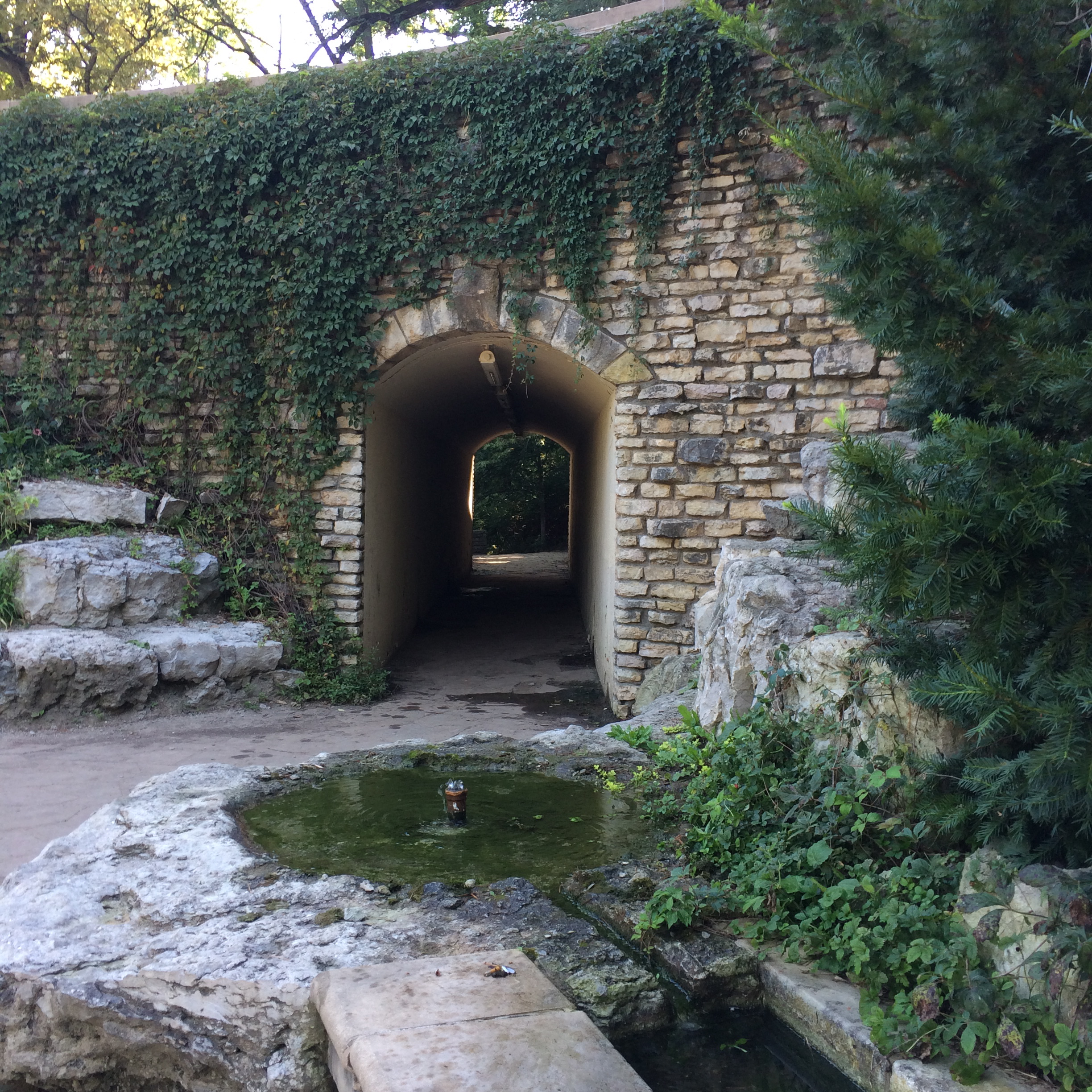
I live on Happy Hollow Boulevard, part of the system of city streets that were planned to link the Omaha parks together. Happy Hollow winds beautifully along two of the bests parks in Omaha: Elmwood and Memorial. And in my daily steps along the sidewalks and paths, I have come to find rest stops for my journey.

IMG_1980

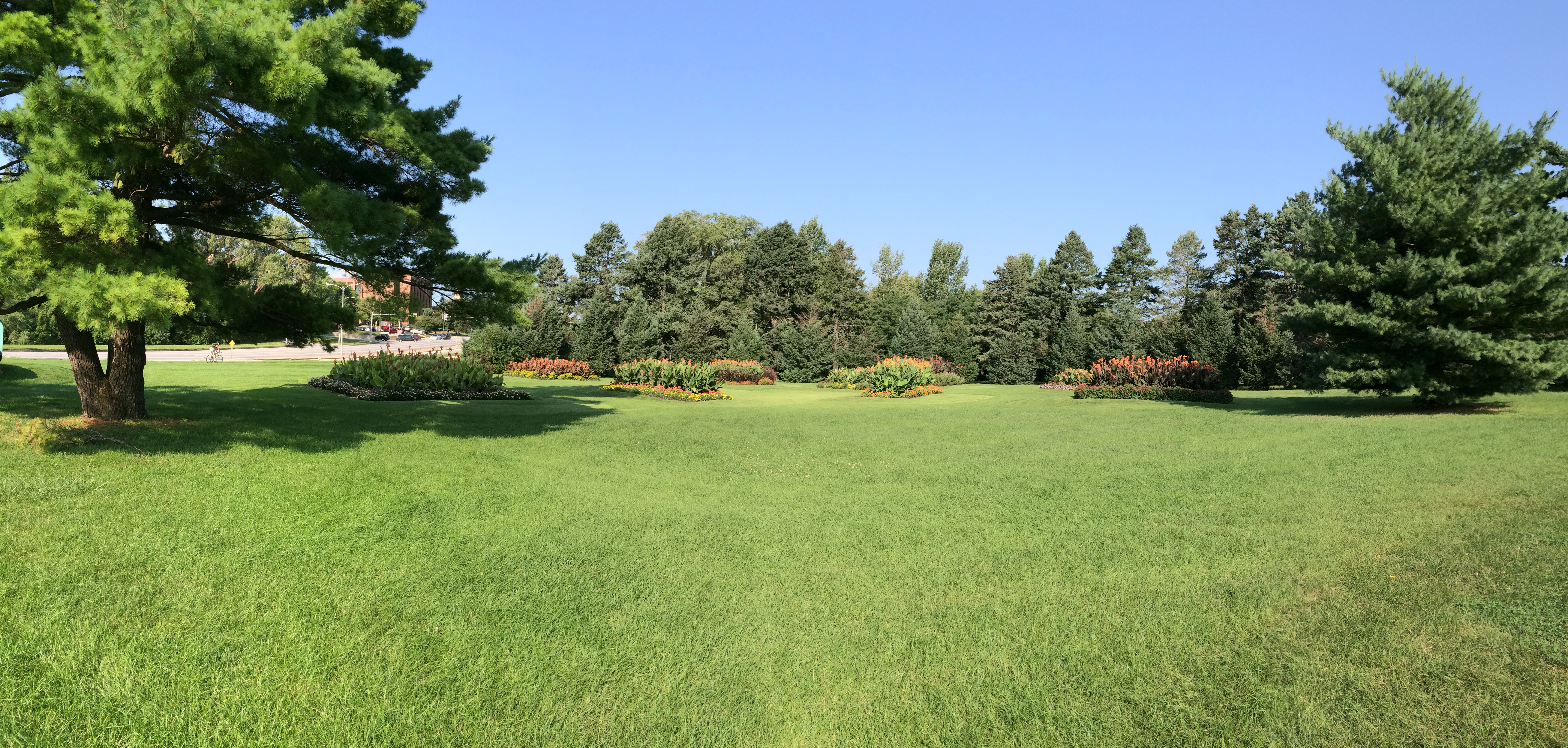
A panoramic view of Memorial Park facing west from the path.

IMG_1967

The grotto at Elmwood Park with its natural spring running through the channel.

“He leads me in paths of righteousness for his name’s sake…” goes the 23rd Psalm. Beside still waters. Green pastures. All these things are in this amazing section of Omaha that I find myself wandering through.

As I think about my friends in Syria, Lebanon and Iraq, or my family in crisis, walking has become a prayer time for me as I put one foot in front of the other, and doing it in green pastures with still waters and carefully planted trees and flower beds, is a reminder that this God who made and loves us all, is there with me at each step.

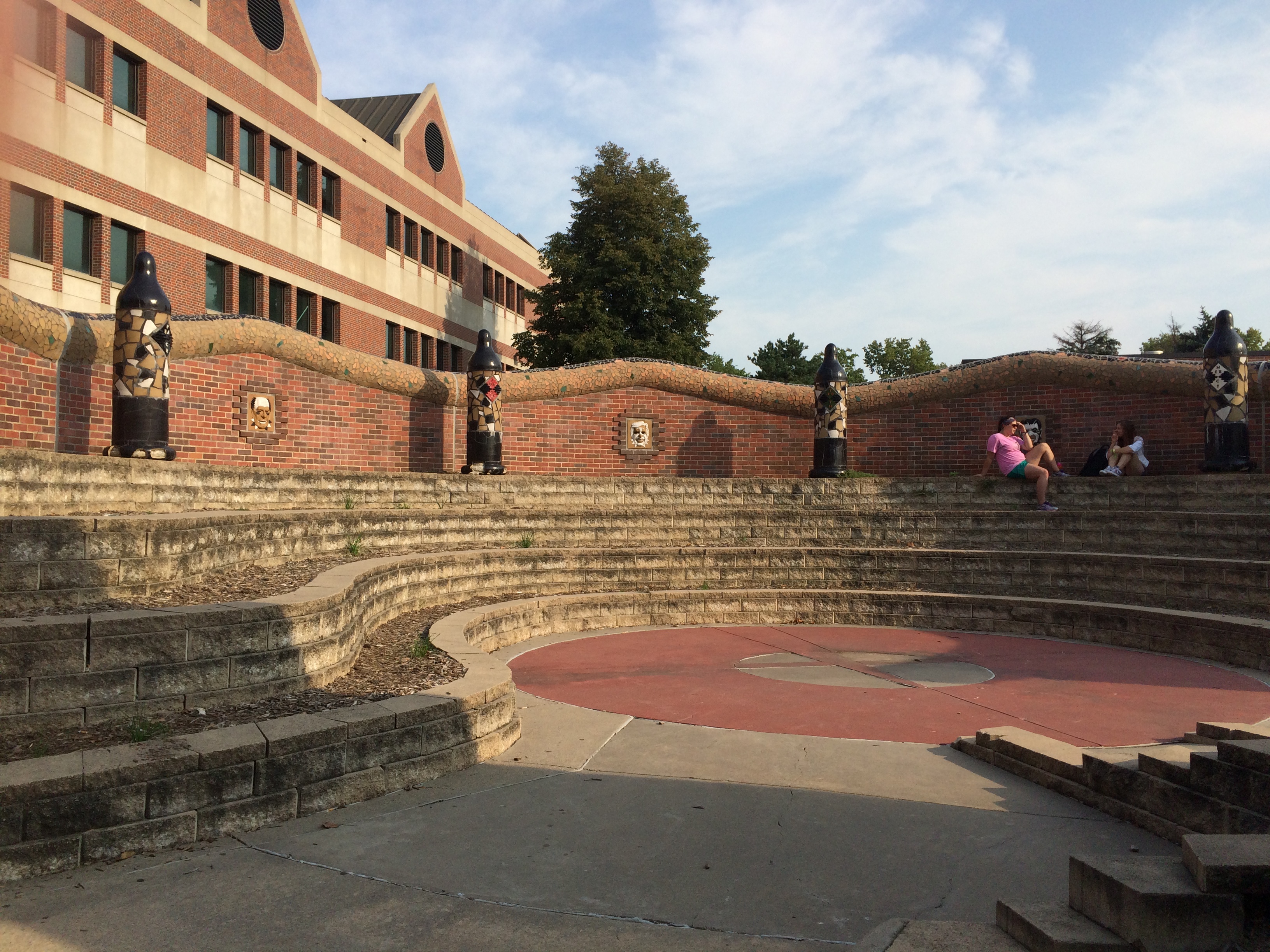
Between the two parks is my college alma mater, the University of Nebraska – Omaha. As I walk through the campus, I have found other places that also remind me of how God has unique ways of encouraging me on this daily journey as I seek his pace, his peace.

IMG_2007There is the Castle of Perseverance, an outdoor amphitheater designed by Andrew Leicester of Minneapolis. I came upon it one day several weeks back as I chugged uphill from the College of Fine Arts, and the first thing I saw was this: the word peace on a missile-shaped sculpture. I followed the semi-circle around and found justice, mercy and truth to complete the set. “Act justly. Love tenderly. Walk humbly.” My six-word reminder from Micah 6:8 was echoing through my head.

IMG_2011This place also brings Romans chapter 5 to my mind, a scripture shared at my father’s memorial service and one that speaks to my heart about the church in the Middle East that I have been humbled to walk with:

Therefore, since we have been justified through faith, we have peace with God through our Lord Jesus Christ,  through whom we have gained access by faith into this grace in which we now stand. And we boast in the hope of the glory of God.  Not only so, but we also glory in our sufferings, because we know that suffering produces perseverance;  perseverance, character; and character, hope.  And hope does not put us to shame, because God’s love has been poured out into our hearts through the Holy Spirit, who has been given to us. (Romans 5:1-5 NIV)

Song

Suffering, perseverance, character, hope. Steps on the journey of the family of God in Syria, even as I write this. Never have I seen a people who model hope in such times of suffering.

Or walking south through campus as I approach the east side of the soccer stadium I found “Song,” another art piece, many of which are sprinkled around this urban campus. With my earbuds bringing “All to Us” by Chris Tomlin into my head and heart, all I can do is sing aloud, just like the little bird:

Precious cornerstone,
Sure foundation
You are faithful to the end.
We are waiting on you, Jesus
We believe you’re all to us.

sounding stone brokenness

Walking down the hill and into Elmwood Park, past students scurrying up the hill to class, I come up the east side of the park and find the Sounding Stones, which I’ve written about before, Sounding Stones. Brokenness. Humility. Submission. Simplicity. Community. Each of those is part of our journey, my journey. And each one invites a prayer. My prayers for peace – dona nobis pacem – are so centered in that stone of brokenness these days.

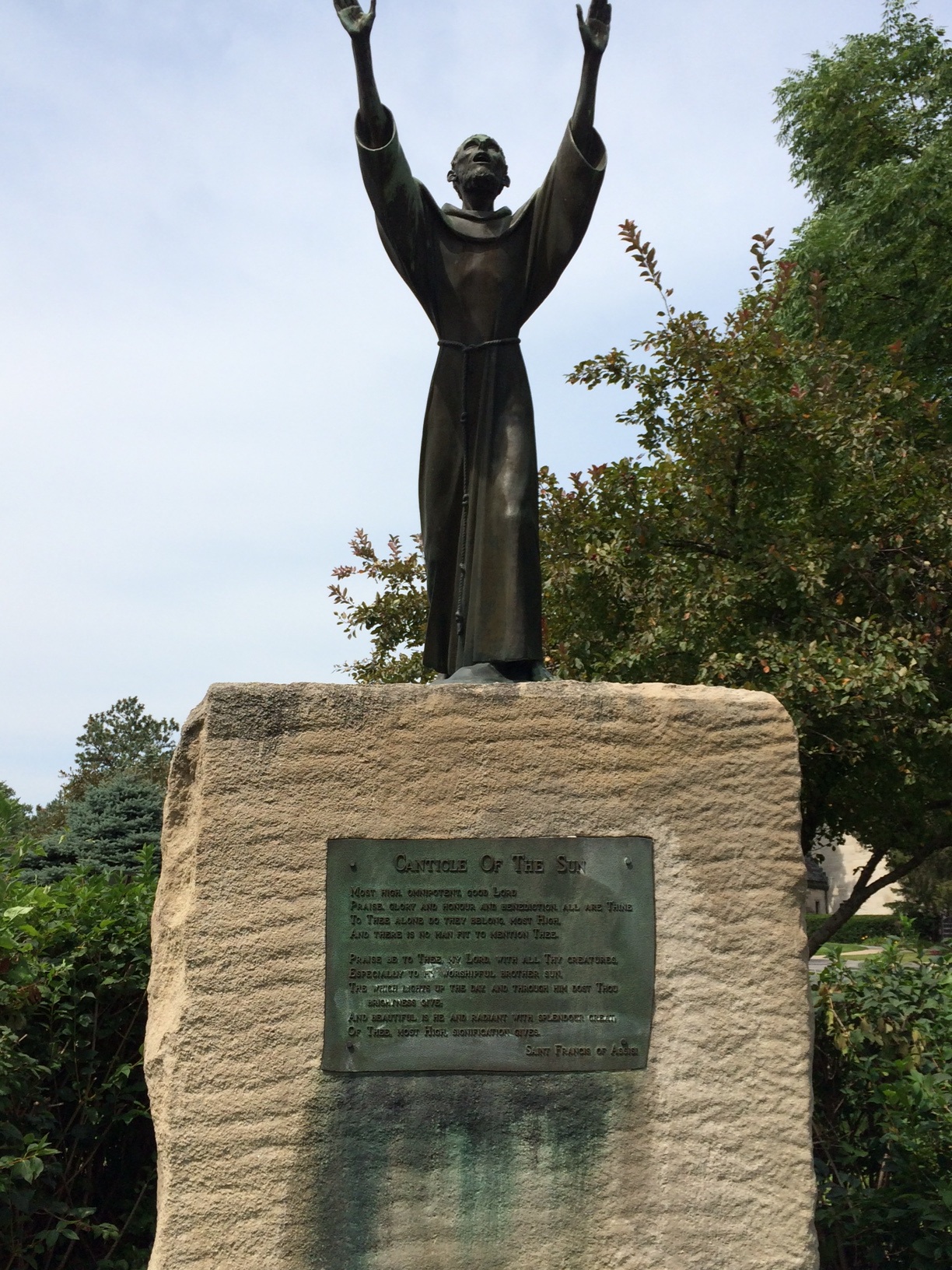
St Margaret Mary's PeaceAnd if these special rest stops on the journey don’t invite me into peaceful places (which they do), there is yet another spot I can wander between the two parks. Saint Margaret Mary’s Catholic Church stands facing the university from the north side of Dodge Street, right next to Memorial Park. If the words carved into its entryway aren’t enough to remind me of God’s peace, the sweet statue of my favorite saint, Francis of Assisi, is there, too. And though the words on his statue there are the canticle of Brother Sun, the ones he is speaking to me are, “make me a channel of your peace.”

St Margaret Mary's St FrancisShalom.

Salam.

Pace.

Paz.

Peace.

Whatever language the word is spoken in, I want to be a conduit of peace. Let my words speak it. Let my actions be its witness. And I am so grateful for these reminders in these rest stops along the way – in green valleys, in still waters, in righteous paths.

Dona nobis pacem.

Amen.